By Dr. Mehrdad Khonsari
[Dr. Mehrdad Khonsari, a former Iranian diplomat, is a Senior Consultant at the Iranian Center for Policy Studies: www.icps.uk.]
The establishment of a tenuous ceasefire in the aftermath of the humiliating 12-day war between the Islamic Republic and Israel has sparked a national debate concerning the need for a serious overhaul to the country’s domestic and foreign policies and priorities.
While all forces across the political spectrum – both at home and abroad – are highlighting similar concerns related to the immediate needs of the Iranian nation, they seem somehow incapable of stepping out of the boundaries defined by their longstanding and now mostly defunct ideological tendencies.
As Iranians ponder their future, it is clear that only through dialogue, exchange and cooperation between political constituencies with common views can any kind of meaningful change come about.
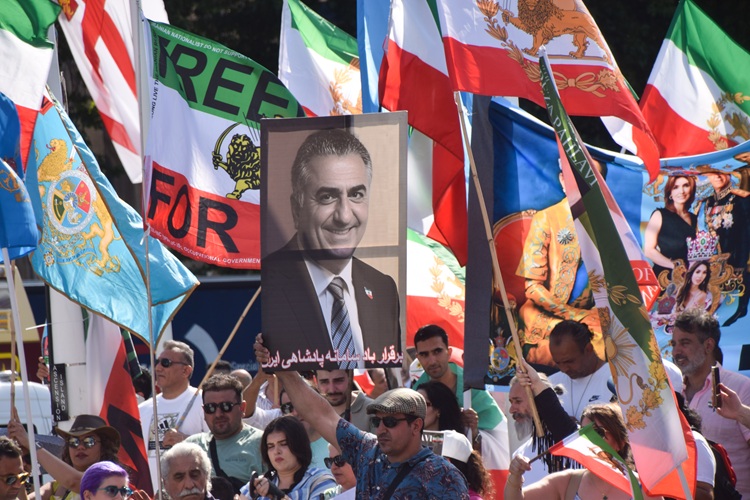
In Munich, Iranian Exiles Unite To Work Towards A Democratic Future
Even within government quarters, we have in the past several days witnessed an open call for dialogue, as “opposition” voices by Iran’s President Pezeshkian emphasize the need for “patience, rationality and national cohesion” in governance reforms.
Previously, former Foreign Minister Ali Akbar Velayati, a confidant of Supreme Leader Ayatollah Ali Khamenei, also expressed a rare call for change, stating that Iran now needed to abandon “expired methods” to maintain national unity, tacitly acknowledging public discontent.
Interestingly, calls for reform at this time from the likes of Pezeshkian and Velayati, while measured, for obvious reasons, are in line with the more direct sentiments echoed by political leaders such as former Prime Minister Mir Hossein Moussavi, who has been under house arrest for the past 14 years, and the outspoken Mostafa Tajzadeh, a former Deputy Interior Minister who is currently languishing in jail.
In a statement following the 12-day war, Moussavi openly said the current structure of the ruling establishment did not represent the will of all Iranians, and noted that people wanted a revision of that structure via a referendum for a new constitution based on popular sovereignty. As a first step, Moussavi called for quick and symbolic measures — such as the release of all political prisoners and a clear change in national media policies.
Meanwhile, the prominent imprisoned dissident Mostafa Tajzadeh, in a bold letter, doubled down on his demands for systemic reforms. He demanded that Supreme Leader Ali Khamenei either enact fundamental reforms—including constitutional revisions via a freely elected assembly—or step down. Tajzadeh cited difficult economic conditions and international isolation as clear failures of current state policies.
Outside Iran, prominent exile groups and political activists have also been active in promoting their own agendas for change, which for the most part commit to replacing the current discredited theocracy with a secular democratic order.
What has been missing from their various efforts has been a serious attempt to end ‘oneupmanship’ and instead work towards a unified front and coordinate their agendas with those prominent civil society figures and activists inside Iran who are seeking peaceful change away from the current system.
There is no question that the potential for national reconciliation has never been greater than at this time. What is most urgently needed to pave the way forward are the following:
- Brinkmanship on the part of leading political figures to bring the current ‘disconnect’ amongst the various political actors both at home and abroad to an end.
- The promise of a ‘conditional amnesty’ extended to all those associated with the core of the present government that they will never be treated in the way that Islamic leaders treated the vanquished in 1979, and the assurance that if they choose to side with the people, they will never be discriminated against or forced to leave their homes and country.
The opportunity for change and reconciliation is at hand. It can be fulfilled by being realistic, respecting others, and perhaps above all, engaging in responsible behaviour.
In Munich, Iranian Exiles Unite To Work Towards A Democratic Future