
By Katayoun Halajan
Malekeh Nayini is a painter and photographer based in Paris who has pushed the boundaries of photography by fusing it with painting.
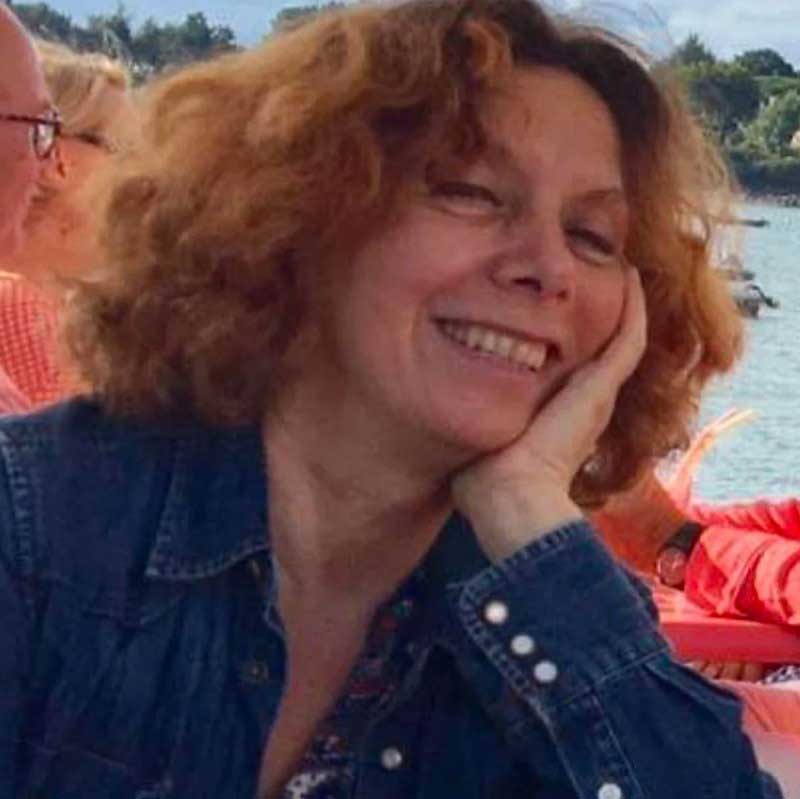
An unassuming, low-profile and quiet artist, she has exhibited work in some of the world’s most prestigious galleries and museums, and lived in New York, London, Switzerland, and Paris
On a late November afternoon, she joined Kayhan Life for a conversation at the café of the Hôtel du Nord – where the legendary movie of the same name was directed by Marcel Carné in 1938. She spoke with simplicity and warmth about her life.
Childhood and Adolescence
I was born in Tehran in 1955. As a child, I loved playing with the ants in our garden. I fed them sugar and spent hours watching them in amazement, seeing how patiently and cooperatively they carried grains back to their nest. Sometimes I also rescued worms and insects that were drowning in our small pond, happy to see that they survived and returned to life.
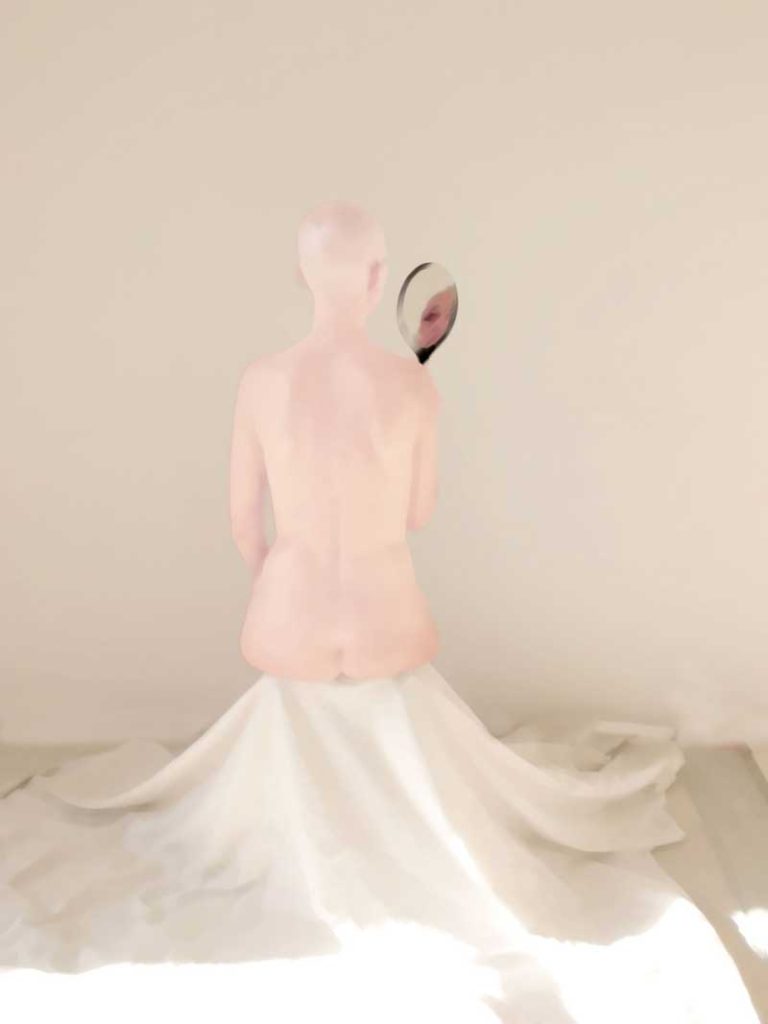
Between the ages of about 3 and 6, I was drawn to imaginary worlds, and developed a deep passion for painting and drawing. I helped my sister color her sketches. I was never a good student at school—my mind was always elsewhere, usually playing in the garden—and as a result my grades were poor.
At 16, I insisted on going to England, as some of my cousins had done. Eventually, my family reluctantly agreed, and the worst years of my life began there. I hated boarding school, and my English was so weak that I couldn’t keep up in class. My only strength was art, and even that was more imaginative than academic. This frustrated my art teacher, because I couldn’t properly draw a vase or a tree.
After that, I was sent to a school in Switzerland. Unlike in England, they found me intelligent and placed me directly into an advanced class. I spent two quiet years there, earned my diploma, and then went to the United States for my undergraduate studies. I was unsure of what career I wanted. I dreamed of becoming a doctor like my father and helping people, but since I wasn’t strong academically, I gave up that dream and decided to study textile design and then photography. That decision defined my life path.
Before I officially started studying photography, my parents gave me my first camera—a Nikon—for my 20th birthday, chosen by Bahman Jalali, a relative of ours. I looked at that camera with excitement, constantly thinking about how to make the best possible use of it.
My first university photography project focused on shadows. Then I began working with masks, making them out of papier-mâché and photographing them in different settings. The first exhibition of this project was held at the Atlantic Gallery in New York. Later, I focused on an old technique called the ‘photogram’ and developed my own approach to color. This technique felt magical and mysterious to me, as it relied on unpredictable transparent materials—you never knew what the result on paper would be. This work was well received in New York, and Camera Arts magazine devoted several pages to it. I also had two exhibitions of this project in New York.
Completing Studies and the Decision to Return to Iran
After earning my bachelor’s degree in art, I was eager to return to Iran, but my parents opposed it because the Revolution had taken place. I didn’t know where to go and felt lost—without motivation or purpose. Under pressure from my parents, I decided to go to New York, where I lived for nine years.
In New York, I continued studying photography. I became very interested in Coney Island and began a project there. Its surreal atmosphere and its people fascinated me.
Alongside photography, I also attended theater school. With Iranian friends, we formed a theater group and staged a performance once a year for Nowruz. It was a very good period, and we made full use of New York’s vibrant energy. I held several exhibitions in the United States between 1982 and 1985.
Moving to Paris
In 1987, I exhibited the Coney Island project at a gallery in Paris. I fell in love with the city and moved there in 1989—a place where my resources were more limited. At first, I tried to find a color darkroom but was unsuccessful. I then began painting on porcelain plates, which, unexpectedly, were very well received, and French publications of the time wrote extensively about them.
Still, I wanted to find a way back to photography. I enrolled in a workshop to learn Photoshop, and through that, I resumed my photographic practice.
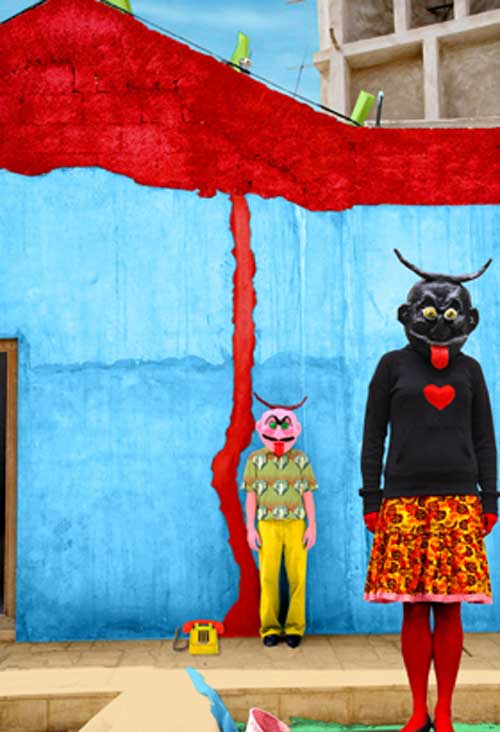
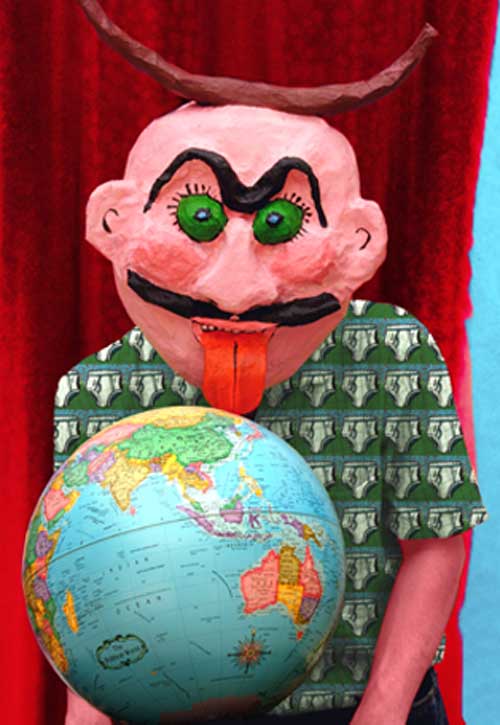
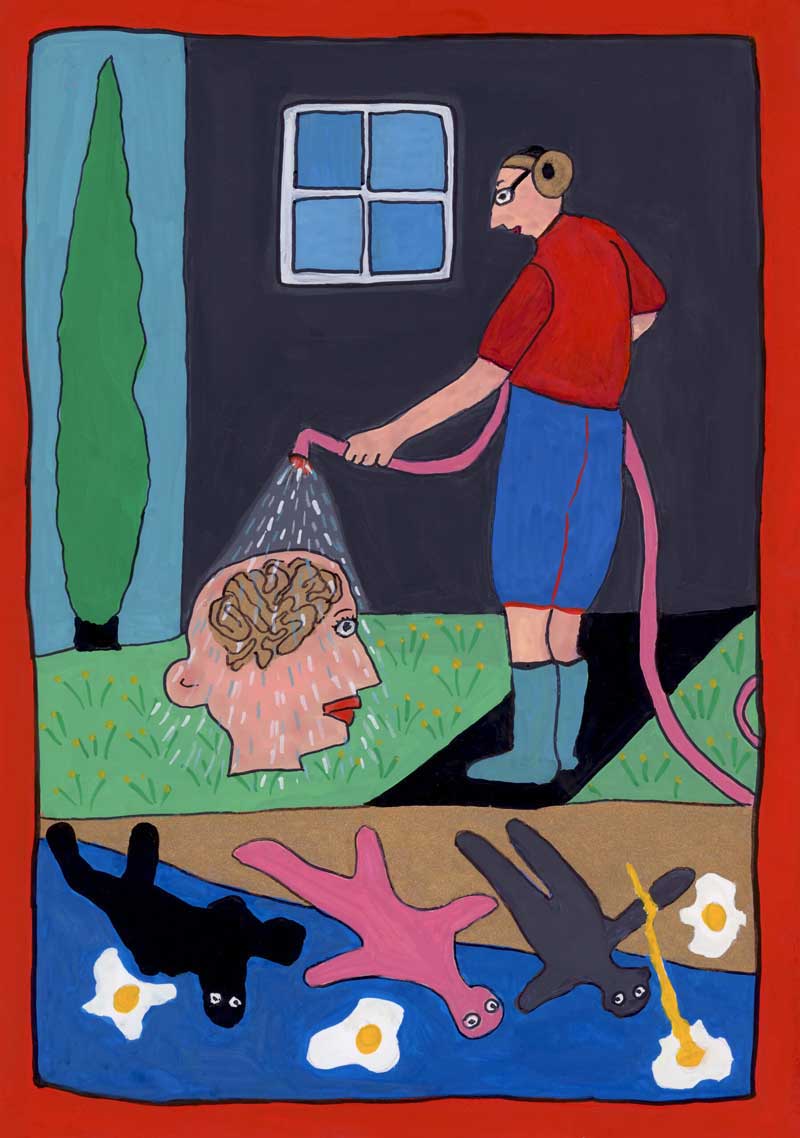
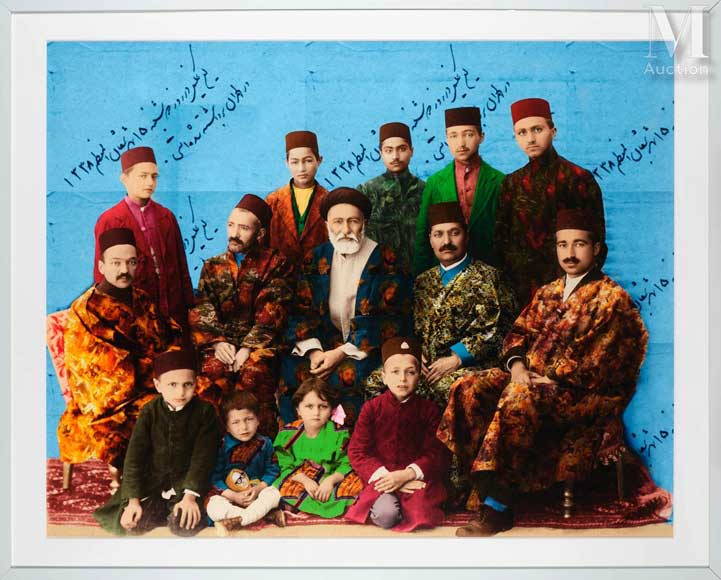
In April 1993, I was informed that my mother was in a coma following a stroke. I immediately decided to go to Iran, but I arrived too late—my mother had passed away. I was left with a room full of her belongings, photographs, and memories, while she herself was gone. Among these abandoned objects, letters, and photographs from the past, I searched for a way to capture moments of my mother’s presence in this world. This led me to begin a photography project based on old family photographs. Rose Issa presented the first exhibition of these family photographs in London. After that, I worked on various projects on different themes, only some of which were exhibited publicly.
These days, I deeply feel the absence of my friends in Paris, especially Bijan Saffari, who was a kind and exceptional human being. Knowing him was a great fortune in my life. Today’s Paris feels like a theater stage to me, where some of the actors are no longer with us.
After the Revolution, I traveled to Iran several times. The last time was 25 years ago, and during that trip I felt something strange. All the street names had changed, people spoke differently—it was Iran, and yet it wasn’t. That was my final trip to Iran. I have lived in many places, but none of them has meant ‘home’ to me.
Sometimes I feel neither Iranian, nor French, nor American. It’s as if I have no roots anywhere and am considered a foreigner everywhere.
A deep attachment to Iran
It’s true that I remain deeply attached to Iran. During the Mahsa (Jina) Amini movement, I spent all my time terrified, glued to the internet. My life was completely paralyzed. I was astonished by the courage, bravery, and intelligence of Iran’s youth—young people with their whole future ahead of them, whom we saw being lost one by one. They were fearless. What power they had. Truly astonishing. Their voices were so loud and clear that the entire world heard them. Their courage and valor are undoubtedly a turning point in Iran’s contemporary history. Honestly, I personally learned a great lesson from that level of bravery.
I wished that in the years following those events I could create a work in memory of the youth and this movement. But I still haven’t been able to, and I remain silent. These days, I mostly paint on a small scale. My last photographic work dates back to before the events in Iran—a portrait of Empress Farah Pahlavi, commissioned by a friend.