(Reuters/KL) – France, Britain and Germany told the Islamic Republic of Iran on Thursday that they would restore U.N. sanctions unless it reopened talks on its nuclear program immediately and produced concrete results by the end of August.
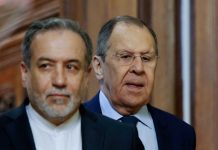
The foreign ministers of the so-called E3, along with the European Union’s foreign policy chief, held their first call with Iranian Foreign Minister Abbas Araqchi since Israel and the U.S. attacked Iranian nuclear facilities a month ago.
A French diplomatic source said the ministers had urged the Islamic Republic to resume diplomacy immediately to reach a “verifiable and lasting” deal, threatening to use the so-called ‘snapback’ mechanism if it failed to do so.
But in a post on X, Araqchi dismissed the threat, saying he had told the ministers: “It was US that left the negotiation table in June this year and chose a military option instead, not Iran …
“If EU/E3 want to have a role, they should act responsibly, and put aside the worn-out policies of threat and pressure, including the ‘snap-back’ for which they lack absolutely [any] moral and legal ground.”
He said talks would only be possible “when the other party is ready for a fair, balanced, and mutually beneficial nuclear deal”.
The three European countries, along with China and Russia, are the remaining parties to a 2015 deal – from which the U.S. withdrew in 2018 – that lifted sanctions on the Islamic Republic in return for restrictions on its nuclear program.
If the Islamic Republic is found to be in violation of the terms, the “snapback” can be used to restore U.N. sanctions before the U.N. Security Council resolution enshrining the deal expires on October 18. The process would take about 30 days.
“The ministers also reiterated their determination to use the so-called ‘snapback’ mechanism in the absence of concrete progress toward such an agreement by the end of the summer,” the French diplomatic source said, without specifying what this would entail.
Since the air strikes, inspectors from the U.N. nuclear watchdog, the IAEA, have left Iran. While Tehran has suggested it is open to diplomacy, there are no indications a sixth round of talks with Washington will resume soon.
Even if they do, diplomats say reaching a comprehensive accord before the end of August – the deadline the Europeans have given – seems unrealistic, especially without inspectors on the ground.
Two European diplomats said they hoped to coordinate strategy with Washington in the coming days with a view to restarting talks with the Islamic Republic.