By Navid Sahraei and Mahya Ostovar
(Navid Sahraei is an Iranian researcher and former student activist based in Italy. Mahya Ostovar is a woman’s rights activist and an assistant professor at the University of Galway in Ireland. The opinions expressed are their own.)
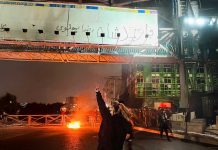
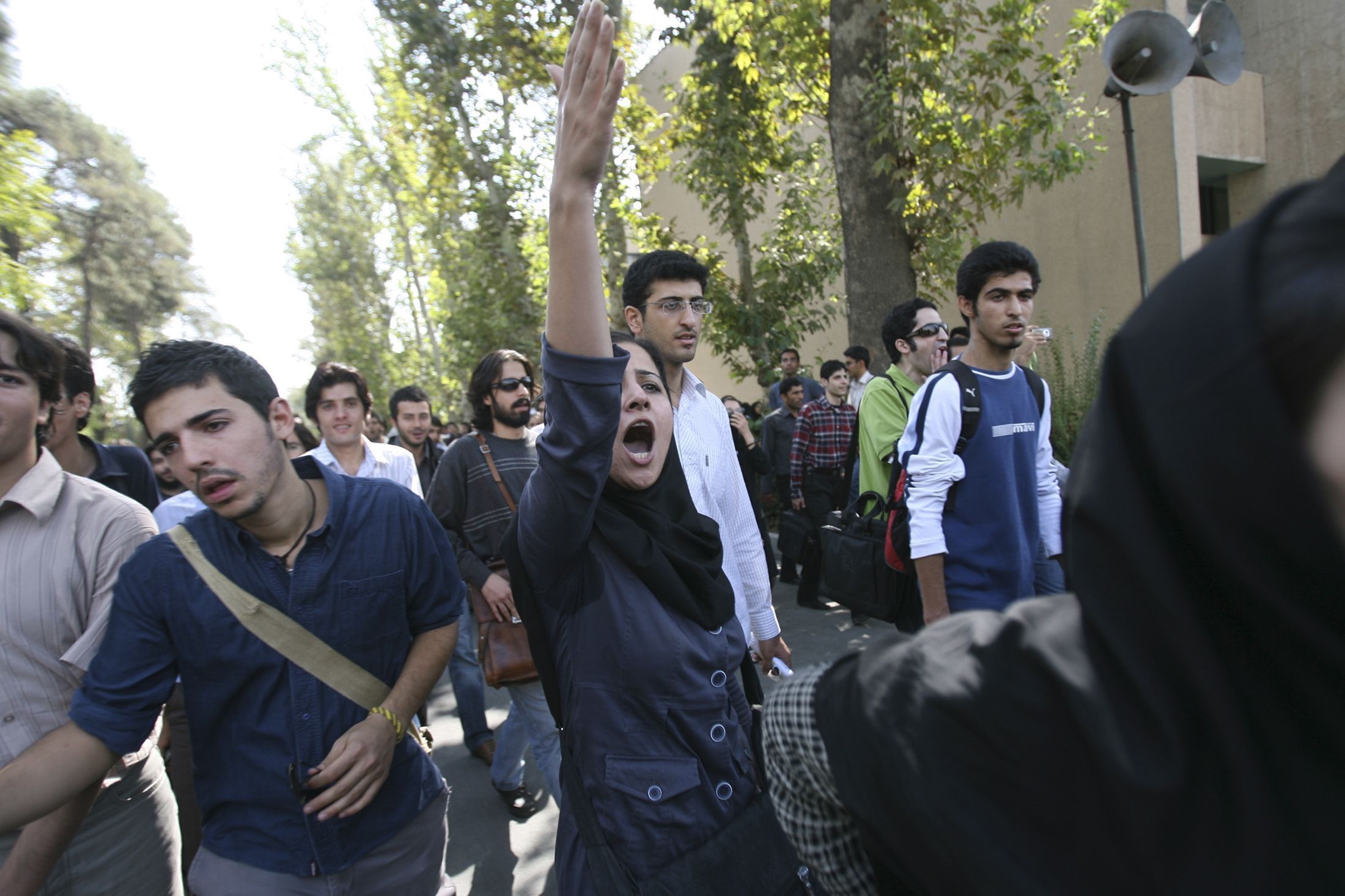
In recent weeks, Iranian universities have once again become political battlegrounds. The timing of these student mobilizations is significant. The re-emergence of protests on campuses has coincided with the reopening of universities following one of the most brutal waves of repression witnessed anywhere in the world in recent times.
Meanwhile, the commemoration ceremonies marking the 40th anniversary of the death of those killed – forms of collective mourning that often blend grief with acts of defiance, including dance and public displays of resilience – have continued to take place across the country.
Taken together, these developments point to a critical conclusion: the Islamic Republic’s long-standing strategy of instilling fear through violent repression has not achieved its intended effect. Rather than producing lasting deterrence, the scale and intensity of violence appear to have deepened collective resistance. Universities, in this context, function as a visible index of broader societal dynamics. What unfolds within their spaces reflects not only student sentiment, but the wider trajectory of a society in which fear no longer operates as an effective mechanism of control.
University Students Mount Fearless Protests in Iran, Voice Support for Reza Pahlavi
In the courtyards of Sharif University, Tehran University, Al Zahra University, and other campuses across the country, Basij members appear with the Islamic Republic’s flag, chanting “Haydar, Haydar,” attempting to reclaim ideological ground. Facing them are students who, after one of the bloodiest crackdowns in the country’s recent history, show no sign of retreat. The dominant slogan now heard across Iranian campuses is unmistakable: “Javid Shah.” Alongside it, “Woman, Life, Freedom” is still chanted, not as a rival slogan, but as part of the same political vocabulary.
This has surprised many observers, including, at times, members of pro-Pahlavi circles, as if visible support for Pahlavi in elite universities coupled with slogans such as “Woman Life Freedom” was somehow unexpected. The surprise reveals more about analytical blind spots than about the students themselves.
These are not newcomers to the streets of Iran. Many of the same young people who filled them three years ago under the banner of “Woman, Life, Freedom” are today raising pro-Pahlavi slogans and gathering under the lion-and-sun pre-revolutionary flag.
What has evolved is not the core demand — the rejection of the Islamic Republic in its entirety and the search for an alternative, a future for a free Iran — but the symbolic language through which that demand is articulated: the language through which a large, visible, and vocal segment of the opposition defines itself and its collective identity.
The symbolic reversals on campus reflect this broader shift. Students chant that Sharif is “Aryamehr” again and that Alzahra should be “Farah,” consciously undoing the post-1979 renamings and pointing to a historical reference outside the Islamic Republic’s ideological framework. These gestures are not merely nostalgic; they signal a refusal of the regime’s symbolic reference points.
The “Woman, Life, Freedom” uprising has not been immune to attempts at ideological narrowing. Certain far-left and ethnically oriented political currents have sought to frame it within their own interpretive boundaries, presenting it as a movement defined primarily by their language and priorities.
The rise and intensity of pro-Pahlavi slogans — not only on campuses but across the broader opposition landscape — can also be understood as a response to that narrowing. Universities are not diverging from society; they are echoing it. What is visible in campus courtyards mirrors a broader consolidation in which many regime-change supporters are defining themselves through shared symbols, increasingly under the lion-and-sun flag, to signal unity rather than fragmentation.
Collective identity in contemporary Iran is not organized along imported left–right ideological lines; it is organized around regime rejection and national reconstruction. While some far-left, far-right, and ideologically rigid groups attempt to fragment the movement into competing ownership claims, the lived reality on the ground has repeatedly shown something else: unity formed through shared rupture.
Three years ago, hundreds of thousands across the country took to the streets after the killing of a young Kurdish woman and chanted, in one voice, a slogan that originated in Kurdistan, transforming it into a national call – deeply inclusive and rooted in solidarity. Today, many of those same citizens define themselves by the lion-and-sun flag and chant pro-Pahlavi slogans. This is not a contradiction. It is the evolution of a national opposition seeking a unifying reference point beyond the Islamic Republic’s ideological frame.
A movement confident in its social base does not need to draw hard boundaries against energies that already converge toward the same political horizon. At times, the impulse to differentiate—for example, by appending “Man, Homeland, Prosperity” to “Woman, Life, Freedom”—has suggested a hesitation to fully embrace the fresh, progressive language that animated the uprising. Such additions may be intended to expand appeal, yet they can also risk alienating some of the very potential energy that already stands within the broader regime-change coalition.
The campuses and streets indicate something clearer: the young people chanting pro-Pahlavi slogans are often the same ones who carried out the 2022 uprising. They are, as Reza Pahlavi calls them in his recent address, adopting a supportive rather than paternalistic tone, his “student sons and daughters”, “the brave daughters and sons of Iran” fighting to reclaim their national collective identity and take their country back. Their politics are not rigidly ideological; they are lived, shaped by repression, courage, and the memory of massacre when multiple symbolic expressions move toward the same destination—the end of the Islamic Republic and the reconstruction of a free Iran—leadership is measured not by differentiation, but by the capacity to embrace that convergence and give it confidence.
That convergence itself is rooted in something deeper than tactical alignment. Beneath the evolving slogans and symbols lies a generational transformation in how politics is understood. The current generation of Iranian students does not engage with politics through rigid ideological frameworks inherited from the past. Their political consciousness is less shaped by abstract doctrines and more by lived experience, everyday realities, and the immediate conditions of life under the Islamic Republic.
For them, politics is not a distant arena of theoretical struggle but an extension of daily existence, an embodied experience, visible in questions of dignity, bodily autonomy, and the possibility of a livable future. It does not ask which doctrine holds the ultimate truth — because none does — even if some ideological actors, who are now shocked and unsettled by the slogans heard in universities, behave as though theirs does.
Instead, it asks which vision can meaningfully transform life as it is lived and felt. In this sense, political language itself is undergoing a shift: from heavy, totalizing narratives toward forms that are immediate, experiential, and grounded in lived and embodied realities.
As a result, attempts by any political current to impose narrow ideological ownership over a broad social movement are increasingly out of step with the realities on the ground. The students on Iran’s campuses are not moving within predefined ideological categories; they are navigating toward a future they perceive as viable, unifying, and life-affirming.
Recognizing this shift is not optional. For all political actors seeking relevance within Iran’s evolving opposition landscape, understanding the generational and embodied logic of this moment is essential. Without it, even the most organized or historically grounded movements risk speaking a language that this generation no longer hears.