By Nazanine Nouri
The Barbican Center, one of London’s leading cultural institutions, launched its annual festival of Iranian cinema after last year’s event ranked as one of its most successful film programs ever. The festival runs until Feb. 26.
“Masterpieces of the Iranian New Wave” [Cinema-ye Motafavet] opened on Feb. 4 with a screening of “Marjan” (1956) – the only surviving fragment of the first Iranian film ever directed and produced by a woman, Shahla Riahi, who also stars in the film.
It was followed by Bahram Beyzaie’s “The Ballad of Tara” [Cherike-ye Tara], the first of Beyzaie’s works to have a woman as protagonist. Beyzaie — who passed away in December at the age of 87 — completed “The Ballad of Tara” as the Iranian Revolution was under way. The film was immediately banned by the Islamic Republic for its vision of a much-desired woman who was master of her own fate. The Barbican will also present Beyzaie’s short “Journey” [Safar] (1972).
The evening was introduced by Ehsan Khoshbakht, who curated the Barbican’s Iranian cinema season for the second consecutive year.
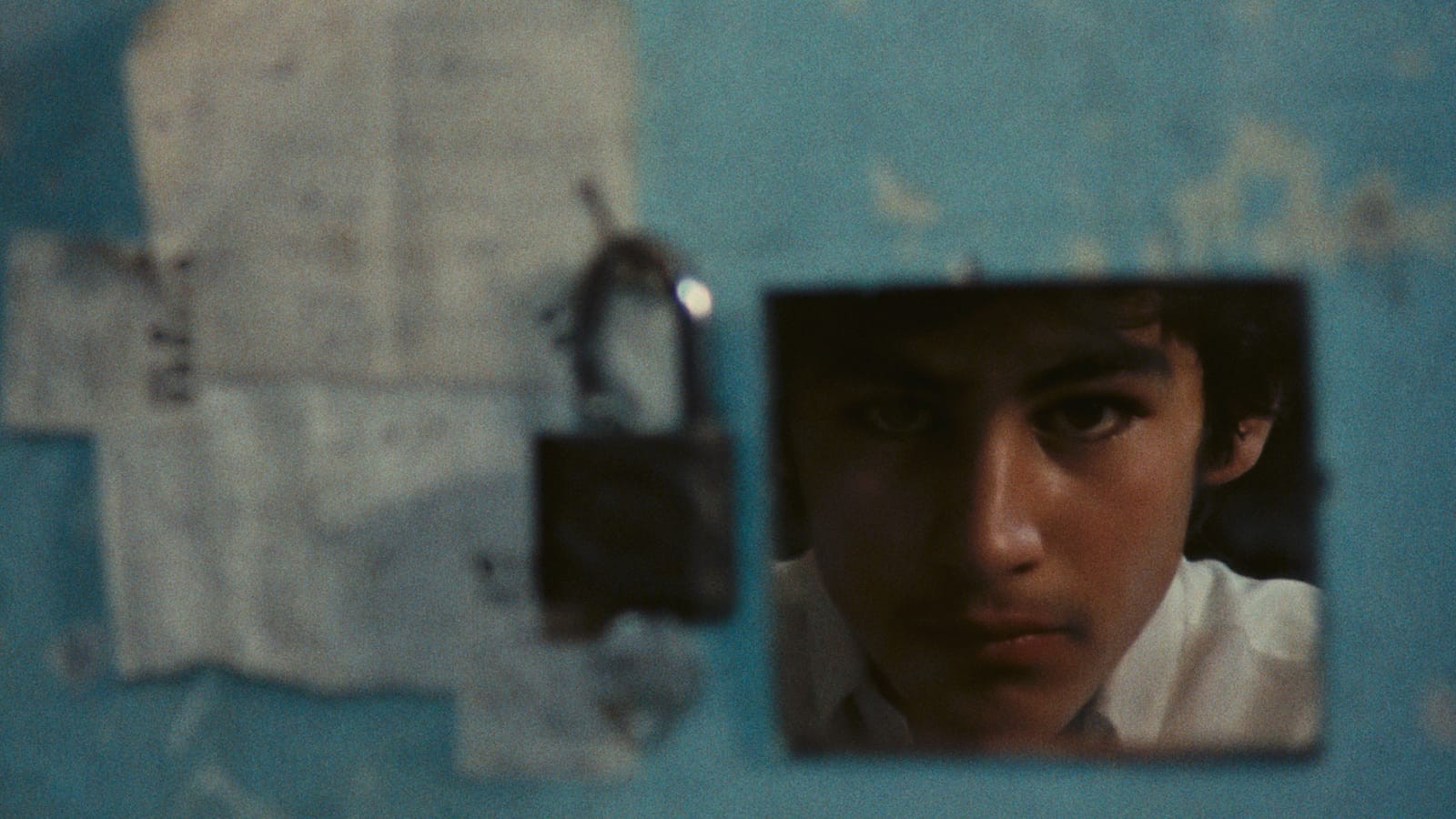
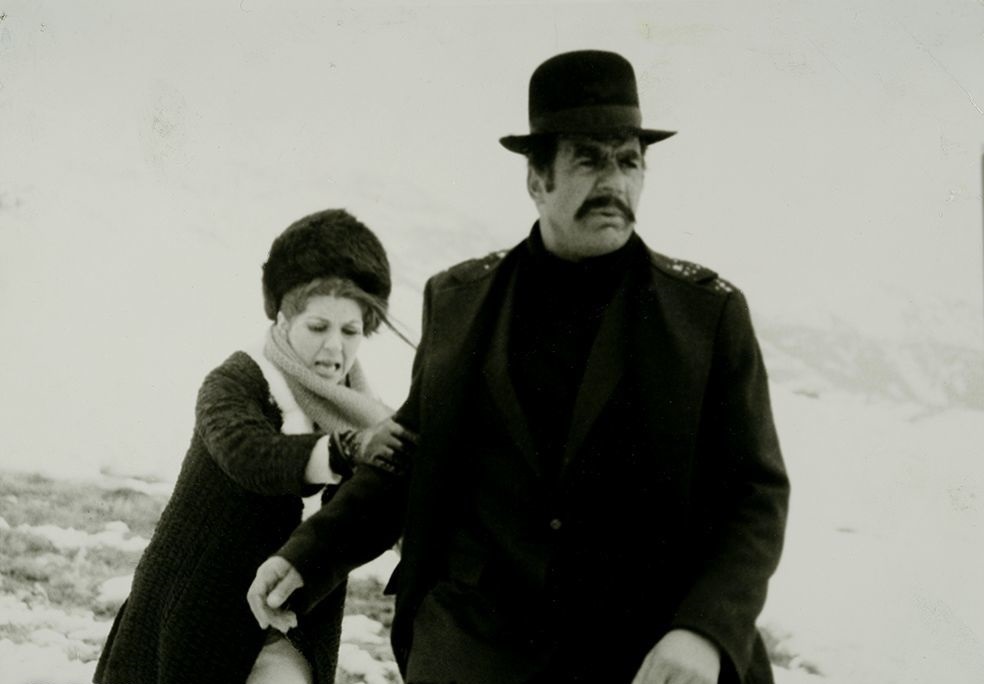
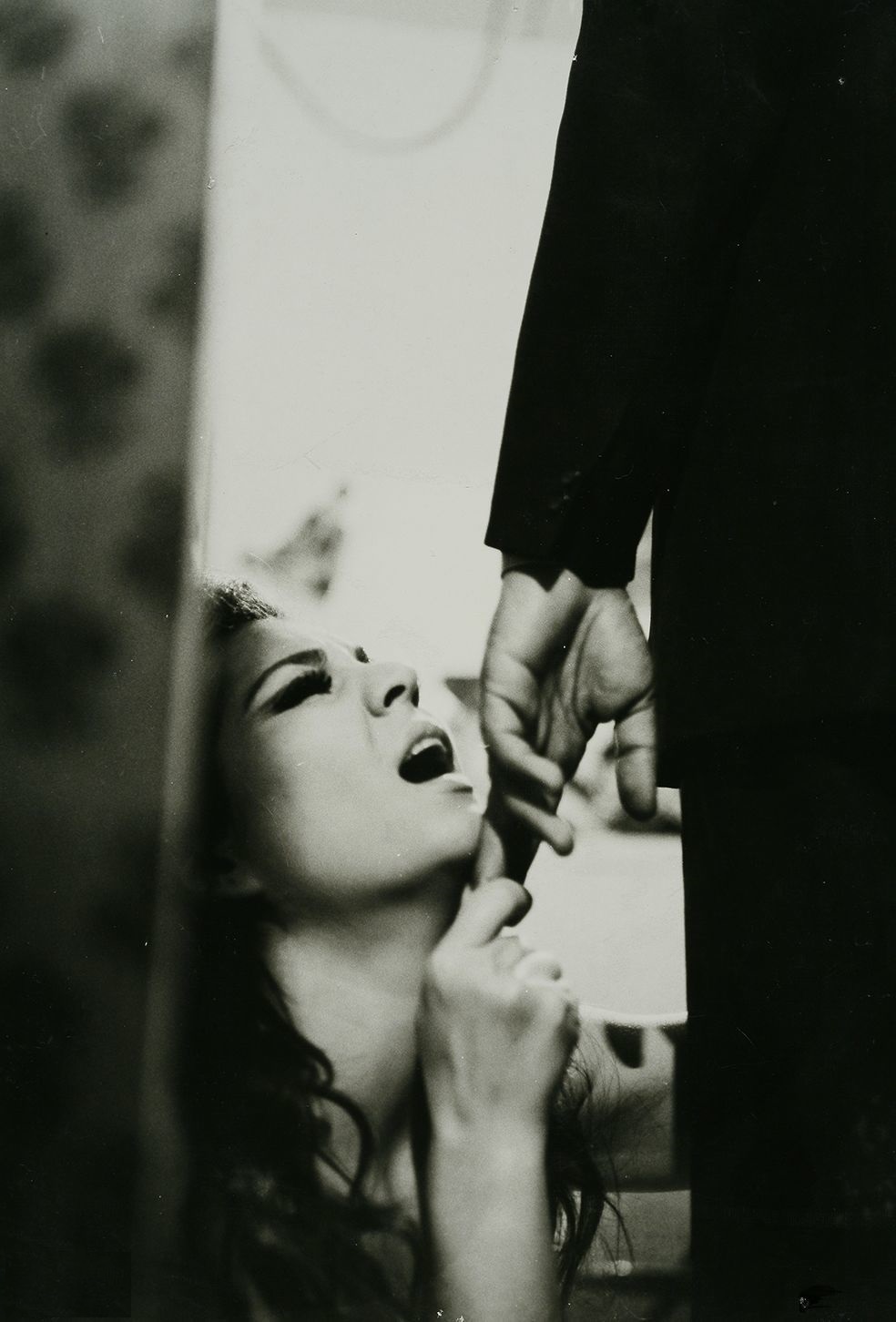
The Iranian New Wave — or Cinema-ye Motafavet — was a grassroots movement in Iranian documentary and fiction filmmaking which began as an artistic response to the rapid modernization of Iranian society in the 1960s and 70s. Produced by a small group of young, collaborative and mostly self-taught filmmakers, the films – which were set against the backdrop of the Shah’s reign – combined documentary realism with poetic allegory, and reflected the complex and often contradictory emotions toward modernization during that period.
“Some of the films in this program have taken more than half a century to be seen in the way they were intended to be seen – or, in some cases, to be seen at all,” said Ehsan Khoshbakht before the festival’s start. “The stylistic and political boldness of these films helps explain where contemporary Iranian directors draw their inspiration.”
There will be 11 films presented at the festival, including ones that have never before been screened in the UK.
The season will close with the world premiere of the newly restored “Secrets of the Jinn Valley Treasure” (1974), a political satire and the final cinematic work directed by Ebrahim Golestan, starring Parviz Sayyad and Mary Apick. This is a re-edited version which Golestan viewed as definitive and has never been publicly screened until now. The closing night will be presented in partnership with the Iran Heritage Foundation.
Two other earlier works by Ebrahim Golestan in collaboration with Forough Farrokhzad will also be screened during the season: “A Fire” [Yek Atash] (1961), edited by Farrokhzad; and “Courtship” (1961), in which Farrokhzad makes her sole screen appearance before her death in a car crash six years later.
The Barbican will also present:
- “The Postman” [Postchi] (1972) by Dariush Mehrjui, jointly restored by Martin Scorsese’s World Cinema Project and the Cineteca di Bologna;
- “A Suit for Wedding” [Lebassi Baraye Aroussi] (1976) by Abbas Kiarostami;
- “The Night It Rained” [An Shab ke Barun Amad] (1967) by Kamran Shirdel;
- “The Carriage Driver” [Doroshkechi] (1971) by and with Nosratollah Karimi;
- “Dancer of the City” [Raghase-ye Shahr] by Shapour Gharib, starring Forouzan and Nasser Malek Motie; and
- “The Deer” [Gavaznha] (1974) by Masoud Kimiai, starring Behrouz Vosoughi. (This film was banned for two years after premiering at the Tehran International Film Festival in 1974 and allowed back with a new ending. Both endings will be screened at the Barbican.)
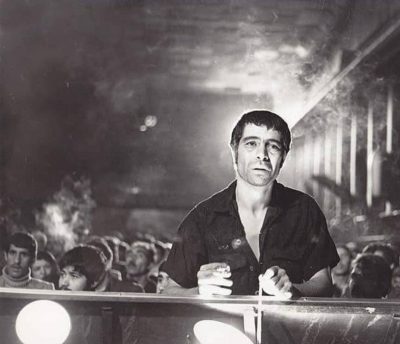
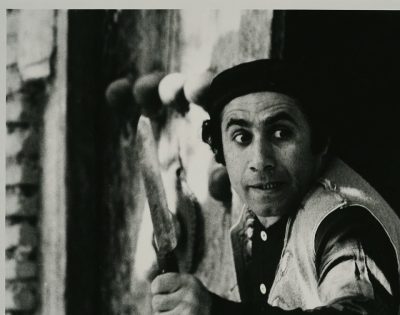


The following are biographies of filmmakers featured in the Barbican season:
Shahla Riahi (1927-2019) was an actress and film director, born in Tehran who started stage acting in 1944 when she was only 17 before appearing in cinema for the first time in “Golden Dreams.” In 1956, she became the first Iranian woman to direct a feature, with “Marjan” – a 110-minute, 35mm, black-and-white drama about a gypsy girl named Marjan who settles near a village and falls in love with a school teacher, after her father is locked up in the school for having stolen their lamb.
Riahi featured in more than 72 films throughout her career, including in such films as “The Carriage Driver” [Doroshkechi] (1971); and “Beggars of Tehran” [Gedayan Tehran] (1967). She was married to the film director and writer Esmaeil Riyahi.
Bahram Beyzaie (1938-2025) was one of the leading figures of the Iranian New Wave movement. He helped revitalize Iran’s performing arts by incorporating Indo-Iranian mythology and traditional Iranian performing arts with modern theater and cinema. He headed the University of Tehran’s Theater Arts Department for many years. His book “Theater in Iran” [Namayesh dar Iran] (1965) is considered an authoritative history of Iranian stage performance. He left Iran in 2010 at the invitation of Stanford University, and became the Bita Daryabari Lecturer of Persian Studies, in particular Iranian theater and cinema.
Ebrahim Golestan (1922-2023) was one of the leading intellectuals and writers of 20th-century Iran and one of the pioneers of modern Iranian cinema. He established his own Golestan Studios, which became the most sophisticated center for filmmaking in Iran in 1959. A champion runner in his youth, he initially combined filmmaking with a highly successful career as a journalist (he was also an accomplished translator) and as a professional photographer, capturing some of the most lasting images of Iran in the 1950s, when Mohammad Mossadegh was Prime Minister.
In 1954, when a consortium of Western oil companies took over the Iranian oil industry, he was put in charge of making documentaries. After severing his ties with the consortium in 1959, he negotiated the purchase of the film equipment, and established Golestan Studios, supplying film clips and photographs to the Western media.
In 1958, Golestan began an intense love affair with the feminist poet Forugh Farrokhzad – the most celebrated love affair in all of modern Persian literature (he was married, she was divorced). The affair lasted until her death in a car accident in 1967. He produced her documentary “The House is Black” – now recognized as an important film of the Iranian new wave, and one of the nine titles being screened at the Barbican.
After her death, Golestan took up exile in the West Sussex village of Bolney in Britain, left his wife and two children in Iran, sold his film studio and made Britain his permanent home until his death at the age of 100. His daughter Lili became a translator and is the owner and artistic director of the Golestan Gallery in Tehran. His son Kaveh became a renowned photojournalist, and was tragically killed by a land mine while on assignment in Iraq with the BBC in 2003.
Dariush Mehrjui (1939-2023) was a prominent Iranian filmmaker, producer and screenwriter and a founding member of the Iranian New Wave movement. His film, “The Cow” [Gaav] (1969) was one of the movement’s first pictures.
Mehrjui graduated in philosophy from UCLA in 1964. “The Cow” [Gaav] (1969) was his second feature film, a drama starring the renowned Ezzatolah Entezami and adapted from a short story by the prolific Iranian writer, Gholamhossein Sa’edi, about an old villager’s love for his cow and his anguish after its death. The film brought Mehrjui national and international recognition, winning him the International Critics Award at the Venice Film Festival in 1971, while Entezami won Best Actor at the Chicago International Film Festival.
Mehrjui’s “The Postman” [Postchi] (1970), featured at the Barbican, stars Ali Nassirian, Ezzatolah Entezami and Jaleh Sam, and won the 1972 Interfilm award at the Berlin International Film Festival.
Mehrjui would be most acclaimed for “The Cycle” [Dayereh Mina] (1977), a film he began directing in 1973 which would be banned for three years before being released in 1977. Exploring the illicit blood traffic in Iran, the film starred Saeed Kangarani, a teenager from a poor neighborhood in the outskirts of Tehran who had brought his father for medical treatment and was entangled in the illegal blood trafficking business. The film would go on to win the 1978 FIPRESCI Prize and the OCIC Award at the Berlin International Film Festival.
Mehrjui moved to Paris in 1980 where he worked on “Journey to the Land of Rimbaud,” a documentary about the French poet Arthur Rimbaud. Upon returning to Iran in 1985, he resumed his film career under the Islamic regime, directing “Hamoun” (1990) as well as a number of movies depicting the lives of women throughout the 1990s, including “Sara,” “Pari,” and “Leila.”
Mehrjui and his wife, Vahideh Mohammadifar, a screenwriter and costume designer were found stabbed to death in their home in the city of Karaj, near Tehran in 2023. The killer who was arrested and sentenced to death days after the attack, was a former employee with a grudge against Mehrjui for financial reasons.
Kamran Shirdel (1939) is an Iranian filmmaker and documentarist – the father figure of Iran’s NEW cinema and documentary school of filming, who paved the way for documentaries that were an accurate reflection of the reality of Iranian society. Many of Iran’s renowned cineastes worked directly with him during their formative years.
Shirdel studied architecture, urbanism, and design at the University of Rome, and film direction at the Centro Sperimentale di Cinematografia in the early 1960s. During that time, he worked as an assistant on John Huston’s “The Bible,” which was then shooting at the Cinecittà studios in Rome.
Shirdel returned to Tehran in 1965 and began directing documentaries for the Ministry of Culture and Art. He would direct his most renowned socio-political documentaries over the next three years, before being expelled from the Ministry. Revealing the darker side of the economic boom on Iranian society, his films spoke up for the underprivileged and were banned for exposing and criticizing the corruption in Iran. They included: “Women’s Prison” [Nedamatgah] (1965); “The Women’s Quarter” [Qaleh] (1966); “Tehran is the Capital of Iran [Tehran Paitakhte Iran Ast] (1966); and “The Night it Rained” (1967).”
“The Night it Rained” [An Shab ke Barun Amad], undoubtedly Shirdel’s best documentary film, and a masterpiece in the history of documentary filmmaking explores what happened on a rainy night when a young boy allegedly saved a train from crashing. The film was banned and confiscated after completion, released in 1974 to participate and won the Grand Prix at the Tehran International Film Festival, only to be banned again until after the revolution.
Shirdel’s later works include his first feature film, “The Morning of the Fourth Day” [Sobh-e Rooz-e Chaharom] (1972); as well as such documentary films as “Gas, Fire, Wind” [Gaz, Atash, Baad] (1986); “Genaveh Project” [Tarh-e Genaveh] (1988); and “Tanhaee-ye avval” (2002).
Shirdel is the founder and director of the KISH International Documentary Film Festival (KIDFF), which is held annually in January on the island of Kish in the Persian Gulf. He is also the managing director of Filmgrafic Co. He was appointed as Il Cavaliere Della Repubblica Italiana and received the medals of La Stella Della Solidarietà Italiana in a ceremony held in Farmanieh Palace in Tehran in 2010.
Nosratollah Karimi (1924-2019) was an Iranian director, writer, actor and the father of animation, stop-motion and puppet film in Iran. Despite a prolific career in theater and film that spanned six decades, Karimi is primarily known for his role as Agha Jan, in the popular 1976 TV series, “My Uncle Napoleon” [Daei Jan Napoleon].
He began his career as make-up artist, stage designer and actor in Tehran, before studying film direction and TV production at FAMU in Prague, specializing in puppet and animation movies. Returning to Iran, he was engaged in 1965 by the Ministry of Culture and Art to run a state workshop for animated cartoons. Some of his best-known works include “Life” [Zendegi]; “King Jamshid”[Malek Jamshid] – a fairy tale from Ferdowsi’s “Shahnameh” [Book of Kings]; “Mouse Heart” [Del-e Moosh]; and “Leopard Skin” [Poost-e Palang]; “Hunting for the Moon” [Adam Shakh Dar Miyareh].
In 1972, Karimi introduced puppetry as a major at Tehran University and invited the Czech puppeteer Oscar Batek to launch the program. In 1987, he created “The Uninvited Visitor” [Mehman-e Nakhandeh] puppet play and in 1996 produced the puppet television series “Unruly” [Vorujak].
Karimi later transitioned to feature filmmaking, directing and acting in some of the finest examples of classic popular comedies such as “The Carriage Driver” [Doroshkechi] (1971) screened at the Barbican; “The Interim Husband” [Mohallel] (1971); “The Triple Bed” [Takhtekhab-e se nafare] (1972); and “The Ruined House” [Khane-Kharab] (1975).
Following the 1979 Islamic Revolution, Karimi was banned from working in cinema, due to his criticism of Islamic marriage laws and the role of women in Iranian society in “The Interim Husbands.” He devoted the rest of his life to teaching theater, puppetry, makeup and animation.
Shapour Gharib (1932-2012) was a renowned Iranian playwright, screenwriter and filmmaker. His debut feature film, “The Daughter of the King of Fairies” [Dokhtar-e Shah-e Parian] (1968), won him praise in Iran. His body of work also includes: “Dancer of the City” [Raghaseye Shahr] (1970); “American Mamal” [Mamal Amricayi] (1975); “The Iconoclast” [Botshekan] (1976); “Eastern Man, Western Woman” [Mard-e Sharghi, Zan-e Farangi] (1976); and “Summer Vacation” [Se Mah Tatili] (1977).
Masoud Kimiai (1941) is a filmmaker, screenwriter and producer who never received any formal academic training in filmmaking. Passionate about cinema, he spent hours outside Tehran’s movie theaters listening to the films’ sound tracks on the loudspeakers fixed outside the cinema, trying to visualize the action. After frequent visits to film studios in search of a job, he met director Samuel Khachikian, learned the techniques of filmmaking, and began his career as assistant director to Khachikian. He made his debut in 1968 with “Come Stranger” and became well known after directing his second film “Gheisar” (1969), which together with Mehrjui’s “The Cow,” propelled the Iranian New Wave movement.
Other feature films directed by Kimiai that followed include: “Reza, The Motorcyclist” [Reza Motori] (1970); “Dash Akol” (1971) written with Sadegh Hedayat; “The Deer”[Gavaznha] (1974); “The Soil” [Khak] (1973); and “Snake’s Fang” [Dandan-e Mar] (1990) for which he received the Special Mention award at the Berlin International Film Festival in 1991.
In 2024, his latest film, “Killing a Traitor” [Khaen-koshi] (2022) received six nominations and won three awards, including the Jury Award at the Hafez Ceremony for Kimiai himself.
He was married to the superstar singer Googoosh between 1995 and 2003.