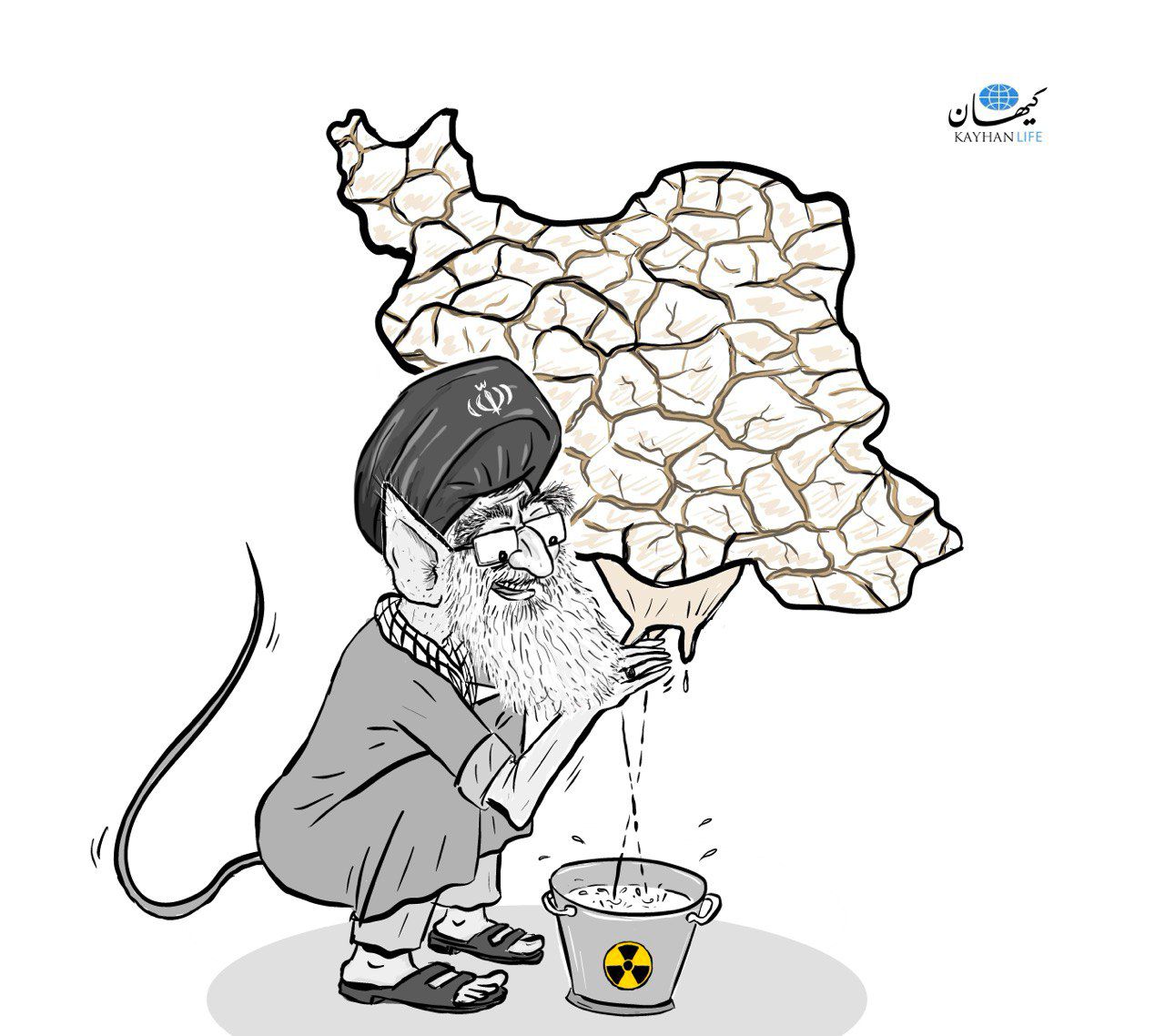
Artist: Behnam Mohammadi
By: Kayhan Life Staff
Iran is entering its fifth consecutive year of severe water shortages, with more than 40 cities — including the capital, Tehran — now experiencing regular rationing and prolonged disruptions in supply.
In Tehran, residents in central districts reported outages lasting two to four hours a day. But in the southern parts of the capital, where many lower-income Iranians live, cuts have reached up to 12 hours daily and, in some areas, have continued for consecutive days. Over the past week, water outages in some marginalized neighborhoods have extended to 72 hours without relief.
The crisis is the product of long-standing policy failures. Four decades of mismanagement, outdated infrastructure, and a lack of meaningful reform in Iran’s water governance. Nearly one-third of the country’s water supply is lost in transit, due largely to deteriorating pipelines and leaky distribution networks.
Further compounding the crisis are decisions by the government to authorize large industrial developments in some of Iran’s most water-scarce provinces. In several cases, water has been diverted from agricultural regions to support these facilities, leaving farming communities increasingly vulnerable.
As the Islamic Republic continues to prioritize defense and nuclear development and state funding remains directed toward missile testing and uranium enrichment, Iran’s infrastructure crumbles and its land grows drier.