Kayhan Life Staff
Prominent Iranian athletes and actors are being caught up in the crackdown against the deadly wave of protests across the country. The Tehran Prosecutor’s Office announced on Jan. 20 that criminal cases had been opened against dozens of public figures and businesses accused of supporting the protests.
In a statement carried by the semi-official Tasnim News Agency, officials said 15 well-known sports and film-industry figures, 10 signatories of a House of Cinema statement, and 60 commercial establishments were now under investigation for allegedly backing the unrest. Authorities did not release the names of those targeted.
EXCLUSIVE: Six Protesters Speak Out After Deadly Crackdown in Iran
Tasnim, a news agency closely aligned with Iran’s Islamic Revolutionary Guard Corps (IRGC), reported that authorities described the individuals concerned as having played an “inciting role” in the unrest and in what officials labeled “terrorist” acts. The agency added that assets belonging to several of the accused had been seized as part of the newly opened investigations.
Prosecutors also said that preliminary judicial reviews led judges to conclude that some defendants endorsed calls for demonstrations in ways that, in the event of condition, could make them financially liable for damage to private and public property. According to the statement, that assessment is under active consideration.
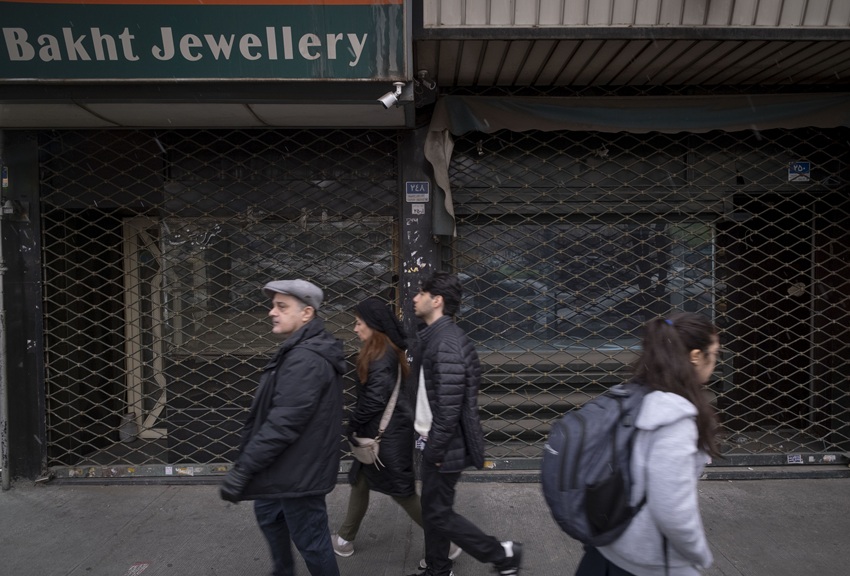
Tasnim added that the move followed directives from Gholamhossein Mohseni Ejei, the head of Iran’s judiciary, who urged courts to pursue both “direct and indirect” supporters of the recent unrest. It said cases were opened against 15 athletes and actors, 10 House of Cinema signatories, and 60 businesses — many of them cafés.
In recent days, local media reported the sealing of the café owned by Voria Ghafouri, a former captain of Esteghlal, one of Tehran’s major soccer clubs, as well as the arrest of Mohammad Saeedi-Nia, a restaurateur whose properties were also seized. Both actions were said to be linked to their support for a call by Reza Pahlavi — the exiled opposition leader and son of Iran’s last monarch — urging citizens to protest in the streets on Jan. 8 and Jan. 9.
Fars News Agency, which is affiliated with the IRGC, reported that authorities intended to finance “reconstruction of recent damages” using assets of individuals it accused of participating in or encouraging “terrorist attacks.” The agency cited unnamed sources claiming that the value of Saeedi-Nia’s seized property “nearly matched” the material damage caused in Tehran.
“One Murder Every 14 Seconds”: Pahlavi Urges World to Confront Mass Atrocities in Iran
UN Rights Council to Hold Emergency Session on Iran, Document Shows
Ejei, speaking on Jan. 19 at a meeting of the Supreme Judicial Council, referred to the latest protest wave as part of what he called the continuing efforts of a “wounded enemy” and said the judiciary “must remain vigilant.”
He also reiterated his call for swift trials of those detained during the protests, saying that courts would not allow “the slightest delay” and arguing that timely punishments were necessary for deterrence.
The government’s latest actions appeared to reflect a shift from street-level repression toward judicial measures targeting protesters and citizens who offered any form of support. The crackdown followed months of unrest that erupted across Iran, during which rights groups reported thousands of deaths and injuries.
Iran International, a London-based Persian-language broadcaster, reported that Iran’s Intelligence Ministry and the intelligence arm of the IRGC issued warnings to journalists inside the country that any reporting on the recent events could lead to arrest and heavy sentences. According to those accounts, several journalists faced threats such as “Do not do anything that you will regret later or that will leave your family in mourning.”