By Katayoun Shahandeh
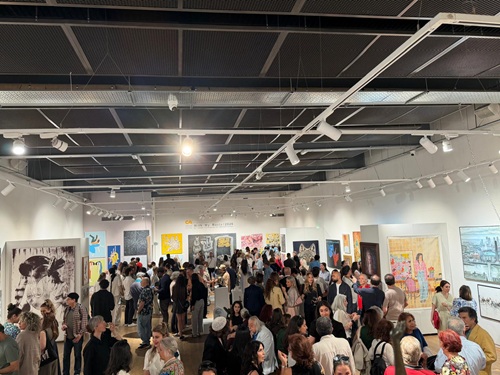
Upwards of 100 artists of Iranian descent from more than a dozen countries recently showcased their talents at London’s 6th Iranian Contemporary Art Biennale inside the city’s Mall Galleries. At a time when the country is viewed as a place of crisis and conflict, the biennale presented an altogether different face of Iran.
This year’s event, titled “With My Roots” — held at the Mall Galleries from May 22 to 30 — presented more than 180 works spanning painting, photography, sculpture, installation and video art. Bringing together artists from Iran, the UK and fourteen countries across Europe, North America and the Middle East, the biennale spanned painting, photography, digital art, installation and video — presenting multiple generations, artistic languages and relationships, and refusing simplification.
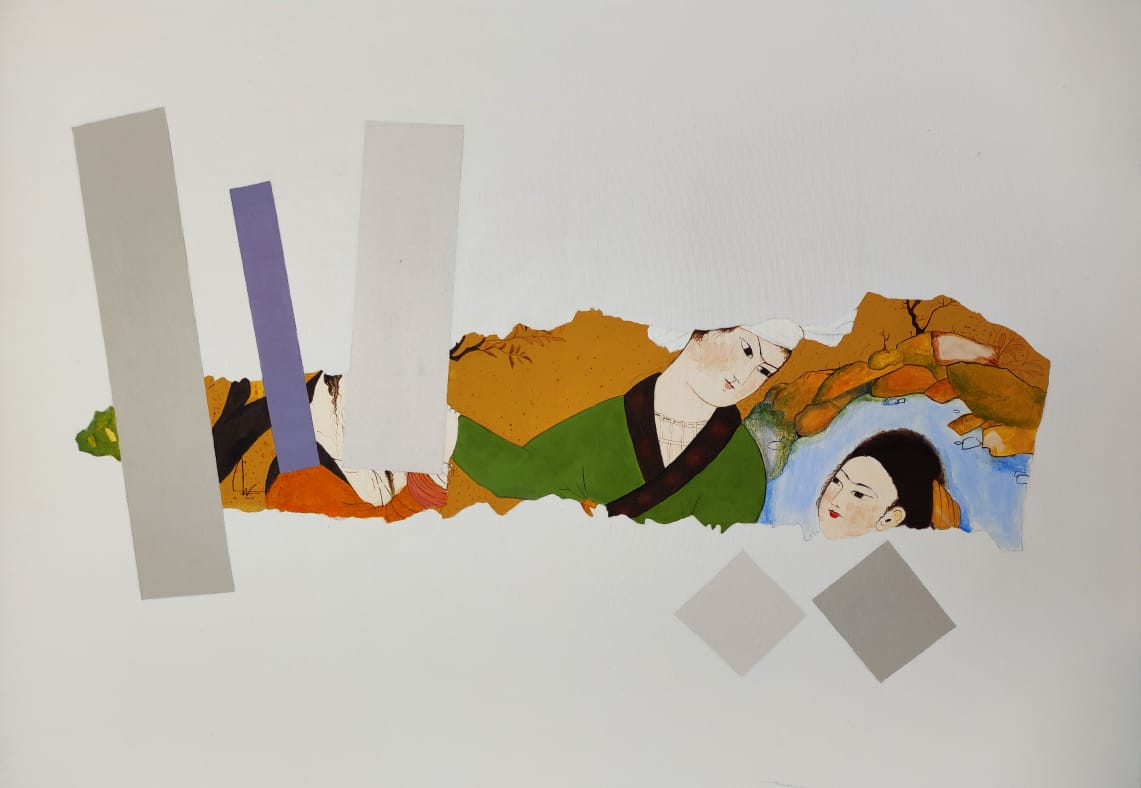



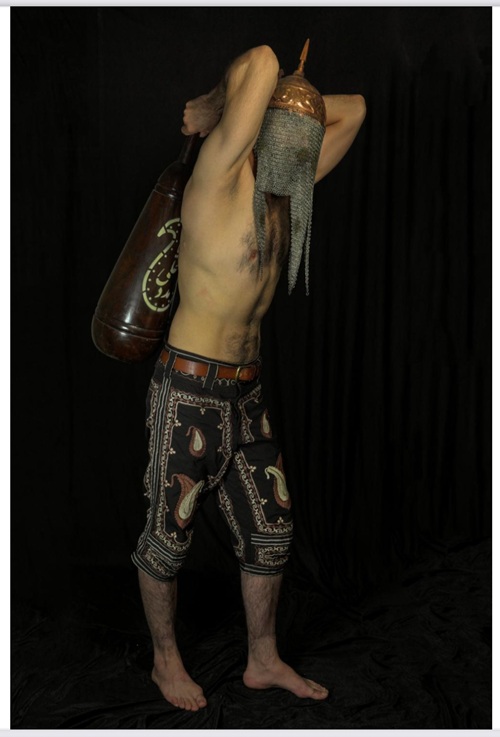
It also placed established figures such as Simin Keramati and Armin Amirian in dialogue with artists still seeking international visibility. This gave the exhibition historical depth while opening space for practices that may not otherwise reach global audiences. It also demonstrated that Iranian art was sustained not by state structures, but by artists, curators and communities determined to keep cultural exchange alive even as ordinary channels are closing.
The biennale was Founded in 2016 by curator Marina Panahi through Capital Art London. Panahi described the event as an opportunity to move “outside the language of politics and conflict” and encounter the voices of Iranian artists directly. At a time when Iran is so often reduced to headlines of violence, sanctions and confrontation, viewers were invited to look more slowly, and more carefully.
Since its first edition, the biennale has also evolved into a rare meeting point between artists working inside Iran and those across the diaspora. These communities may be separated by borders, sanctions, censorship and exile, yet they remain tied through language, memory and shared cultural inheritance.
For artists inside Iran, censorship, economic pressure and restricted mobility shape the conditions of daily practice. For those outside the country, distance can become both a wound and a source of creative possibility. Their work often carries the pull of elsewhere: the ache of separation, the instability of belonging between places, the effort of translating one world into another. The biennale allows these experiences to exist alongside one another without forcing them into a single narrative.
Because the works are also for sale, the biennale offers artists something increasingly precious: the possibility of sustaining a practice under conditions that make producing, transporting and selling art profoundly difficult. For many Iranian artists, a sale is not simply symbolic recognition. It can mean continuing to work, buying materials, supporting families and remaining connected to a wider artistic world.
This year, those pressures were even more visible. War, internet blackouts, disrupted phone lines, suspended flights and mounting economic strain made even the movement of artworks from Iran to London extraordinarily difficult. Works that might once have travelled through ordinary shipping routes moved instead through improvised and fragile channels. The works on display were not simply objects: They were evidence of endurance.
Still, even an exhibition of this scale can only offer a partial view. For every work that arrives in London, many others remain unseen, held back by bureaucracy, fear, financial hardship or the simple impossibility of getting work out of Iran at all.
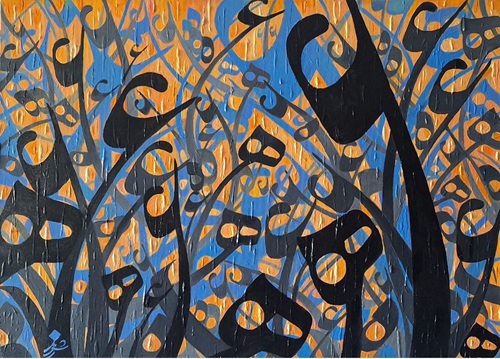
The biennale’s two central curatorial strands, Eternal Iran and Art of Conflict, crystallised these tensions. Eternal Iran examined cultural legacy and memory, exploring how Iranian identity continues to endure and evolve across generations and geographies. Tradition here was not treated as static heritage, but as something living and in flux. Calligraphy, poetry, myth and visual symbolism were stretched, fractured and reassembled through contemporary forms.
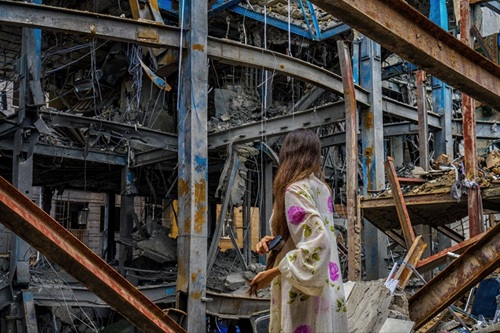
By contrast, Art of Conflict directly confronted the violence of the present. It included paintings, photographs and prints by 19 artists currently living in Iran and experiencing recent violence and war first-hand. Photographs by Majid Saeedi, Alireza Memariani and Shahla Khodadadi sat alongside battlefield photography by Maryam Saeidipour and Maryam Rahmanian. These were not distant reflections on crisis: They were works produced in proximity to instability, grief and fear.
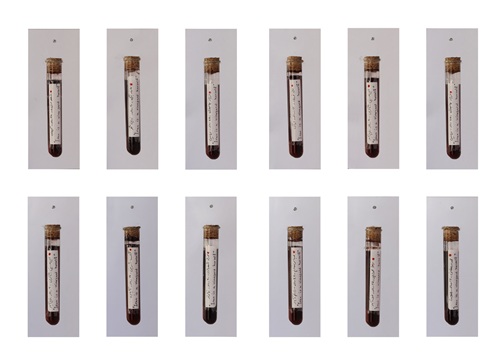
The tension between Eternal Iran and Art of Conflict — the deep memories and histories of Iranian civilization, versus the rupture and uncertainties of the present day — were also very much in evidence in Homa Bazrafshan’s Iran is a Vineyard Herself. The work evokes fertility and mourning at once. Vials of red liquid, visually suggestive of blood, create a memorial language without reducing the installation to a single political statement. The vineyard, traditionally associated with cultivation and abundance, becomes a field of grief as well as endurance. Beauty and violence, life and loss, homeland and mourning coexist within the same fragile structure.