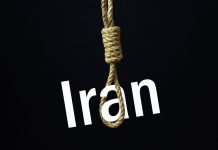
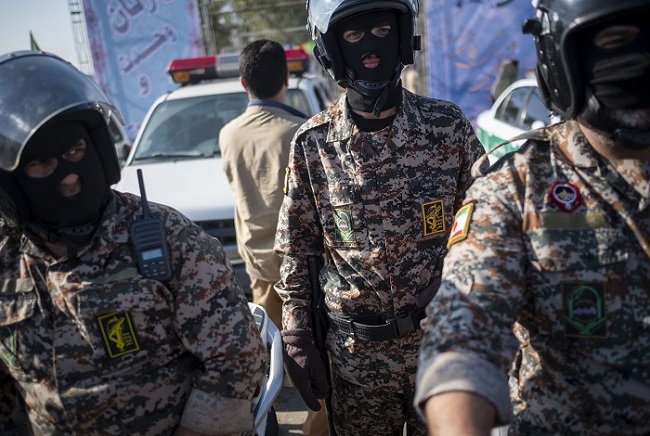
The Islamic Republic of Iran has increased its use of the death penalty to crack down on civil unrest following the 12-day war with Israel, according to a July 16 report by the Norway-based organization Center for Human Rights in Iran (CHRI).
The Islamic Republic is the world’s most prolific executioner of children, women and men, and has been condemned in recent years by the United Nations and international rights watchdogs for its use of the death penalty to suppress political dissent and anti-government protests.
Israel launched the military offensive – named ‘Operation Rising Lion’ – against the Islamic Republic in mid-June after the regime refused to stop its nuclear program. The missile attack struck nuclear facilities, military bases and intelligence units in Iran. Several regime officials were killed during the operation.
“The Iranian government is rapidly increasing its use of the death penalty as a political weapon to crush dissent, terrorize restive ethnic minorities, and tighten its grip on power following its recent conflict with Israel,” CHRI said. “These are not trials. They are state-orchestrated performances meant to deliver death and instill fear.”
“We are witnessing a coordinated state campaign to terrorize Kurdish and Arab communities,” Bahar Ghandehari, CHRI’s director of advocacy said in the report. “They now find themselves singled out as scapegoats by a regime desperate to reassert control after the massive Woman, Life, Freedom protests of 2022 and its military confrontation with Israel in 2025.”
Former Islamic Republic Loyalist Mehdi Nasiri Calls for Regime’s Collapse
Behnam Ben Taleblu, a senior fellow at Washington-based think tank the Foundation for Defence of Democracies told Kayhan Life in an interview that the Islamic Republic had a longstanding policy of cracking down on its citizens during politically turbulent periods.
“An Islamist authoritarian regime is visiting terror on its own population against threats more perceived than real, and trying to project strength at home after failing to do so abroad,” Taleblu said. “Naturally this is harming and will continue to harm those who already live or are defined as ‘others’ in the regime’s parlance, be they ethnic-sectarian groups or just Iranians with different political views.”
“Regimes that do not bend ultimately end up breaking. But the unknown time-horizon before breaking and the strength they can show en route to breaking can be terrifying,” Taleblu added. “The regime is weaker and more exposed than before the 12-day war. But there is a difference between weakness and lethality, especially when that lethality is deployed against an unarmed populace.”
A surge in executions followed the nationwide protests in 2022, which were sparked by the death of 22-year-old Mahsa Amini. Amini was arrested for failing to wear her hijab according the law, and died of injuries she sustained while in police custody. The protests prompted the Woman, Life, Freedom gender equality movement. More than 1,425 people were executed in Iran in the two years following the protests – almost twice as many executions compared to the two years prior to the demonstrations – according to the Oslo-based Iran Human Rights organization (IHRNGO).
Courts in Iran have handed down death sentences in recent weeks for five Kurdish Woman, Life, Freedom protesters, three Arab political prisoners and at least four other men since July 6, according to CHRI. The trials for the men relied almost completely on forced confessions obtained under torture with no credible evidence produced at the hearings, according to the human rights organization.
The regime also arrested more than 700 individuals in Iran accused of being spies for Israel following the war. The arrests were made after Israel’s intelligence agency Mossad confirmed it had been operating inside Tehran for several months before the attack. At least six people have been executed on charges of espionage for Israel, according to a July 22 report by the UK House of Commons library.
Some experts believe the Iran-Israel war has left the regime vulnerable to being overthrown.
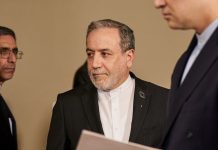
“I think they’ve got less and less options available to them in the international community: the Foreign Minister [Abbas Araghchi] looks like he’s kind of isolated,” Peter Jennings, the executive director of the Canberra-based think tank the Australian Strategic Policy Institute told Sky News. “His regime back home looks like it’s on its last legs.”
“What remains to be seen is whether or not the Iranian people really are as foursquare behind the regime as he claims. I’m not sure that they are,” Jennings added. “A key thing to watch for in the next few days is do we see people on the streets in Tehran? Because that may well be a signal of the end of the regime.”
Several senior officials briefed on internal security matters said the authorities were focused on the possibility of civil unrest in Iran, particularly in Kurdish areas, according to a June 25 report by the Guardian newspaper. The Islamic Republic’s Revolutionary Guard and its Basij paramilitary units were put on alert and told that internal security was now a government priority, the article said.
“It is too soon to say what impact the exposed vulnerability will have in the medium term,” Taleblu told Kayhan Life. “But the next round of protests given all the shortages present in Iran post-strike as well as the pre-existing political problems means the next round of protests are a matter of when and not if.”
Another report published on June 23 by Reuters that said senior clerics in Iran were putting plans in place for a successor to the regime’s Supreme Leader Ayatollah Ali Khamenei, suggesting that the Islamic Republic was under strain.
“The Islamic Republic of Iran is now running one of the world’s most aggressive execution campaigns targeting peaceful protesters, political dissidents, and minority communities, under the pretense of national security,” CHRI said. “These death sentences, based on torture, fabricated charges, and ethnic profiling, amount to state-sponsored murder. The international community should not remain silent as the Iranian government escalates this war on its own citizens.”
CHRI demanded that the UN and governments around the world condemn the death sentences and demand a halt to all executions in Iran, in its report. The center also called for an independent inquiry into allegations of torture and trial violations, and the imposition of sanctions on Iranian judges, intelligence officials, and others involved in such violations.