By Kayhan Life Staff
A group of Iranian human rights organizations, civil society groups, doctors, and legal experts is urging the world’s chemical weapons watchdog to investigate the Islamic Republic’s suspected use of chemical agents against civilians during Iran’s nationwide uprising in January.
In a letter dated Feb. 4 — sent to member states of the Organization for the Prohibition of Chemical Weapons, its director-general’s office, and the group’s permanent delegations to the United Nations — the signatories called for fast, coordinated action and an independent investigation into the suspected use of chemical weapons.
EXCLUSIVE: Isfahan Residents Describe the Deadly Crackdown on Protesters
Shirin Ebadi, the Iranian Nobel Peace Prize winner and human rights lawyer, signed the letter along with many Iranian and international lawyers, doctors, and advocacy groups.
The signatories referred to a “stark precedent”: the mass poisoning of schoolgirls across Iran in 2022. The letter said this event was never independently investigated and had become an example of the state’s denial and cover-up.
Between November 2022 and March 2023, more than 7,000 schoolgirls were poisoned at more than 100 schools in at least 28 of Iran’s 31 provinces, according to human rights groups. Hundreds were hospitalized with symptoms such as shortness of breath, numbness, heart palpitations, headaches, nausea, and vomiting. The outbreak, first reported in Qom, led to a new wave of street protests and drew international concern.
The signatories said similar patterns had been observed in the recent wave of unrest.
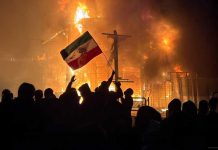
The uprising began on Dec. 28, 2025, when shopkeepers and bazaars in several Iranian cities refused to open for business. The protest quickly spread to all 31 provinces. The regime shut down the internet and started a deadly crackdown. Many areas remain under heavy security, and arrests are ongoing.
Medical networks and news outlets with access to state sources estimated that on Jan. 8 and 9, between 16,000 and 40,000 people were killed, more than 300,000 were injured, and tens of thousands more were detained.
The letter — titled “An Urgent Call for Collective Action Regarding the Islamic Republic of Iran’s Suspected Use of Chemical Agents Against Civilians” — called for international action. The signatories said there was credible evidence that Iranian security forces had used “nonstandard” chemical agents during crackdowns across the country.
“We, a coalition of human rights organizations, civil society groups, advocates for victims’ rights, and concerned citizens who have signed this statement and who work to document violations and advance accountability for the crimes of the Islamic Republic of Iran, hereby submit this letter,” the signatories wrote.
“We call on all OPCW Member States to take immediate collective action and hold the Islamic Republic of Iran accountable for the suspected use of prohibited chemical substances against civilians, including protesters and, previously, schoolgirls in girls’ schools,” they added.
OPINION: After the Slaughter, Islamic Republic Faces Certain Collapse
The signatories are advocacy networks, legal and medical groups, and diaspora organizations.
They include the Alliance Against the Islamic Regime of Iran Apologists (AAIRIA), Kalameh Lawyers Network, the Council of Lawyers for a Democratic Iran, Canadian Iranian Doctors for Human Rights (CIDHR), Justice for Iran, the Global Campaign Against Execution in Iran, the International Committee Against the Death Penalty, the International Independent Physicians and Healthcare Providers Association, and local groups like Bay Area 4 Iran and Cali Iranian Unity (Davis Group).
Along with Ms. Ebadi, lawyers and activists Shadi Sadr, Saeed Dehghan, Ladan Bazargan, Laleh Bazargan, and Sholeh Pakravan have also signed the letter.
In the letter, the signatories said they based their conclusions on eyewitness accounts, medical assessments, and independent reports. The signatories wrote that the alleged agents caused “severe and lasting health consequences,” which were different from those usually linked to standard tear gas.
The letter listed symptoms such as shortness of breath, nerve damage, heart problems, ongoing headaches, dizziness, and long-term health issues. Iranian doctors noted “consistent clinical patterns” that they said showed exposure to illegal chemical substances.
The main point of the letter was that the January crackdown should be viewed in the context of the 2022 school poisonings, which the signatories saw as the clearest example of suspected chemical agent use against civilians in Iran. The letter said those attacks were widespread and systematic, lasting months, affecting hundreds of schools and thousands of children, and were never independently investigated.
In both the school poisonings and the more recent protest-related reports, the signatories wrote, “the pattern, scale, repetition, and uniformity of symptoms point to intentional use rather than accidental or incidental exposure.”
They also said the government’s response to the school poisonings showed that Iran could not be trusted to investigate allegations against itself.
According to the letter’s signatories, during the 2022 attacks, officials blocked medical and forensic investigations, intimidated doctors, nurses, students, and families, and sent security forces to interfere with collecting evidence. The signatories said authorities gave different explanations, such as “mass hysteria,” “stink bombs,” or “pepper spray,” even though there was strong medical evidence against these claims.
The signatories argued that the same tactics are now being used in response to alleged chemical exposure during the crackdown on protests, creating what they call an ongoing pattern of state behavior.
The signatories said these actions, if substantiated, would constitute a serious violation of Iran’s obligations under the Chemical Weapons Convention, which bans the making, storage, and use of chemical weapons. Iran joined the treaty and ratified it on Nov. 3, 1997, according to the letter. The signatories said this meant that Tehran must prevent the use of banned agents, investigate credible allegations, and work with the OPCW.
Because of what they called Iran’s history of hiding evidence, intimidating witnesses, and punishing whistleblowers, the signatories said the government’s claims of self-investigation “cannot be trusted.”
Iranian Students, Parents Stage Protests in Tehran Over School Poison Attacks
The letter urged OPCW member states to use mechanisms under Article IX of the convention, including formally requesting explanations from Tehran. If Iran’s response is “insufficient, ambiguous, or unacceptable,” the signatories said governments should ask the OPCW’s Executive Council to approve a challenge inspection, which is a rarely used and intrusive tool meant to address serious compliance concerns.
The letter also asked the OPCW’s director general to establish an independent committee of experts within the organization’s Technical Secretariat. This committee would have the authority to carry out field inspections, collect biological and environmental samples, interview victims, doctors, and witnesses, visit relevant sites in Iran, and publish a public, fact-based report on its findings, cooperation, and any obstruction.
If Iran refuses, delays, or blocks the process, the letter called for “collective diplomatic, legal, and financial consequences,” including referring the matter to the relevant U.N. bodies.
“Using chemical agents against civilians, including children and peaceful protesters, is a grave violation of international law and may constitute a crime against humanity,” the statement said. “Silence and inaction only fuel the continuation and expansion of these crimes.”
The signatories urged the OPCW, based in The Hague, to act “collectively, decisively, and without delay” to preserve evidence, ensure accountability, and prevent any further use of banned chemical substances against Iranians.