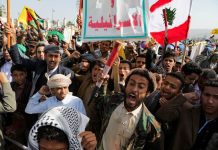
The armed crackdown on protests that began in December 2025 in Iran ranks the Islamic Republic of Iran among the most repressive governments of the 21st century. On Jan. 8 and 9, tens of thousands of people in cities across the country were met with live gunfire from government forces.
A nationwide internet shutdown has made it impossible to obtain accurate figures on those killed, injured, arrested, or missing. Reports nevertheless indicate that between 16,000 and more than 40,000 citizens have been killed, tens of thousands injured, and tens of thousands more detained.
Through a series of reports, Kayhan Life has sought to document eyewitness accounts from participants in protests across various cities and regions, preserving them as part of the historical record of the Iranian people’s revolution against the Islamic Republic.
For their safety, the sources’ names have been changed.
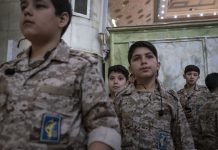
According to available reports, the identities of at least 146 children killed during the December and January protests have so far been confirmed. Many children were arrested in the streets, and several others were detained after the protests ended in what families described as “abductions.” There is currently no information about their condition.
In an early February update, the U.S.-based Human Rights Activists News Agency (HRANA) confirmed the identities of 146 children under the age of 18 who were killed during the unrest.
On Jan. 30, the Coordinating Council of Iranian Teacher Trade Associations (CCITTA) published a report titled “Empty Desks,” confirming and releasing the names of 100 students killed by agents of the Islamic Republic during the January crackdown.
The statistics published by HRANA and CCITTA reflect only verified cases.
Internet disruptions and security threats against families have severely restricted the flow of information, leading many to believe that the true number of children killed is higher than currently reported.
On Feb. 1, Education Minister Alireza Kazemi stated that the number of students killed remained unclear, noting that because the incidents occurred in multiple cities and districts, “exact and official statistics have not yet been announced.”
The Ministry of Education distanced itself from responsibility for some of children who had been deceased or detained, stating that several detained teenagers had dropped out of school and therefore were not considered students.
Somayeh Sadat Ebrahimi, director of the ministry’s Office for Counseling and Care Against Social Harms, said that some students had participated in protests “out of excitement,” claiming that hostile media had exploited teenagers’ emotions.
Reports indicate that security forces treated children with the same violence used against adults, deliberately targeting them with gunfire.
Among those killed was 16-year-old Sina Ashkboosi, the only child of his family, who was shot in Tehranpars, part of Greater Tehran.
Iran Protest Footage Captures Grief, Defiance, and Unbroken Resolve
A source told Kayhan Life that on the evening of Jan. 8, Sina and another teenager gathered with others in a neighborhood park on 196 East Street, chanting slogans. Government agents arrived and opened fire directly at the group.
According to the source, officers aimed at people’s chests and heads; a bullet struck Sina in the heart. His parents, who were present, rushed him to a hospital near Tehranpars’ Third Square, but he died in his mother’s arms.
“Sina was the family’s only child, intelligent, gifted, and kind,” the source said.
Authorities released his body to his parents on the condition that the funeral be held quietly and without publicity. The burial took place under heavy security pressure.
Many teenagers have also been detained, though exact numbers are unavailable.
On Feb. 1, Justice Minister Amin Hossein Rahimi, who heads Iran’s National Body for the Convention on the Rights of the Child (NBCRC), confirmed that several minors had been arrested.
Without specifying how many, Rahimi said that individuals under 18 arrested during the incidents were “quickly processed” at Tehran’s Special Juvenile Prosecutor’s Office and handed over to their families.
He added that a “small number” of detainees aged 16 to 18 were being held in correctional and rehabilitation centers pending investigation and would be released after inquiries were completed and bail posted.
EXCLUSIVE: Tehran Protest Survivors Describe Live Gunfire, Bloodshed
Two days earlier, the Education Commission of the Majlis (Iran’s parliament) confirmed the arrest of several students under 18 and said its letter to the police command requesting information about killed and detained students had received no response.
Alireza Monadi Sefidan, chair of the commission, told the Iranian Labor News Agency (ILNA) on Jan. 30 that the letter had also asked about the number of students killed and injured, “but we have not yet received any response.”
Farshad Ebrahimipour Nourabadi, the commission’s deputy head, said it was certain that some of those arrested were students under 18.
Responding to the Ministry of Education’s claim that most detainees had dropped out of school and were only of school age, Ebrahimipour argued that “under the law, all individuals from preschool through twelfth grade are considered students.”
Human rights organizations have warned about detention conditions, psychological pressure, and torture of detained teenagers.
On Jan. 31, Amnesty International issued an urgent alert stating that thousands of people –including children arbitrarily detained during the protests — face risks of torture, ill treatment, and unfair trials that could result in long prison terms or even the death penalty. The organization called for immediate international action.
Kayhan Life also spoke with the family of a 17-year-old detained in Ahvaz, the capital of the southwestern province of Khuzestan. He was arrested during protests on Jan. 8 in the Kianpars neighborhood. Fearing further pressure, his family requested anonymity. They were allowed to visit him for 15 minutes on Jan. 27.
His mother said that after his arrest, he and several other teenagers and young men aged 20 to 23 were beaten to force confessions.
“They beat the kids with hoses and plastic pipes,” she said. “My son told me a teenage boy was slapped so hard that his ear bled, yet they did not take him for treatment. Even on the day we visited, he had not seen a doctor. They beat my son, too. He just went to school. He wasn’t involved in any group. Can you believe they interrogated a teenager to force him to confess to cooperating with Israel?”
According to the mother, a judicial case has been opened against her son. He was interrogated on Jan. 28 and is now awaiting a court date.
“We still don’t know what he is accused of,” she said. “They have not allowed us to choose our own lawyer. They said they would appoint a public defender or allow us to select a lawyer approved by the judiciary — often a former interrogator or judge. How can we trust them?”
The father told Kayhan Life that for more than 10 days, they had no information about their son’s whereabouts before learning he was being held with many others in a silo. While adults aged 18 and older were present, most detainees were under 25.
“When we saw him at the prosecutor’s office, they said he would be transferred to a correctional facility, but that has not happened,” he said.
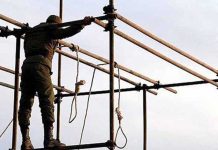
He added that during interrogations, some children were threatened with execution.
“My son and several other teenagers were beaten and threatened into signing confession papers without knowing what they contained. We fear sentences will be issued based on these forced confessions,” the father explained.
Some children were not arrested during street protests but were detained later after being identified by security agencies, often in violent home raids. In some cases, families have no information about their children’s whereabouts.
On Jan. 29, CCITTA reported that security forces arrested 17-year-old Erfan Javadi in front of his home in Dehdasht, in the southwestern province of Kohgiluyeh and Boyer-Ahmad and transferred him to an unknown location.
CCITTA also reported that 17-year-old Aso Keykhosravi from Javanrud, in the central province of Kermanshah, remained missing three days after his arrest, with no information available about his condition or place of detention.
In another case, Ali Eyvazi, a 16-year-old student from Baghmalek in Khuzestan Province, was arrested at dawn on Jan. 8 during a raid by more than 60 masked and armed officers on his home. He remains under interrogation, and security forces have reportedly pressured him to confess against his relatives.
In an interview with Kayhan Life, a teacher in Tehran Province confirmed that teenagers had been detained and said security agencies pressured schools to report absent or possibly injured students, including those wounded by pellet guns.
“Most teachers and principals refused,” the teacher said. “But in several high schools, students were arrested in front of their schools or on their way there. Both girls and boys were detained. Security agencies were also highly sensitive about holding memorials at schools for students killed. Some students who posted about the protests or the victims on social media received threatening calls from cyber police.”
The teacher described severe psychological distress among teenagers following the protests.
“I see a wave of grief and anger among my students. These children-like adults and many people are not in good condition,” the teacher said. “Without proper support, I fear a rise in suicides among teenagers and young people after this brutal repression and the grief affecting society.”
“Increased security pressure on students could trigger suicidal tendencies,” the teacher warned. “Unfortunately, the education system has been completely passive. The conditions of teenagers who witnessed violence, were injured, lost loved ones, or experienced humiliation are alarming.”