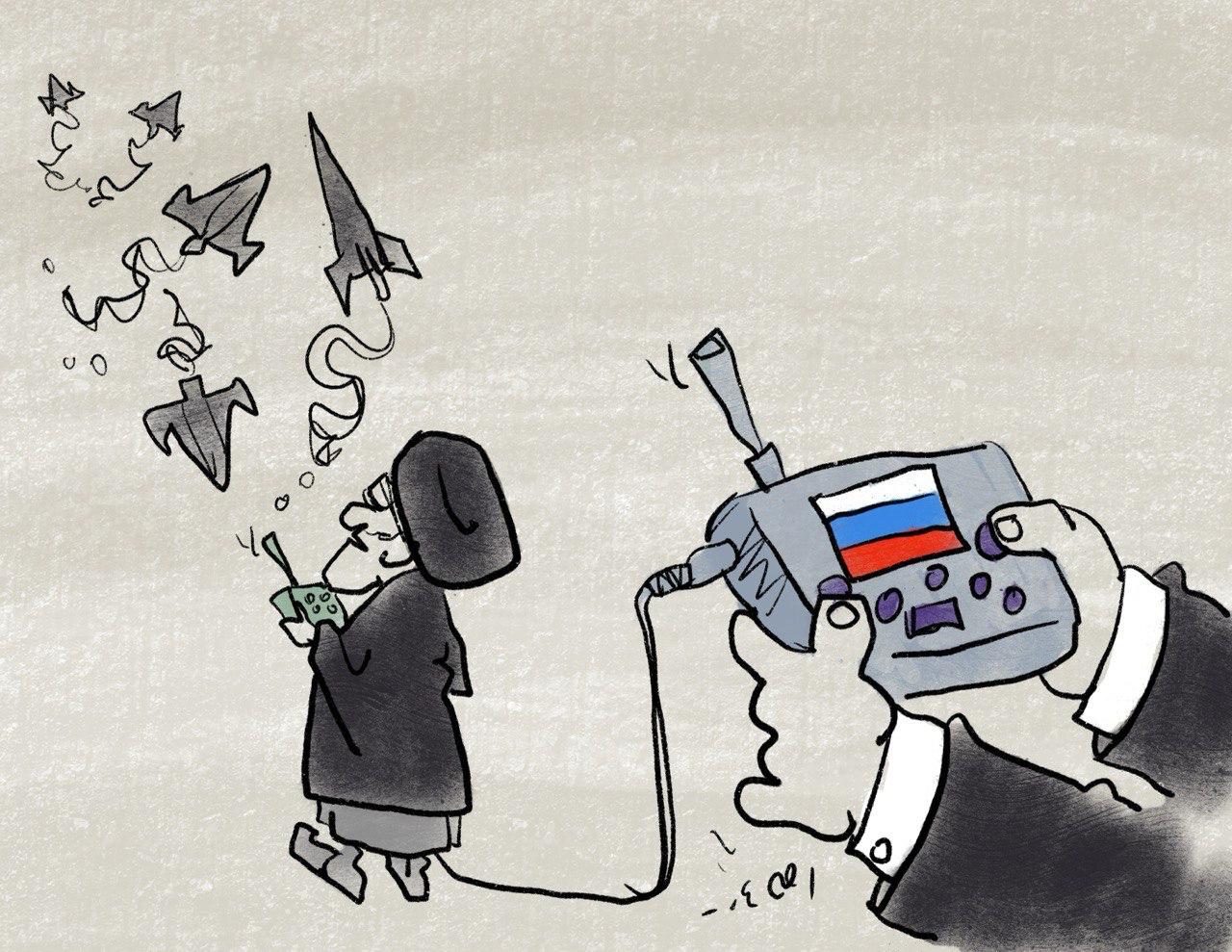
Artist: Ahmad Barakizadeh
By Kayhan Life Staff
The Islamic Republic and Russia have settled into a marriage of convenience held together by sanctions, shared isolation, and a “shadow fleet” of outlaw tankers.
Russian influence now threads so tightly through Tehran’s policymaking that some analysts quietly wonder whether the country’s foreign strategy is still written in Persian—or delivered preformatted in Cyrillic.
November offered a snapshot of this odd couple: two delegations from Tehran—nuclear and armaments officials—shuttled to Saint Petersburg, while international monitoring firms helpfully pointed out that the pair’s illicit tanker fleet continues to sail across global waters under the flags of Pacific islands.
Meanwhile, Ynet, a publication known for its proximity to Israeli intelligence, reported that Moscow has decided to help the Ayatollahs finish designing a nuclear weapon. According to its sources, Tehran has crossed a “critical and irreversible” threshold—with Russia playing midwife.
Experts warn this axis of convenience is hardly sturdy. Should Washington shift course, Moscow may find reason to trade its partnership with the Ayatollahs for a better geopolitical real estate.