By Katayoun Shahandeh
Katayoun Karami is a conceptual artist whose work explores the intersections of the personal and the social through photography and mixed media.
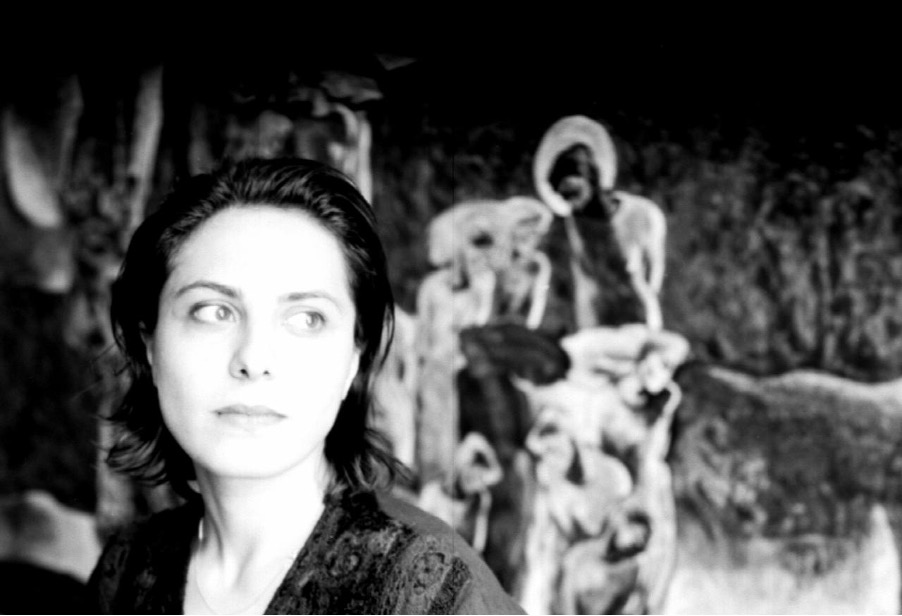
Born in Tehran in 1967, she studied Architecture at Middle East Technical University in Ankara, Turkey, and since the 1990s, has developed a body of work that is deeply engaged with the complexities of contemporary life and of Iranian society. Her art is rooted in personal and societal narratives — often touching on the condition of women in Iran, and drawing on collective experiences to explore broader questions of identity, visibility, and representation.
Since 2002, Tehran-based Karami has exhibited her work in numerous solo and group exhibitions across Iran and internationally. She joined Kayhan Life for a conversation her about her life and art.
Women’s social conditions play a central role in your art. How do you approach representing these themes through your work?
As an Iranian woman, my perspective inevitably intersects with gender, but I don’t see it as my exclusive focus. After the Green Movement in 2009, I created works that, while not explicitly about women, were deeply influenced by the collective atmosphere. If I depict certain experiences, it’s because they pass through me – they’re lived realities. That creates a feminine dimension in the work, but not a deliberate one. I work best when responding to emotions I’ve personally experienced. That’s why I often use mixed media to depict the complexity of these layered truths.
How do you see the role of art in shaping social awareness and dialogue, particularly regarding women’s rights?
Art can be powerful in shaping awareness. It allows for a kind of engagement that direct discourse can’t always achieve. We see this even more clearly today through the rapid spread of images and videos on social media. During the Mahsa protests [the wave of demonstrations across Iran in 2022 after the death in police custody of Mahsa Amini], for example, I was exhibiting in India, and by coincidence, many of the works I had brought explored themes of female identity and the veil. As the news of Mahsa’s death circulated globally, young Indian visitors – many of whom had never been to an art exhibition before – came specifically because they were moved by what was happening in Iran. That moment deeply affirmed my belief in art’s ability to resonate across borders.
Even if a single image or work is eventually forgotten, its visibility at a critical moment can make a difference. It might shift one person’s perspective – and that, to me, is already meaningful. Personally, encountering certain artworks has profoundly shaped how I see the world, and I hope to offer that possibility to others through my own practice.
What is your perspective on the visibility of Iranian female artists in the global art scene?
In recent years, I feel that the global visibility of Iranian artists – across genders – has unfortunately declined. While there have been encouraging moments, with some artists participating in biennales or having strong exhibitions abroad, these remain exceptions rather than the norm. The visibility of Iranian cinema, for example, far surpasses that of our visual art scene.
That said, visibility can grow when more people engage with the work and the dialogue around it deepens. The opportunity to speak about our art and to contextualize it can help foster that hermeneutic connection. I’m grateful that some of our work is being seen beyond Iran’s borders, but I hope for more consistent platforms, support, and engagement that can elevate Iranian women artists more widely on the global stage.
Can you tell us about your early influences and what led you to pursue art as a career?
My early interest in art began when I was very young, with photography classes at Kanoon during the Revolution. Life felt uncertain – my family moved frequently during that period – but the darkroom became a place of calm. Watching an image emerge on paper was magical, and photography became a way to process the world.
Although I wanted to go to the Honarestan (Art School), my teachers discouraged me because I was good at maths and physics. So I followed a more conventional path and later studied architecture in Ankara. But it was during those early months – visiting galleries for class, analysing how space could be transformed through art – that I began to truly understand the depth and possibilities of visual language. I was fascinated by how artists think, how they construct meaning, and how art can hold emotion, memory, and philosophy all at once. These experiences shaped my path into art. It was never a single decision, but a gradual recognition that this was how I understood and communicated with the world.
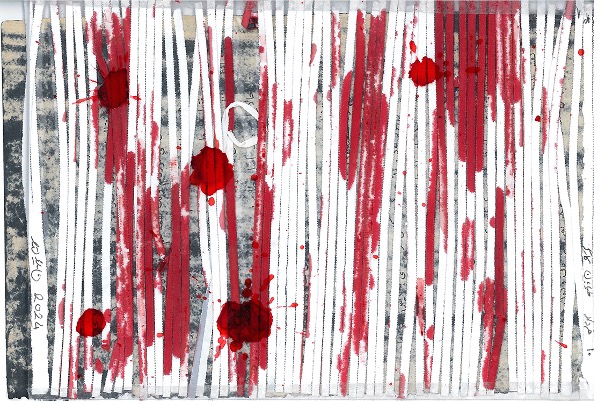
Image courtesy of the artist.
You began working as an artist in Tehran during the 1990s – a time of significant social and political change. How did that environment influence your work?
I wasn’t formally trained in photography, so I approached it more intuitively. I was drawn to social issues, even if they weren’t directly visible in the work. Much of my early photography was observational: I would regularly walk through Tehran or the countryside photographing life.
A major shift came in 2003, after volunteering at a hospital following the Bam earthquake. I documented the destruction of the city with other photographers, but it was the hospital – and the mass graves – that profoundly affected me. I saw how fragile identity becomes in moments of crisis. That experience led to my first self-portrait series, Censorship (2004), where I began using photography to engage more deeply with social questions. It marked a transition from observation to a more dialogical, emotionally driven practice.
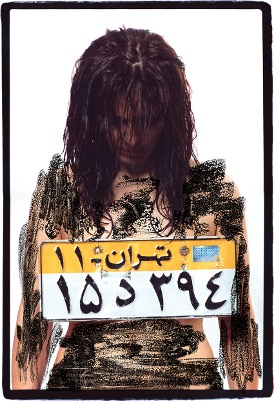
Image courtesy of the artist.
How has your artistic practice evolved over the years, from the 1990s to today?
My practice has shifted significantly over the years – from being more observational in the 1990s to becoming deeply personal and socially engaged after the Green Movement in 2009. Before that, I often saw myself as an observer, documenting what I encountered without fully grasping the long-term significance of the moment. After 2009, I no longer felt I was simply taking images – I wanted to invite viewers into the emotional and political spaces I was navigating. My sensitivity to social issues grew stronger, and I felt compelled to translate that into my work in a way that honoured their complexity and urgency.
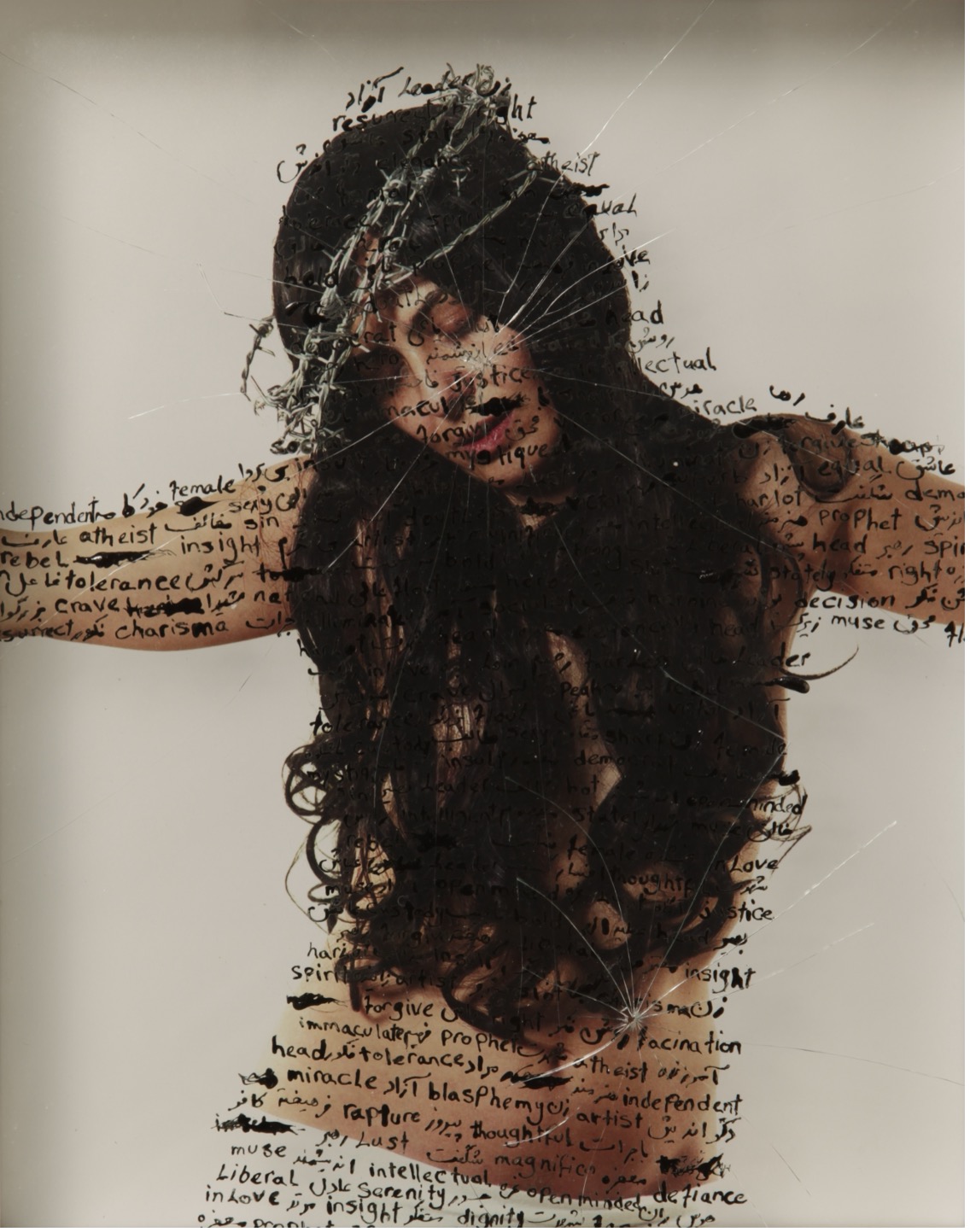
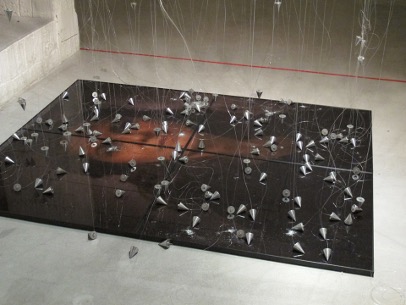
Each project since then has evolved organically from the last. For instance, my Resurrected (2009) series began after an execution at Evin Prison – something we tried desperately to prevent. That day, a prostitute known as ‘Khorshid,’ who had also killed her newborn, was executed. I went home distraught and created the series out of a need to respond, but it still felt incomplete. Later, in Have a Break (2012) – created in response to renewed reports of executions, particularly the stoning of women – I felt I was finally able to give form to what had remained unspoken in my earlier work.
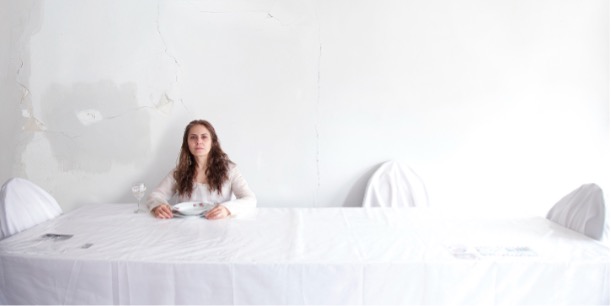
You frequently depict yourself in your artwork. Do you see your self-representation as autobiographical, symbolic, or both? How has your depiction of yourself evolved over time?
I don’t primarily view my self-portraits as autobiographical. When I was younger, I often used myself simply because the themes I explored were difficult, and I didn’t want to involve others in the emotional weight of those subjects. Over time, however, self-portrayal became more than just a practical choice—it became a visual language of narration, one that allowed for symbolism, emotion, and at times, surreal reflection.
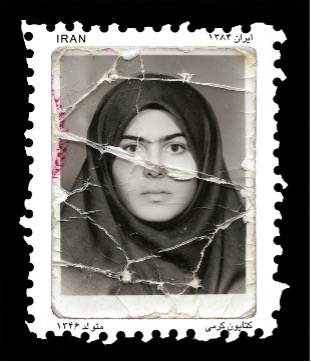
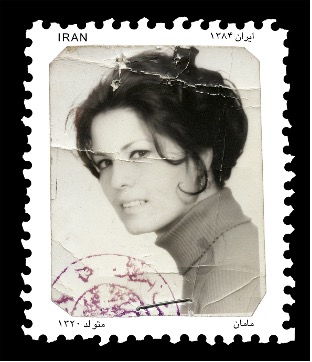
In works like the Stamp (2005) series, for instance, the use of images of myself and my mother becomes deeply charged. While those pieces may appear autobiographical, they also speak to collective memory and shared experiences—of war, revolution, state violence, forced veiling, and systemic erasure. There’s a generational continuity in those experiences that I wanted to make visible. While my image is present, it often stands in for something larger – a communal voice, a shared history, or a silent resistance. Over time, I’ve come to see self-representation not just as personal reflection, but as a way to connect individual memory with collective trauma and resilience.
For more information: https://katayounkarami.com