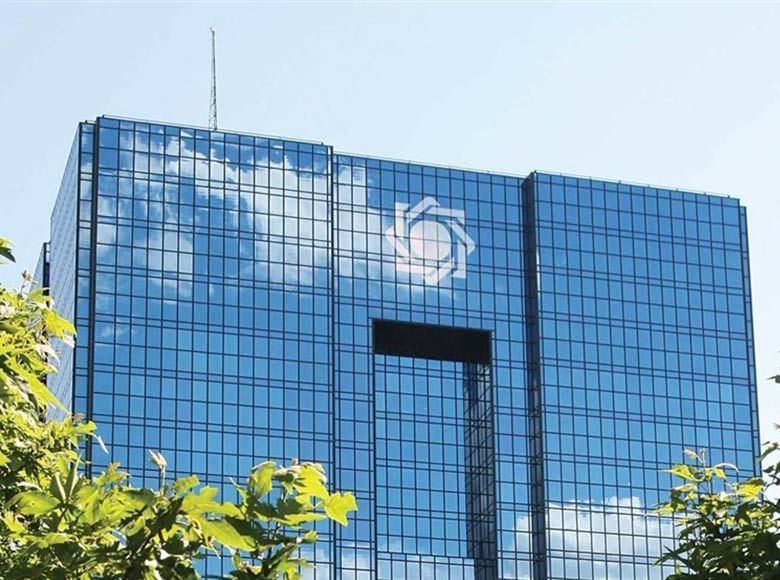
Ayandeh Bank, whose operating license was officially revoked late last month by the Islamic Republic of Iran Central Bank, is now being targeted by the UK government. The UK Foreign Office has imposed sanctions on Ali Ansari, the bank’s founder and principal shareholder, accusing him of “facilitating and supporting the hostile activities” of the Islamic Republic and its Islamic Revolutionary Guard Corps (IRGC).
On Oct. 23, Ayandeh Bank’s operating license was officially revoked, its activities terminated, and its funds transferred to Bank Melli Iran (BMI).
A week later, on Oct. 30, the UK sanctioned Ansari, citing “reasonable grounds” to believe he had financed IRGC operations abroad.
British authorities have accused Ansari of helping Tehran engage in destabilizing activities against the UK and other countries.
Reports suggest that Ansari’s companies, including Iran Mall International Development Company, allegedly act as fronts for money laundering tied to Mojtaba Khamenei’s network. Some sources even allege that Khamenei’s son himself effectively owns Iran Mall.
Ayandeh Bank exemplifies how, within the Islamic Republic, public wealth is siphoned off through complex networks of money laundering and patronage, enabling figures such as Ansari to allegedly amass enormous fortunes.
This is done through the practice of rent-seeking, which means gaining wealth by manipulating economic or political conditions rather than through productive activity. While some rent-seeking activities – such as lobbying for favorable laws – are legal, the practice often crosses into outright corruption, bribery, and financial crime.
Established in 2012, Ayandeh Bank emerged from the merger of TAT Bank (Turnaround Time or Total Asset Turnover), Salehin Credit Institution, and ATI Credit Institution, beginning its operations in 2013.
Ansari had founded TAT Bank in 2009, but within three years, it was under investigation for widespread financial irregularities. With the Islamic Republic of Iran Central Bank’s approval, Ansari restructured his network by merging TAT Bank with two credit institutions, creating Ayandeh Bank as a new platform for his alleged rent-seeking operations.
With the Central Bank of the Islamic Republic’s approval and authorization, Ansari swiftly founded Ayandeh Bank by merging TAT Bank with two credit institutions.
From its inception, Ayandeh Bank attracted large deposits by offering unusually high interest rates. However, most of these funds were reportedly funneled to insiders — especially Ansari himself.
For instance, 740 trillion rials (about $687 million) were reportedly granted to Ansari as a “loan” to build Iran Mall, effectively channeling public deposits into his private ventures. Neither Ansari nor any of the other connected borrowers reportedly ever repaid these loans.
Official figures show that 61 individuals received a total of 1,300 trillion rials (approximately $1.2 billion) in unsecured loans — none of which have been reimbursed.
According to the bank’s financial statements, Ayandeh issued large-scale loans to 77 companies, of which 43 were owned or controlled by the bank itself.
Out of nearly 789 trillion rials (about $732 million) in major loans, 633 trillion rials (roughly $588 million) went to subsidiaries of Ayandeh Bank — revealing a circular system of self-financing and asset manipulation.
By the end of the 2024–2025 fiscal year, Ayandeh Bank had accumulated losses of $4.388 billion, exceeding Iran’s entire 2025 annual development budget of $2.1 billion.
Its Capital Adequacy Ratio (CAR) stood at -503 percent, compared to a global average of +12 percent and a typical Iranian standard of +8 percent — a sign of complete financial insolvency.
The Capital Adequacy Ratio (CAR) measures a bank’s financial strength by comparing its capital to risk-weighted assets. Expressed as a percentage, it shows whether the bank can absorb losses and protect depositors.
Just four years after opening, Ayandeh Bank’s financial collapse — marked by negative balances, mounting losses, and systematic rent-seeking — was already evident.
In 2018, Gholamhossein Mohseni Ejei, head of the Judiciary of the Islamic Republic, revealed that Sarmayeh Bank — established as part of the government’s banking privatization program six years earlier — had incurred losses totaling 500 trillion rials (about $464 million).
This figure was nearly equivalent to Iran’s entire development budget for that year, which stood at 6000 trillion rials (roughly $5.6 billion).
Despite this staggering deficit, the Central Bank of the Islamic Republic remained silent regarding the rent-seeking network that had taken shape within Sarmayeh Bank.
Across three successive administrations — from the reformist government of former President Hassan Rouhani to the conservative government of the late President Ebrahim Raisi — the Central Bank not only failed to act but actively supported the institution, ignoring its extensive violations.
Instead of intervening, the Central Bank allowed Ayandeh to overdraw from the national reserves repeatedly. The bank owes 7,170 trillion rials (about $6.6 billion) to other banks and has 3,000 trillion rials (around $2.7 billion) in Central Bank overdrafts.
Between 2022 and 2024, under Raisi, the Central Bank even injected another 2,000 trillion rials (about $1.9 billion) into Ayandeh Bank.
These practices made Ayandeh Bank one of the most significant drivers of liquidity growth and inflation in Iran.
Economists estimate that over two decades, the bank contributed to 25 percent of total liquidity expansion and roughly 7 percent of national inflation.
Years of inaction eventually led to internal tensions within the regime.
Turkish Bank Tells US Supreme Court It Should Be Immune From Iran Sanctions Charges
On Oct. 21, Judiciary Chief Gholamhossein Mohseni Ejei publicly threatened Central Bank Governor Mohammad Reza Farzin, writing on his “X” account: “Mr. Farzin, you have full authority to act on Ayandeh Bank. Do your duty — or face consequences.”
A day earlier, Ejei told a group of students at a press conference that he had been pressing the Central Bank “for four years” to address Ayandeh’s corruption.
Within days, under pressure, the Central Bank dissolved Ayandeh Bank, announcing that it would safeguard depositors’ funds and that its debts would be covered first through liquid assets, then through major shareholders.
The Illusion of Assets
Ayandeh Bank’s main assets include the Iran Mall, Farmaniyeh Mall, and Mashhad Mall projects — large but largely illiquid holdings.
Analysts warn that its limited marketability means the financial burden will probably fall on Bank Melli Iran, itself already struggling.
Central Bank deputy Farshad Mohammadpour remarked: “If selling Iran Mall were easy, Ayandeh Bank would not be in this situation.”
Attempts to auction Iran Mall shares in December 2020 for 34 trillion rials ($32 million) yielded no results, widely believed to be another internal money-laundering maneuver.
The Rotana Hotel in Mashhad — the capital of Iran’s northeastern province of Khorasan Razavi — is estimated to be worth about 500 trillion rials (roughly $464 million), while the Iran Mall in Tehran is valued at around 3,550 trillion rials (approximately $3.3 billion). Both are considered illiquid and difficult to sell.
Another segment of these holdings has been reportedly concealed through the transfer of shares to shell companies, creating the illusion that they are no longer owned by Ansari, even though all the entities ultimately trace back to him.
In essence, over the past two decades, Ansari has reportedly financed several large-scale projects using Ayandeh Bank’s resources — much of which originated from Central Bank loans — and subsequently laundered funds to recycle and protect his wealth.
Ali Ansari was born in December 1962 in southern Mehrabad, Tehran, and was originally from Ghazvin, the capital of the northwestern province of Ghazvin. His father, Ali Akbar Ansari, was a well-known builder from Ghazvin who moved to Tehran when Ali was young.
After high school, Ansari served in the military and was sent to the Iran–Iraq War. Many believe his wartime connections later helped him with his alleged rent-seeking activities — including ties to Mojtaba Khamenei, the son of Iran’s Supreme Leader, Ali Khamenei.
After military service, he began his business career by obtaining a permit from the Zanjan Department of Heavy Industries to establish a pipe and profile factory — his entry point into Iran’s economic and commercial structure.
The Islamic Republic’s rent-seeking system has funneled business opportunities to well-connected insiders — and Ansari was no exception.
In addition to running a pipe and profile factory, he expanded into the fruit and nut trade with Russia and the Caucasus.
By 1993, he had entered the iron market, establishing a wholesale and distribution center in Tehran’s Shadabad district, which remains one of Iran’s leading hubs for iron trading.
In 2006, Ansari launched the Iran Mobile Market and, around the same time, founded the Mahdi Furniture Market in Yaftabad, transforming the area into the country’s leading furniture center.
By 2009, leveraging his vast economic network and connections reportedly extending into Ali Khamenei’s office, Ansari established TAT Bank — a failed venture later rebranded as Ayandeh Bank.
Thanks to state backing, it soon became notorious as Iran’s most rent-driven financial institution.
According to startling figures, over 90 percent of Ayandeh Bank’s funds during its two decades of operation were allegedly funneled into Ansari’s own ventures — including Iran Mall, Mashhad Mall, Rotana Hotel, Farmaniyeh Mall, and his iron, furniture, and mobile markets.
Ansari’s trajectory mirrors that of other regime-connected tycoons like Babak Zanjani and Hossein Hedayati — products of a system that funnels national wealth into the hands of insiders.
Zanjani, for instance, was convicted in 2013 of embezzling $2.7 billion from Iran’s Oil Ministry. His death sentence was later reduced to 20 years in prison after partial repayment in 2024.
Photos from Ansari’s father’s funeral in June 2025 revealed the depth of his political ties: attendees included Meysam Khamenei (the Supreme Leader’s son), Vahid Haghanian (a former deputy at the Leader’s Office), Babak Zanjani, and numerous public figures.