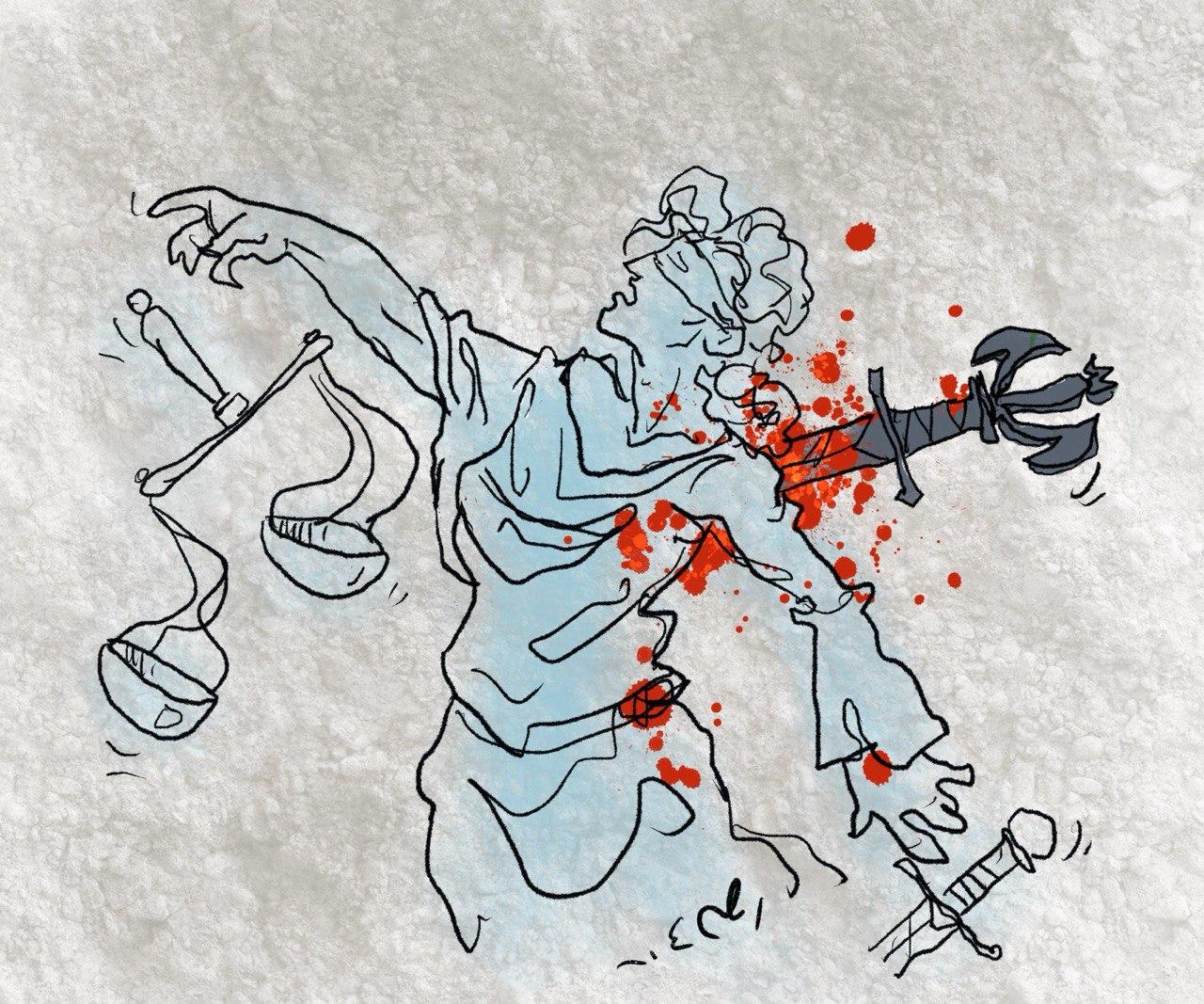
Artist: Ahmad Barakizadeh
By Kayhan Life Staff
The death of Khosrow Ali-Kordi, a prominent Iranian lawyer, has renewed scrutiny of what human rights activists describe as a pattern of state-sponsored killings.
Mr. Ali-Kordi, who had repeatedly reported threats from Iranian security agencies, was found dead in his office last week. Officials said he died of cardiac arrest. But witnesses challenged that explanation. They reported blood and visible injuries on his body and the presence of unidentified visitors shortly before his death.
Officials also restricted access to evidence. Witnesses said security forces removed more than a dozen surveillance cameras from the building where Mr. Ali-Kordi worked and from nearby streets. Family members were reportedly threatened, and his brother, Javad Ali Kordi, was summoned to the Revolutionary Court in Mashhad.
Shortly before his death, Ali-Kordi had warned the United Nations fact-finding mission on Iran that he faced serious risks because of his work representing political detainees and government critics. His death coincides with the 27th anniversary of Iran’s so-called “chain murders,” a series of assassinations of intellectuals and dissidents in the late 1990s widely attributed to intelligence operatives.
Occurring on the eve of International Human Rights Day, Mr. Ali-Kordi’s death has become a symbol of what critics call entrenched impunity in the Islamic Republic.
His seventh-day memorial ceremony in Mashhad turned into a massive protest against the Islamic Republic. Mourners chanted slogans including “Reza, Reza Pahlavi — this is the nation’s call”, “Long live the Shah”, “Woman Life Freedom”, and “Long Live Iran.”
Security forces blocked the mosque entrance, dispersed the gathering, and made several arrests, including Mr. Ali-Kordi’s brother, Javad Ali-Kordi. Those detained also included the Nobel Peace Prize laureate Narges Mohammadi and several other activists, according to rights groups.