WEEK IN REVIEW Nov 20, 2026
Ink & Irony
The Plague
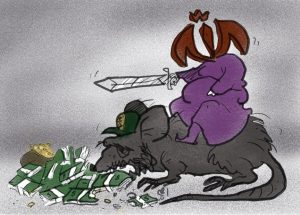
For more than nine months, President Masoud Pezeshkian’s government has prescribed “economic surgery,” invoking war to justify measures that make ordinary Iranians pay for its budget shortfalls. While Regime insiders keep pocketing public money, everyone else is told to endure the pain.
In the name of reform, the government has cut subsidies and scrapped preferential exchange rates for essential imports. Even bread is now rationed: Families who need more than their allowance must pay six times the official price.
Gasoline costs more, subsidies cover less, and motorists wait hours at filling stations — all while officials invoke the fight against smuggling. Gas shortages are disrupting industry and threatening to leave households without heat this winter. Power plants are struggling for fuel, raising the prospect of electricity shortages as well.
Analysts estimate that a family of three or four needs about $374 a month to live. Workers earn about $93. Most teachers and nurses receive $93 to $131, while most retirees get $75 to $131. A worker’s entire monthly wage covers just a quarter of a family’s basic costs.
For families forced to choose between food and heating, “economic surgery” is a cruel euphemism. They are left to keep the state afloat while regime insiders help themselves to its wealth and fund their proxies.
Welcome to the Kayhan Life Week in Review
The Islamic Revolutionary Guard Corps (IRGC) attacked Persian Gulf countries and exchanged fire with U.S. forces, while the Houthi advance in Yemen threatened shipping in the Red Sea. The Senate rejected an attempt to limit President Donald Trump’s war powers, but Trump said the U.S. would hold off attacking Iran, while Washington reinforced its blockade and Western powers pressed for nuclear inspections. In Iraq and Lebanon, plans were afoot to contain the influence of Tehran’s proxies. Back in Iran, families faced a deepening gas crisis, and mourning in a mainly Kurdish town in the west of the country turned into protest against the Islamic Republic. The judiciary upheld sentences against lawyer Javad Alikordi, and a human rights group called for an investigation into alleged torture at a secret Revolutionary Guard detention center. Iranian modern art took center stage at Frieze Abu Dhabi.
Renewed exchanges of fire in the Persian Gulf threatened efforts to contain the war. Tehran said it targeted U.S. military installations in Kuwait after American jets struck an Islamic Revolutionary Guard Corps (IRGC) missile site on Qeshm Island in the Strait of Hormuz. Bahrain reported intercepting Iranian attacks three times in one week.
Iran Fires at Kuwait After US Strike on Iranian Island
US, Iran Exchange Fire Despite Talks With Mediators
Bahrain Intercepts Iranian Aerial Attacks as Tehran Says It Attacked US Base
The fighting tested President Donald Trump’s preference for economic pressure over another major offensive. He said the United States would “see what happens” after Jan. 1, without explaining the date’s significance. In the meantime, the U.S. Senate voted to reject a resolution requiring the President to end the war with the Islamic Republic or obtain congressional approval to continue it. The measure had passed the House.
Trump Says US Will ‘See What Happens’ in Conflict With Iran After January 1
US Senate Rejects Resolution Curbing Trump’s Iran War Powers
Security concerns extended farther than the Middle East. Trump said Washington was examining a CNN report alleging that Tehran was developing plans for a possible radioactive “dirty bomb” attack in the U.S. capital. He did not confirm an imminent threat, and Tehran denied the allegation. Separately, the U.S. intelligence chief told lawmakers that threats linked to the Islamic Republic against Americans at home and abroad had increased substantially.
Trump Says US Taking Seriously Report of Possible Iranian Dirty Bomb Plot in Washington
Threats From Iran Have Increased Substantially
Reuters reported that Israel’s intelligence chief had pressed U.S. officials for joint strikes, while Persian Gulf leaders urged restraint, fearing retaliation. Oman and Qatar pursued mediation, as Saudi Arabia and Turkey urged Trump not to resume attacks on Iran.
Trump Tells Advisers He May Hold Off on Iran Attacks Barring New Provocations
Trump and Tehran Gamble on Time as Iran War Stalemate Deepens
Israeli Spy Chief Lobbied for Joint Iran Strikes on US Visit
Yemeni government forces withdrew from an area overlooking the Bab el-Mandeb Strait, leaving the Iran-aligned Houthis in control. The retreat gave the group greater leverage over the approach to the Red Sea and Suez Canal, as Tehran continued to disrupt traffic through the Strait of Hormuz.
Yemen Government Forces Withdraw From Area Near Bab el-Mandeb Strait, Houthis in Control
Meanwhile, Washington tightened its blockade by extending its warning to ships receiving Iranian cargo at sea. U.S. Central Command said vessels taking cargo from ships covered by the blockade could be treated as evading it, even without entering an Iranian port. The advisory widened the potential reach of enforcement against transfers moving oil and other cargo between vessels.
US Tightens Iran Blockade With Curbs on Oil Transfers at Sea
As part of its effort to disrupt the Islamic Republic’s regional proxy networks, the United States targeted Hezbollah’s financial support in Lebanon, sanctioning three people and three entities. The Treasury Department identified the Ta’awanu Association as a Hezbollah-affiliated charity and sanctioned its founder and two Lebanese brothers accused of assisting the group. Washington described the measures.
US Sanctions Hezbollah-Linked Charity in Push Against Iran’s Proxies
The United States, Britain, France and Germany accused the Islamic Republic of blocking nuclear inspections and demanded access to sites bombed in June 2025. Highly enriched uranium stocks remained unaccounted for. The International Atomic Energy Agency also expressed growing concern about an enrichment plant declared last year: inspectors still did not know its exact location, status or whether it contained nuclear material.
West Presses Iran at IAEA to Let Inspections Resume at Bombed Nuclear Sites
IAEA Increasingly Concerned About Iranian Enrichment Plant
Shipping faced another threat on the opposite side of the Arabian Peninsula. Yemeni government forces withdrew from an area overlooking the Bab el-Mandeb Strait, leaving the Iran-aligned Houthis in control. The retreat gave the group greater leverage over the approach to the Red Sea and Suez Canal, as Tehran continued to disrupt traffic through the Strait of Hormuz.
Yemen Government Forces Withdraw From Area Near Bab el-Mandeb Strait, Houthis in Control
In Iraq, Prime Minister Ali al-Zaidi prepared for a confrontation with Kataib Hezbollah, one of the IRGC’s most powerful militia allies. Iraqi officials accused the group of siphoning hundreds of millions of dollars in state oil revenue. Nine senior security and oil officials were dismissed, and commanders were ordered to prepare forces to enter the militia’s stronghold south of Baghdad. Kataib Hezbollah denied smuggling and called the crackdown an effort to force its disarmament.
Iran’s Proxy in Iraq Rakes In Hundreds of Millions Through Oil Smuggling
Iraqi Leader’s Planned Crackdown on Pro-Iran Militias Is Riskiest Move Yet
France sought European action over an alleged IRGC cyberattack targeting supermarket refrigeration systems. Foreign Minister Jean-Noël Barrot said Paris would present evidence to European Union ministers and seek agreement within a month on people and entities to sanction.
France to Outline to EU Evidence of Iran Cyberattack and Will Ask for Sanctions Within a Month
Inside Iran, the approaching winter brought warnings of more severe gas shortages. Households and businesses already struggling with inflation and job losses faced further disruption. A senior Iranian official and an Iranian security official told Reuters that the country’s leadership was increasingly concerned about fears of public unrest.
Iranian Leaders Fret Over Public Mood as Gas Shortages Add to War Ills
Mourning for workers killed in a bus crash turned into an anti-regime protest and in support of Crown Prince Reza Pahlavi, in a mainly Kurdish city in western Iran’s Ilam province, before security forces and Basij members used tear gas and batons to disperse them. Local sources reported six arrests, including a 15-year-old. Pahlavi offered condolences to the bereaved families and praised the protesters’ courage.
Deadly bus crash sparks anti-regime protests in western Iran
Iran’s Supreme Court rejected imprisoned lawyer Javad Alikordi’s request for a retrial, leaving prison terms, internal exile, a travel ban and permanent disbarment in place. Alikordi was arrested after a December 2025 memorial for his brother Khosrow, a human rights lawyer whose death was described as suspicious. The gathering drew thousands of mourners and antigovernment chants before security forces dispersed it.
Iran’s Supreme Court Upholds Sentences Against Jailed Lawyer Javad Alikordi
The Campaign to Free Political Prisoners in Iran (CFPPI) alleged that the IRGC’s intelligence branch operates a secret underground detention center inside Isfahan’s Dowlatabad prison complex. It urged U.N. experts and other international bodies to investigate the allegations.
Prison Complex In Isfahan Hides Secret IRGC Detention Center, CFPPI Reports
Iranian modern art was presented at the inaugural Frieze Abu Dhabi, which brought together 84 galleries from 37 countries and regions. Leila Heller Gallery devoted its booth to Farideh Lashai, whose paintings return to the trees, flowers and water of her native northern Iran. London’s Ab-Anbar Gallery presented Mohsen Vaziri Moghaddam’s sand compositions and a kinetic sculpture whose movable limbs allow viewers to change its form.
Frieze Abu Dhabi Spotlights Farideh Lashai, Vaziri Moghaddam
Kayhan Life’s Curated News:
Bus crash protest in Abdanan tests Iran’s hold after war and crackdown, Al-Monitor
The Path Out of Iran’s Forever War Runs Through Its Streets, Foundation for Defense of Democracies
Trump, Xi and Putin hold rare 3-way talks on nuclear risks but deliver no breakthroughs, AP
How Iran’s hitmen are hung out to dry by IRGC paymasters, The National
Kayhan Life’s Social Media Picks:
“Who Are You?” Iran-Linked Hit Man Screams During Arrest
Treat of the Week:
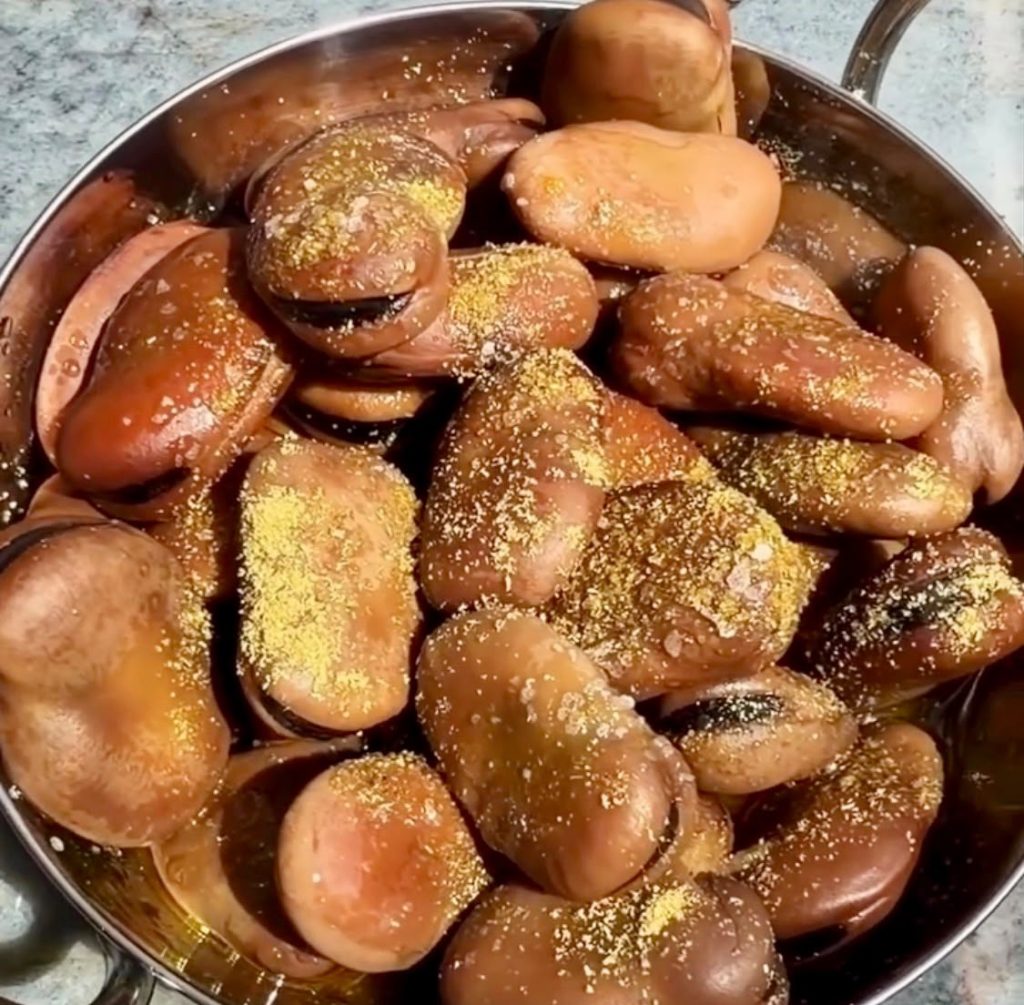
Persian-Style Boiled Fava Beans (Baghali)
 All of us at Kayhan Life wish you a peaceful weekend.