By Kayhan Life Staff
Iran’s Supreme Court has rejected the appeal of Javad Alikordi, a lawyer imprisoned in Vakilabad Prison (also known as Mashhad Central Prison) in Mashhad, upholding the sentences imposed on him.
Abbas Mousavi, Alikordi’s defense lawyer, announced in a post that the court had denied his client’s request for a retrial and upheld the sentences of imprisonment, exile, dismissal from the legal profession, and a travel ban.
In June, Branch 1 of the Mashhad Revolutionary Court sentenced Alikordi to five years in prison for “assembly and collusion to act against national security,” and 13 years for “propaganda activity against national security,” under Article 4 of the “Law on Intensifying Punishment for Espionage and Cooperation with the Zionist Regime and Hostile Countries against National Security and Interests.”
The ruling also imposed permanent dismissal from the legal profession, a two-year ban on leaving the country, and two years of exile in Saravan, in the southeastern province of Sistan and Baluchestan.
With the Supreme Court’s decision, these penalties are now final and will be enforced.
Alikordi is the brother of Khosrow Alikordi, a lawyer and human rights defender who died “under suspicious circumstances” on Dec. 6, 2025. Javad Alikordi was arrested on the night of Dec. 12, 2025, just hours after the memorial service marking the seventh day since his brother died in Mashhad.
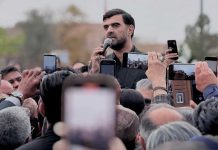
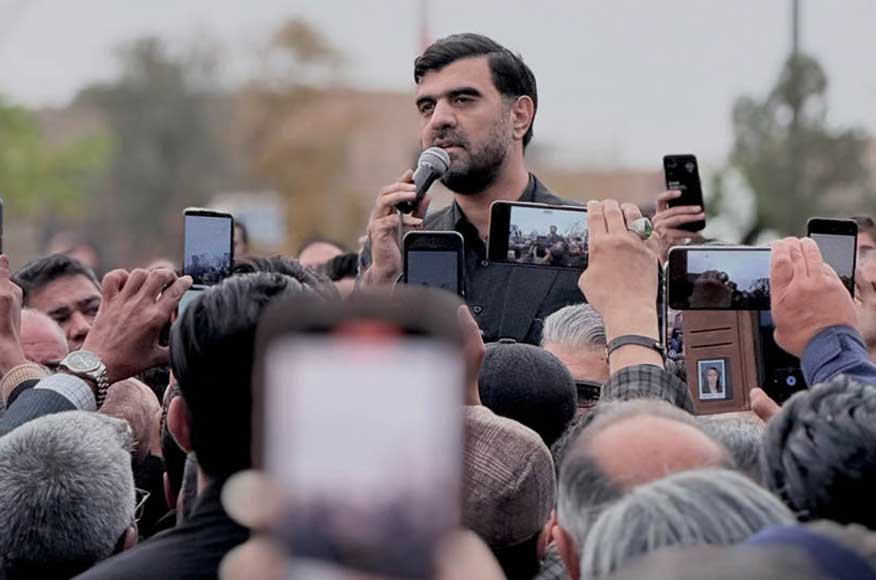
Thousands of people attended the gathering spontaneously, chanting slogans such as “Long live Iran” and “Long live the Shah.” Several civil activists, including Nobel Peace Prize laureate Narges Mohammadi, were also present.
Families seeking justice also attended, among them the family of Abolfazl Adinezadeh, a teenager killed during the 2022 protests whom Khosrow Alikordi had represented, and Tayebeh Nazari, a former client of his and the mother of Maryam Arvin, a lawyer killed during the same protests.
Security agents and riot police attacked the crowd, firing tear gas and pellets and beating attendees in an attempt to disperse them.
Judicial officials attributed Khosrow Alikordi’s death to “cardiac arrest,” but his family and those close to him rejected that account. According to the family, evidence such as unusual bleeding at the scene of his death deepened their doubts about the official explanation. The family and several lawyers had called for transparency regarding the actual cause of death.
After the memorial service turned violent, Javad Alikordi published a video criticizing the conduct of security and police forces and the mass arrests of attendees. He said he possessed confidential documents concerning his brother’s suspicious death and would make them public if pressure from security officers continued.
According to informed sources, security forces arrested him hours after the video was published and took him to an undisclosed location. Human rights activists say his arrest was, in fact, retaliation for his efforts to question the circumstances of his brother’s death and seek the truth.
In announcing the Supreme Court’s decision, Alikordi’s lawyer added that the father and uncle of Javad and Khosrow had both fought in the Iran-Iraq War (1980–88) and had both gone missing.