By Kayhan Life Staff
The Islamic Republic of Iran’s judiciary, in cooperation with the Ministry of Justice, has begun drafting a bill that would criminalize insults to the country’s flag, national anthem, and other symbols of the Islamic Republic and establish specific penalties for such acts.
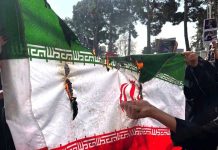
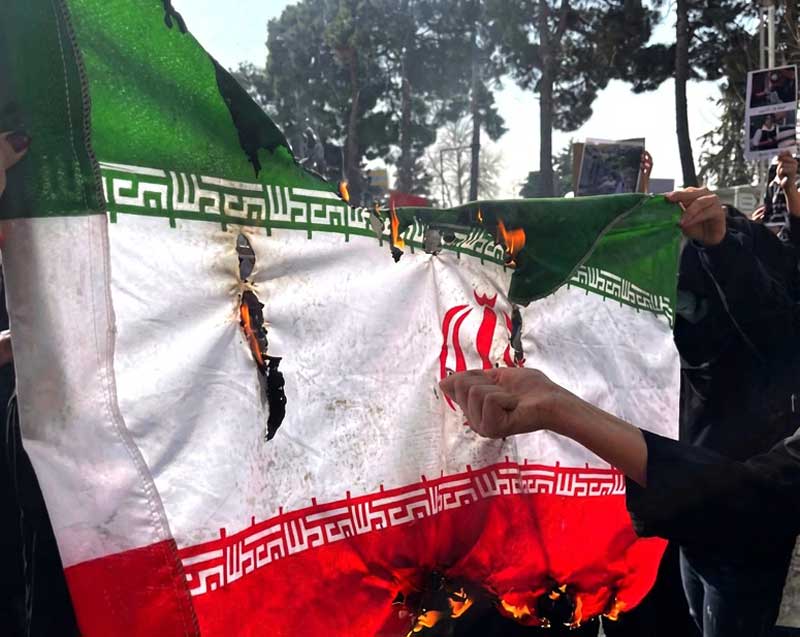
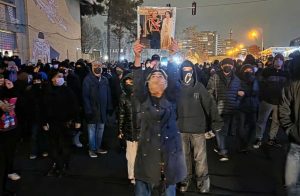
In recent years, including during the December and January protests, the Islamic Republic’s flag was burned at street demonstrations and student gatherings on university campuses. The judiciary describes the flag and anthem as “national” symbols, although critics regard the flag as inauthentic and the anthem as ideological and divisive.
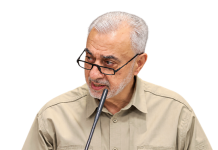
Judiciary spokesman Seyyed Ali Kazemi said the drafting process follows Article 18 of the bylaw governing the Islamic Republic’s flag and anthem.
“This past May, a bylaw on the national flag and anthem was approved by the Council of Ministers, which sets out provisions on ways of respecting the flag and national anthem,” Kazemi said. “Under Article 18 of this bylaw, the Ministry of Justice is obliged, after obtaining the judiciary’s opinion, to draft a bill criminalizing insults to the national flag. This matter is currently under review as a joint effort.”
He added that the judiciary was conducting comparative studies of other countries’ laws to determine how best to define the offense.
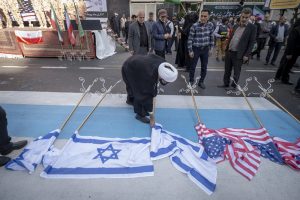
Referring to events surrounding the war between Israel, the United States, and Iran, Kazemi said that some people had shown disrespect for the flag through their actions. He stressed that such acts were already prosecuted under charges such as “propaganda against the system” or “insulting the sacred,” because the flag bears “divine names.”
“If these acts are carried out in an organized manner or as part of large-scale operations, this will naturally be grounds for aggravated punishment,” he said.
Kazemi said there were two options for addressing the issue: “Continuing to use existing criminal charges, or passing new laws.” He added that, once completed, the proposed bill would have to be submitted to the Majlis (Iranian Parliament) for approval and proceed through the legislative process.
Mahmoud Bahmanabadi, the former student vice-president at Sharif University of Technology (formerly Aryamehr University of Technology), announced this summer that the university had issued expulsion orders against six students in connection with the February 2026 protests.
According to Bahmanabadi, 236 students were referred to the Disciplinary Council, and cases were opened against 115 of them based on what the university described as “sufficient evidence.” About 40 other students were summoned to the Primary Disciplinary Committee.
He said the charges against students included “physical altercation, causing unrest, carrying cold weapons, insulting the flag, chanting disruptive slogans,” as well as online activity. He added that the council had received 29 reports concerning students’ online activity during February and the period of the war, and that about 15 students had been summoned in connection with those reports.
Amir Mohammad Karimi and Mahyar Eftekhari, students at the University of Tehran, and Amir Mohammad Surmeh, a student at Amir Kabir University of Technology (Tehran Polytechnic), were also expelled on charges of “insulting the flag” during the February 2026 protests at their respective universities.
The judiciary’s and Ministry of Justice’s efforts to criminalize insults to the flag form part of the government’s broader campaign to intensify repression.
In recent weeks, the Majlis has approved several articles of the “Countering Infiltration” law, which imposes wide-ranging restrictions on citizens. The bill was initially intended to define the boundaries of dealings with “foreign intelligence services and institutions.” However, with the approval of Article 22, its scope expanded to regulate everyday media activity in detail.
Under Article 22, interviews and conversations with media outlets designated as hostile by the Ministry of Intelligence, or owned, managed, or financed by agents linked to first- or second-tier governments, are permitted only under the conditions set out in the bill. Violations may result in a sixth-degree penalty under Article 19 of the Islamic Penal Code.
Esmail Kowsari, a member of the Majlis National Security and Foreign Policy Committee, defended the bill and rejected claims that it restricts people’s freedoms. He said that, under its provisions, “people who intend to travel abroad should provide the necessary notification so they are not caught out later.”
“If someone has nothing to hide, this bill is one hundred percent in their favor and creates no obstacle; rather, it aims to facilitate matters and warn people so they do not become tools in others’ hands,” he added.
Kowsari noted that the Majlis had reviewed 22 of the bill’s 33 articles. Regarding restrictions on interviews with foreign media, he said people “should not talk to particular media that do not want the Islamic Republic to exist at all.”
Meanwhile, the judiciary has placed another bill on its agenda that would tighten social restrictions on citizens, particularly women, as well as businesses, under the pretext of “combating nudity and promiscuity.”
Taken together, these measures appear to reflect the Islamic Republic’s fear of a new wave of nationwide anti-government protests.
By intensifying the security climate and criminalizing ordinary citizens’ activities, the government seeks to expand its surveillance and control of public spaces and citizens’ behavior, prevent protests, and suppress dissent under the guise of legal measures.