By Kayhan Life Staff
The Iranian government has been forced to acknowledge a looming gas shortage this winter and the possibility of cuts to gas supplies in some parts of the country, including the northern provinces. Experts believe the shortage could be severe enough to force the government to close some offices and public organizations, and potentially even schools and universities.
Experts have long warned of a gas shortage this winter and possible outages in parts of the country.
Iran’s Oil Minister Resigns for Personal Reasons, State Media Reports
Government spokesperson Fatemeh Mohajerani discussed that eventuality during a press conference on Sept. 29. She said the country would face a shortfall in meeting its gas needs in the coming weeks.
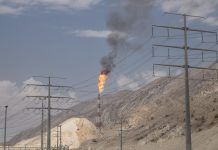
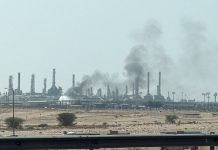
“The (U.S. military) strikes on the energy sector caused significant damage. The attacks resulted in the loss of 230 million cubic meters, of which we are working to recover 100 million,” she said.
Mohajerani added: “The government is trying to avoid a gas shortage, but we may have problems in the northern provinces. Measures have been taken, and governors have been warned.”
She did not clearly explain what the “problem in the northern provinces” would entail or what she meant by the “measures” the government has taken. However, the governor of Gilan Province in the north, Hadi Haghshenas, has referred to plans for gas rationing and the possible closure of government offices.
Speaking to the Tehran-based Eghtesad News, Haghshenas said: “The warning raised by the government spokesperson was specifically directed at the three provinces of Mazandaran (north), Golestan (north), and North Khorasan (northeast), but Gilan may also be affected by the country’s gas imbalance.”
Haghshenas said that if a shortage develops in the province, officials’ priority will be to keep industries operating and prevent production from halting.
“If an energy deficit or shortage occurs, restrictions will be applied on a planned, weekly basis,” he said.
A gas shortage this winter is increasingly likely. The only question is the scale of the shortage, which could leave the government facing several scenarios.
Saeed Tavakoli, CEO of the National Iranian Gas Company (NIGC), which is affiliated with Iran’s Ministry of Petroleum, said U.S. military attacks in recent months had destroyed part of the country’s gas production capacity. He estimated the deficit during the peak winter months at between 200 million and 250 million cubic meters.
For months, experts have been warning of a fuel and energy crisis this fall and winter involving gas, electricity, and diesel. The most serious concern is natural gas. Even before the war, Iran’s gas production was insufficient to meet domestic demand during the colder months, forcing authorities in previous years to ration supplies to industry.
Dr. Hashem Oraee, an energy analyst and professor at Sharif University of Technology (formerly Aryamehr University of Technology), recently told Eghtesad News that damage to energy infrastructure during the military attacks of recent months had further reduced gas production capacity. If the winter is particularly cold, he said, the deficit during peak consumption could reach roughly 400 million to 500 million cubic meters.
Oraee stressed that the gas crisis cannot be attributed solely to damage caused by the recent war. In his view, it reflects a structural imbalance that has developed over years because of poor management, inadequate investment, and ineffective policymaking.
Arash Najafi, head of the Energy Commission of the Iran Chamber of Commerce, also warned that shifting the burden of the gas shortage onto industry could lead to production stoppages, job losses, and reduced foreign-currency earnings.
On Oct. 1, Farshid Shokrkhodaei, a member of the Iran Chamber of Commerce’s board of representatives, told the Tehran-based Tejarat News: “We will certainly face a gas shortage in winter. Because of this shortage, we will probably see a large amount of mazut burned in power plants and, as a likely consequence, severe air pollution.”
Emphasizing the seriousness of the crisis, Shokrkhodaei also discussed possible measures for getting through the winter.
“Several solutions have been proposed. One is moving government activities online. For offices, that is very likely. After that, we probably get to universities and perhaps schools. Not because of other issues, but because heating all these classrooms and all these educational spaces itself demands a heavy load,” he explained.
Iranian Rial Hits New Low as Central Bank Sells Dollars to Support Currency
Local media reports from the southeastern province of Sistan and Baluchestan indicate a severe shortage of gas cylinders, accompanied by rising prices. The situation appears to signal the beginning of gas rationing in one of the country’s most deprived provinces.
Meanwhile, Hozhabr Javadi, CEO of the Gas Company of Mazandaran Province, said that, given “production limitations and accumulated imbalances in the northern provinces, necessary measures have been planned for winter conditions.” He added that gas supplies to villas that are not in active use would be cut off.
The plan, however, goes beyond unoccupied villas. The Mazandaran Gas Company has announced that it will begin monitoring gas consumption by luxury villas, villas with swimming pools, and government offices in the province in late October and continue until April next year. Government offices have also been instructed to reduce their gas consumption by 25 percent compared with last year.
At the same time, Javadi has asked commercial and industrial consumers to secure alternative fuel supplies so that, if restrictions are imposed, household gas supplies can remain stable. High-consumption subscribers, whose usage is equivalent to that of five to 10 residential units, will also face restrictions if they continue to consume gas at high levels.
In Gilan Province, a mechanism for rationing gas supplies to industry has also begun. Steel is one of the province’s major productive sectors, with several steel plants operating there and a combined production capacity of more than two million tons.
The northern provinces are also home to several major cement factories, which are among the first industrial units likely to face gas rationing. In Gilan, these include Deylaman Cement and Khazar Cement; in Mazandaran, Mazandaran Cement; and in Golestan, Peyvand Golestan Cement.
These plants cannot maintain normal production without incurring high costs if gas supplies are restricted. Switching to alternative fuels, reducing production capacity, or temporarily shutting down operations would all impose substantial costs on these facilities.
The north also accounts for a significant share of Iran’s agricultural, food-processing, and dairy industries. Provinces such as Mazandaran, Gilan, and Golestan play an important role in producing and processing agricultural and livestock products. Dairy plants, cold-storage facilities, processing units, and food manufacturers all require a stable energy supply to operate continuously.
In these industries, a gas cut or pressure drop may be less immediately visible than in a steel plant, but it can still significantly increase production costs. Alternative fuels, along with the costs of storing and transporting them and disruptions to production processes, ultimately feed into the final price of goods.
Now, in early October, Sistan and Baluchestan Province, along with the northern provinces, are already showing the first signs of gas restrictions.
The Tehran-based Eghtesad-24 news website published a report warning that developments in the north look less like a response to a possible cold winter and more like the beginning of emergency energy-consumption management.
The policy appears to be that if a shortage develops, non-essential consumption will be managed first, followed by industrial consumption, to preserve gas supplies for households.