By Kayhan Life Staff
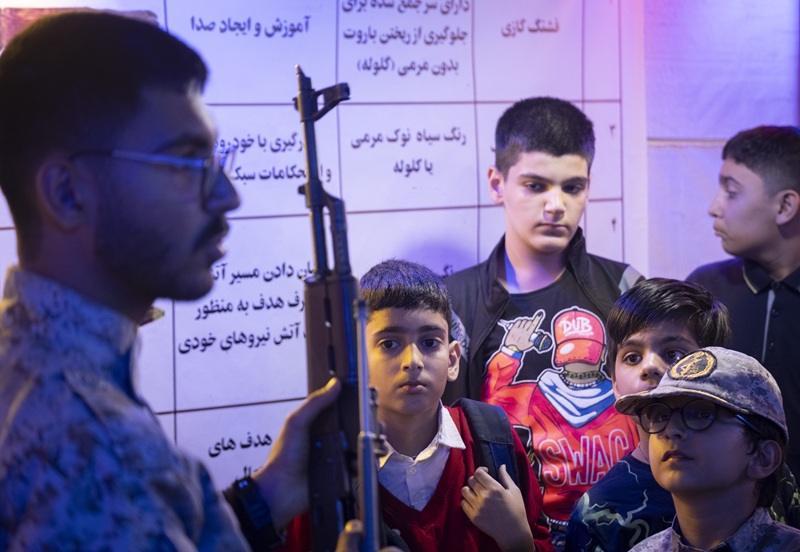
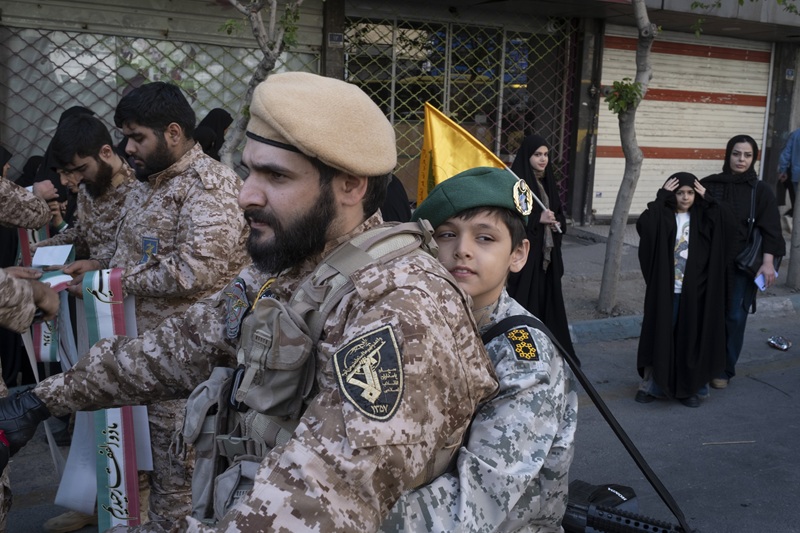
The Islamic Republic of Iran’s Basij volunteer militia — responsible for violently cracking down on the protests of December and January — have started military training for boys aged 12 to 15 under a state initiative called “Janfada” (self-sacrifice).
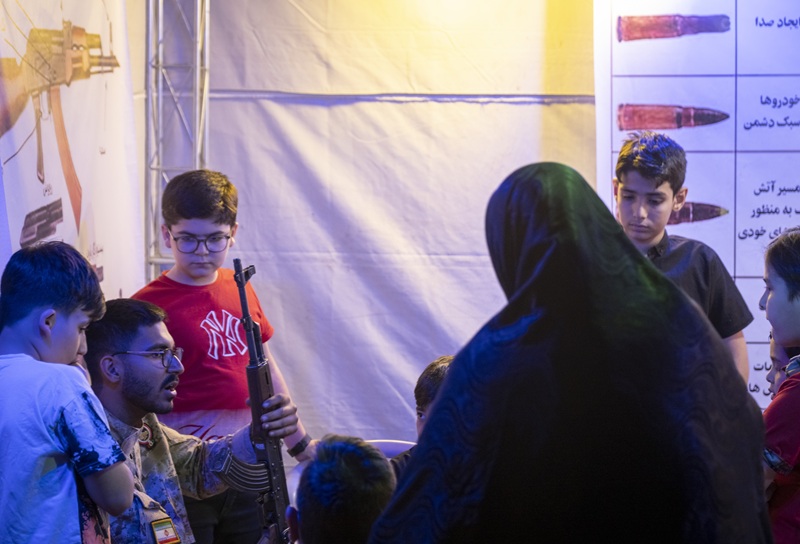
The children are reportedly being taught how to operate drones and shoulder-fired weapons, and how to carry out intelligence activities, in an effort to make up for a shortage of manpower.
International law and treaties, including the Geneva Conventions, prohibit the recruitment of individuals under 15 into armed forces, and using children under 15 in armed conflict is a war crime.
The Islamic Republic has ignored this prohibition and has even lowered the age to 12. Human Rights Watch and Amnesty International have described the practice as a flagrant violation of children’s rights which puts those children in the line of fire.
Sasan Zare, the campaign’s spokesman, told the Iranian Labor News Agency (ILNA) that training for those aged 15 and over has already begun and that, because of “high demand,” special training for younger age groups will also be arranged.
The campaign has drawn coverage from the New York Post. In a Sept. 22 article titled “Iran Recruiting Boys as Young as 12 to Train for ‘Self-Sacrifice’ Brigades,” the newspaper wrote that, by officially announcing military training for underage boys, the Islamic Republic had taken its long-standing pattern of exploiting children to a more dangerous stage.
Training started in Tehran earlier this week. The campaign’s official slogan is “We have one life, and we give it for Iran.”
The children are to learn the basics of local security, general war preparedness, observation, surveillance, and intelligence work. They will also be trained to fly the small drones used in military operations and to fire shoulder-launched weapons.
The program is overseen by the Basij, which operates under the Islamic Revolutionary Guard Corps (IRGC), the same force that played a central role in suppressing the protests.
Zare said 31 million people, roughly one-third of the country’s population, have registered for the campaign, and 26 percent have declared their readiness for military and security duties.
Tehran’s Imam Hossein Square (formerly Fowzieh Square) is also being turned into a “fully equipped paramilitary training camp.”
The campaign follows up from a policy announced in March and April 2026. Rahim Nadali, cultural deputy of the Greater Tehran Mohammad Rasulullah Corps, said at the time that the minimum registration age for the “Homeland Defense Fighters” plan had been lowered to 12.
He attributed the decision to the “demand of the teenagers themselves.” A few days later, Alireza Jafari, an 11-year-old child soldier, was killed alongside his father at a Basij checkpoint in Tehran.
State media confirmed that he was “on duty.” His mother said her husband had taken their son to the checkpoint because of a manpower shortage and that the boy himself had said, “Either we win the war, or we become martyrs… I would love to become a martyr!”
After examining photos and videos, Amnesty International confirmed that children were carrying Kalashnikov rifles at checkpoints and on patrols.
Bill Van Esveld, associate director of the Children’s Rights Division at the U.S.-based Human Rights Watch, said Iranian officials appear willing to risk children’s lives to demonstrate that they have more manpower.
In the Islamic Republic, programs of this kind have long been under way.
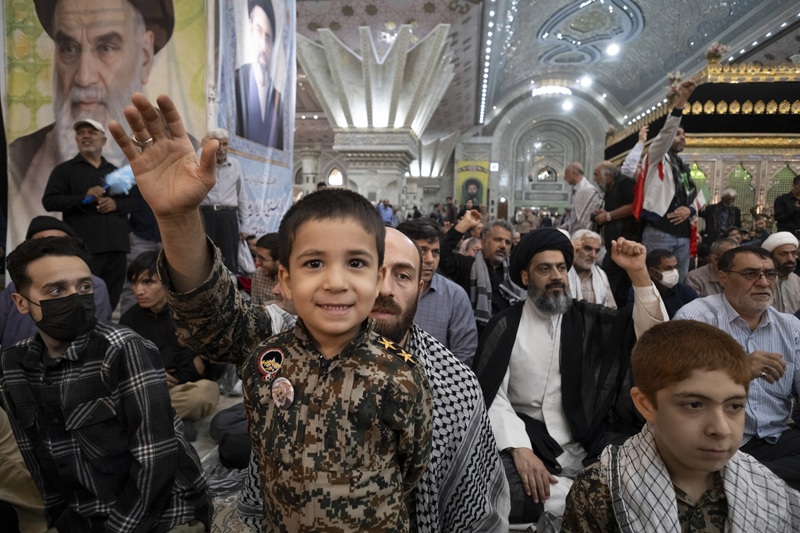
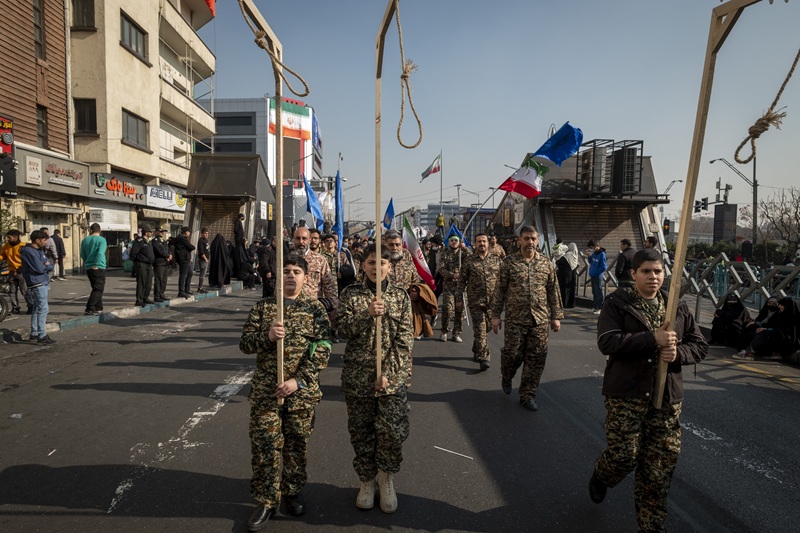
During the Iran-Iraq War (1980–88), the government sent thousands of children and teenagers into minefields and on suicide operations with the promise of a “key to paradise.”
The story of 13-year-old Mohammad Hossein Fahmideh became a symbol of a culture of death-seeking, and textbooks and the so-called “Rahian-e Noor” (Passengers of Light) program still promote him as a model of self-sacrifice.
Mohammad Hossein Fahmideh was a young Iranian Basij fighter and a symbol of the Iran-Iraq War. During the 1980 Battle of Khorramshahr, he is said to have halted an Iraqi tank advance by detonating a grenade belt beneath a tank, sacrificing his life. Iran honors him as a war hero.
Rahian-e Noor refers to the religious and political caravans that travel to sites in southern and southwestern Iran to commemorate Iranian efforts and the lives lost during the Iran-Iraq War.
The Basij uses schools and mosques to indoctrinate children and give them military training, and in recent years it has even recruited Afghan teenagers for the Fatemiyoun Brigade.
The Fatemiyoun Brigade, also known as Liwa Fatemiyoun, is an Iran-backed Shia militia composed primarily of Afghan refugees and migrants, mostly from the Hazara ethnic group, who are recruited, trained, and overseen by the IRGC.
Turning public squares into training camps exposes children not only to physical danger but also to the normalization of violence and death. Training 12-year-old boys to use drones and shoulder-launched weapons means preparing them for an operational role, not merely a support role.
Now, in a state of war with the United States and Israel, the regime faces a shortage of manpower and an erosion of its social base.
The Basij, one of the main institutions of internal repression, has become a source of auxiliary manpower at checkpoints and on city patrols, exposing children to airstrikes..
Registration for those aged 12 and over has begun in mosques and Basij bases.
The Islamic Republic pursues several goals in exploiting children.
First, it secures affordable, replaceable manpower amid a shortage of adults.
Second, it creates human shields and a strong deterrent: The presence of children at checkpoints and in public squares raises the political cost of attacking.
Third, it reproduces the culture of martyrdom from childhood, so that the next generation is also prepared to sacrifice itself for the regime.
Fourth, it serves as a form of social control; keeping teenagers occupied in Basij structures distracts them from protest and discontent.
The case of Alireza Jafari, an 11-year-old child soldier, showed that children’s presence at checkpoints can end in death. Nevertheless, the regime not only failed to back down but expanded official training in weapons and drones.
Human rights organizations have repeatedly warned that such actions must be addressed at the international level, but so far, the response has been limited.