By Katty Biglari
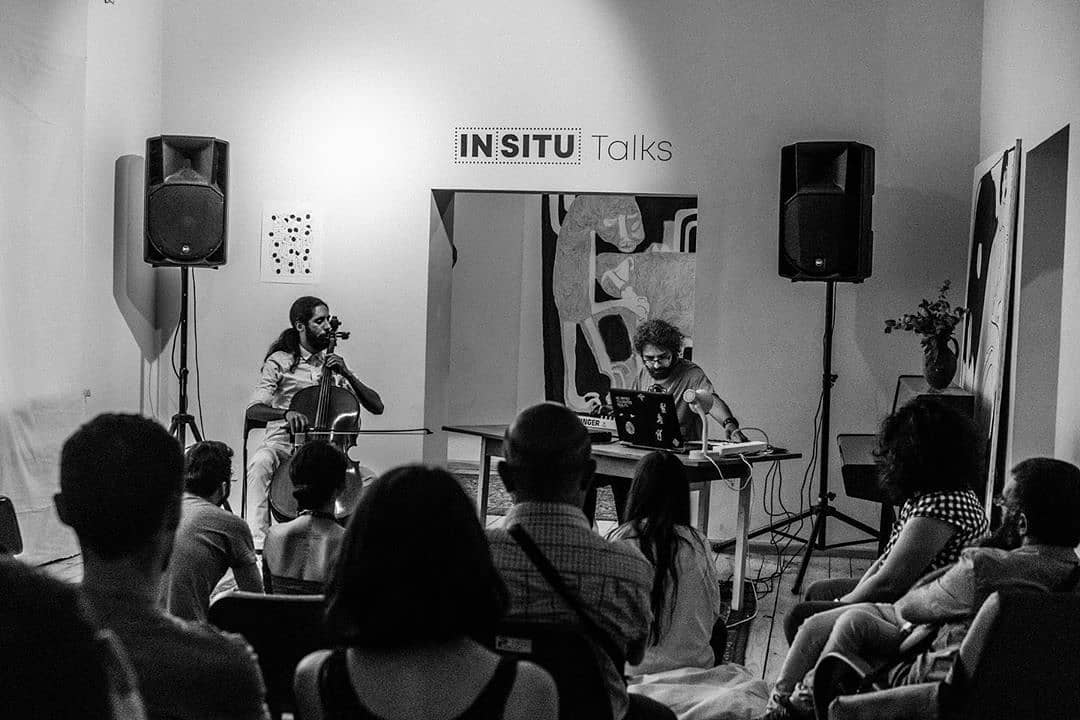
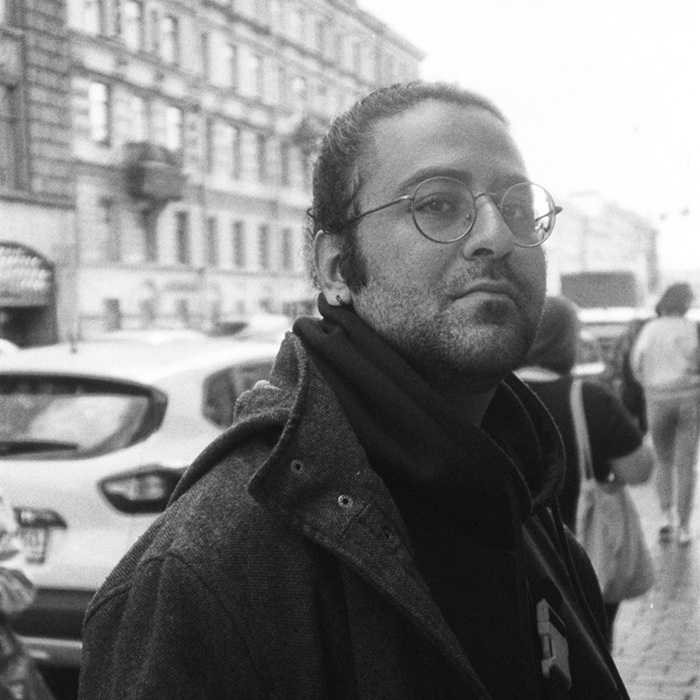
Arash Azadi is a multidisciplinary artist whose electroacoustic and experimental music is used in performance art and audiovisual installation. He is among the 109 artists and artist collectives selected to participate in the prestigious Sharjah Biennial in 2027.
Born in Hamedan, Iran in 1994, Azadi played the setar and received his high school diploma in math and physics. At Yerevan State Conservatory, he then studied classical Persian music and composition. He became intrigued by contemporary classical composers such as John Cage, Philip Glass, and most of all, Karlheinz Stockhausen.
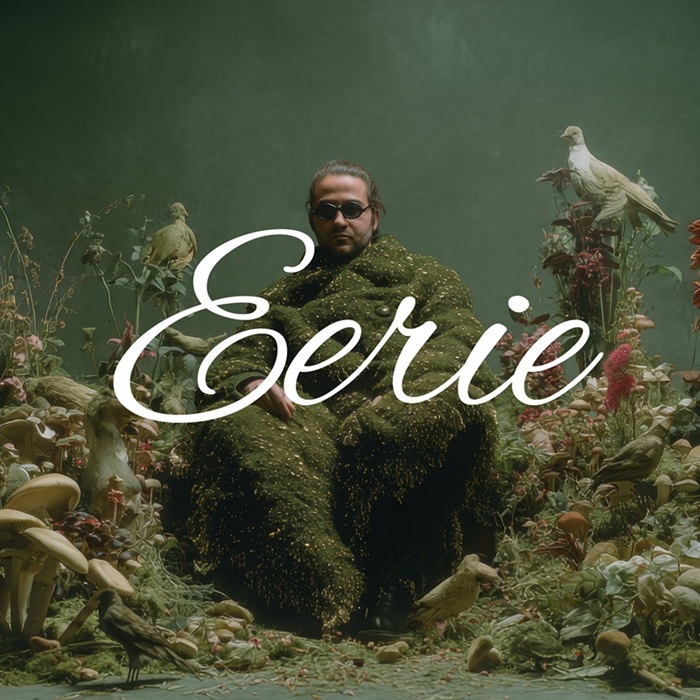
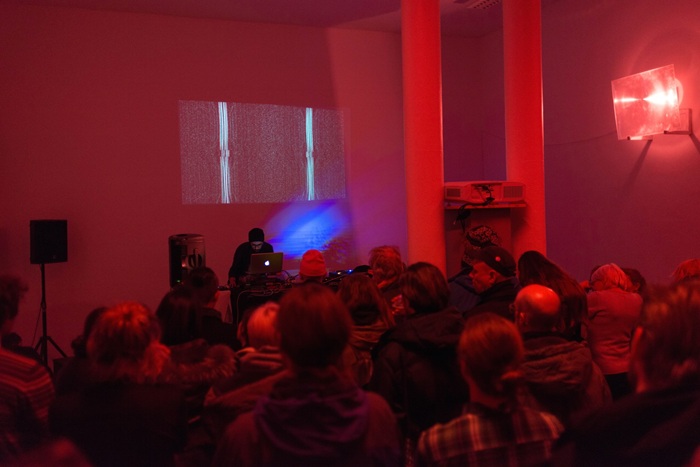
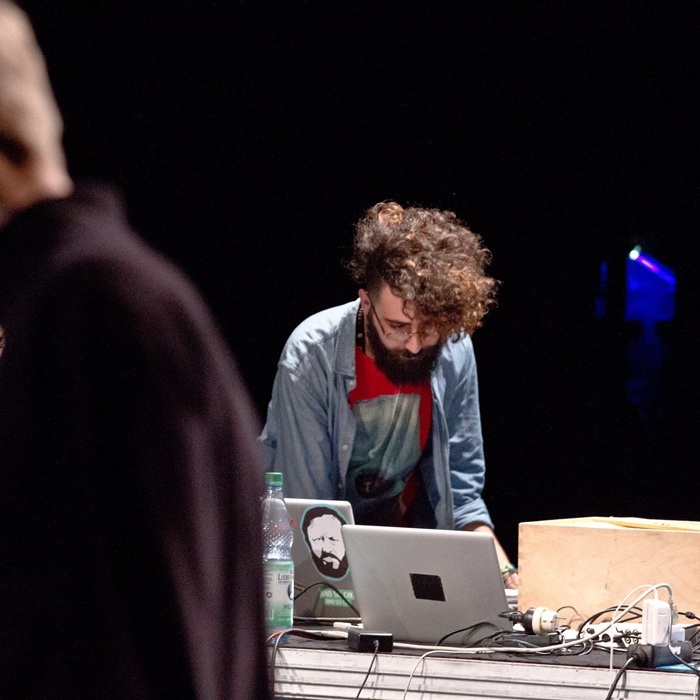
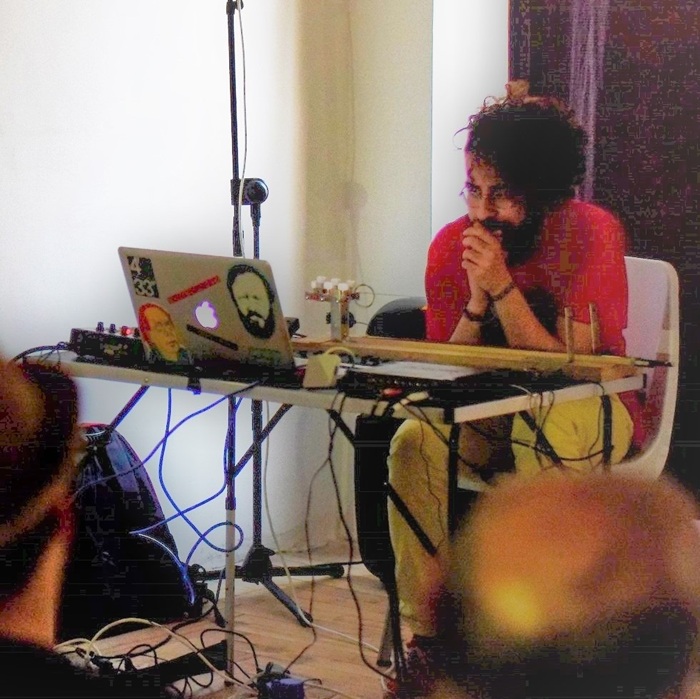
In 2020, he launched his own label “Structured Experience,” an online platform for New Music and Sonic Arts. His modern approach to sound acoustics created by human beings and enhanced by machines has resonated with audiences in Europe and Iran.
Azadi, who lives in Yerevan with his Armenian wife and regularly travels to Iran to see his family, spoke about the Sharjah Biennial, music, and Iran in a recent conversation with Kayhan Life.
Congratulations on being selected to participate in the Sharjah Biennial. Has it challenged you to create a new piece?
Thank you! Yes, I am working on a new acousmatic opera called “The End Is Always Near.”
I was living in Armenia after the pandemic when the Artsakh/Nagorno Karabakh war broke out between Azerbaijan and Armenia. I moved to Russia where I lived and worked for about four years — a year in Moscow and three in Nizhny Novgorod.
As the Russia-Ukraine war began, I did a performance called “White Space” — based on my piece “A Hymn to Peace” — for four alto saxophones, also involving live-action painting, with an Armenian friend Gayane Avetissian at the Mutabor club in Moscow in April 2022. It was a reaction to the events unfolding around me.
The situation in Iran is constantly on my mind. The 12-day war between my homeland Iran and Israel, the violent oppression of protestors by the Islamic Republic, and a full scale war unleashed by the US have had a profound effect on me.
The new composition for the Sharjah Biennale “The End is Always Near” — which merges AI-generated voice, text and sound into a sonic meditation on the notion of apocalypse — embodies the experience of facing a pandemic, four wars, ethnic cleansing, oppression and cruelty. It is painful to see my compatriots suffering in an atmosphere of fear and blocked from the internet.
In “The End is Always Near,” the audience is invited to move freely through the spatial environment, experiencing overlapping streams of narration, voice, and sound in constant transformation. The piece points to an enduring paradox of human civilization: Every era imagines itself to be the last.
The libretto will be generated through a hybrid process of research and algorithmic stylization. Drawing from sources including religious scriptures, modern fiction, philosophical essays, and scientific climate reports, I will train AI text models to recompose fragments of these materials into new rhetorical forms: prophetic, poetic, bureaucratic, or algorithmic. Each movement will reflect a different voice of the apocalypse — a sermon, a news broadcast, a prayer, a love letter, a system error log.
You started out as a musician. How did you come to add visual elements to your music?
When I got into the world of electro-acoustic and electronic music in 2012 at the Yerevan conservatory, I was fascinated with audio-visual performances, by artists such as Ryoji Ikeda, Alexander Schubert, Michael Beil. Soviet-era professors hated electronic music, and there was no faculty member to teach it. I had to pursue it on my own.
I eventually found an online summer course at the Massachusetts College of Art by Judy Dunaway, where I began to learn MAX MSP creative coding multimedia software. Since then, I have put on many audio-visual performances, and have even created two Max for Live plug-ins for Ableton Live that help visualize sound through geometric patterns.
You have said that we are losing a lot of our culture in the process of modernization and globalization. How are you challenging this trend?
I always had an identity crisis. I began playing the Iranian instrument setar at the age of nine. During my teenage years, my group of friends were immersed in Hollywood movies, MTV, and CD & DVDs that were sold illicitly underground. We were fascinated by heavy metal bands such as Linkin Park, Marilyn Manson, Metallica, and others.
The Islamic Republic cracked down on musician friends and subjected them to imprisonment and bodily harm, forcing them to leave the country.
Having left Iran at the age of 17, I regret having distanced myself from my Iranian culture and roots. I blame the oppressive regime that forced us to search for an escape from the propaganda streamed through the media. Yet we then landed in the colonialism of Western global culture.
In the process of achieving that universal, global culture, indigenous and smaller cultures and histories are being neglected or overlooked. This has ushered in a touristic attitude towards non-Western cultures — where a culture becomes an exotic object to be sold to Western eccentrics.
I do not wish to make Iranian elements central to my work, to avoid association with Western Orientalism. But as the saying goes, you can’t hide who you are. So once in a while, there are Iranian elements that appear in my pieces, because it’s a big part of who I am.
Technology has been an important tool in your creative output. How do you see the future of AI in the arts?
AI is a tool that can be used in a conscious, creative manner to benefit society. It will take over repetitive, primitive tasks. The boring stuff will be done easily with AI, and artists will be able to concentrate on the big picture.
Technology expands our ability to transcend. It’s an esoteric tool that can help us go beyond our biological and physical limitations. With vision and conscious thought an artist can create or perform what was impossible. This transcendence can inspire the human performer to reach new heights and levels of creativity.
We are God’s children with infinite consciousness and emotional intelligence. AI can’t make something without a human visionary behind it.