“One Murder Every 14 Seconds”: Pahlavi Urges World to Confront Mass Atrocities in Iran
By Kayhan Life Staff
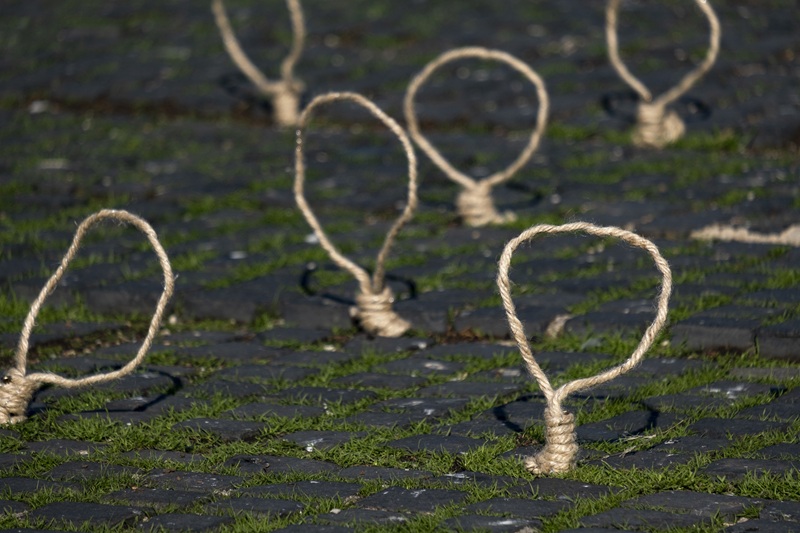
The Islamic Republic of Iran executed 2,159 people in 2025, pushing the total number of executions worldwide to its highest in 44 years, Amnesty International reported in an annual report titled “Death Sentences and Executions 2025.”
“Amnesty International’s monitoring of the global use of the death penalty recorded 2,707 executions in 2025, representing a 78 percent rise from 1,518 in 2024,” the report said. “Iranian authorities carried out more than 2,000 executions, the highest figure recorded in the country by Amnesty International since 1981, as the death penalty continues to be used as a tool of fear and repression.”
At least 2,707 individuals were executed across 17 countries last year — a roughly 80 percent increase from 2024. The figures do not include the thousands of executions believed to have taken place in China, which Amnesty International continues to identify as the world’s leading user of the death penalty.
The unprecedented rise in executions is largely attributed to Iran’s intensified implementation of death sentences.
In 2025 alone, Iran executed at least 2,159 people, more than double the number recorded in 2024. Executions in Iran accounted for roughly four-fifths of the total worldwide.
Other countries also reported higher execution numbers: Saudi Arabia executed at least 356 individuals, mainly for drug-related offenses, while Kuwait saw executions rise from six to 17, Egypt from 13 to 23, Singapore from nine to 17, and the United States from 25 to 47.
Amnesty International noted that the U.S., Iran, China, Somalia, Iraq, Saudi Arabia, North Korea, Egypt, Vietnam, and Yemen maintained relatively consistent execution practices over the past five years.
Executions in Iran have accelerated sharply over the past 12 weeks. A nationwide internet blackout has made it difficult to collect prison data, but reports indicate that executions of political prisoners have reached levels unseen in three decades.
According to the U.S.-based Human Rights Activists News Agency (HRANA), between late February and mid-May, at least 4,023 arrests and 50 executions were recorded, 32 of which were linked to political or security-related charges.
In response to Iran’s escalating crackdown, the London-based Justice for Victims of the 1988 Massacre in Iran (JVMI) sent an open letter to UN Secretary-General Antonio Guterres. Signed by 300 international human rights, legal, and political figures, the letter warns of “systematic executions and escalating heinous crimes” and urges urgent international intervention.
The letter accuses the Iranian government of exploiting political instability, including Israeli and U.S. military actions, as a pretext to intensify internal repression, mass arrests, torture, state-sanctioned killings, and internet shutdowns.
It describes recent executions as “targeted,” noting that many individuals have been executed arbitrarily through judicial processes that fail to meet minimum due process standards.
In recent weeks, at least eight political prisoners were executed solely for their affiliation with the People’s Mojahedin Organization of Iran (MEK), and at least 11 others remain at risk.
Political prisoners and protestors are frequently sentenced to death on charges such as “enmity against God” (moharebeh) and “rebellion” (baghi).
The letter traces the roots of Iran’s extensive use of the death penalty to the global community’s longstanding neglect of mass executions during the 1980s.
The signatories call on the UN Secretary-General and member states to pressure Iran to halt executions immediately, release political prisoners unconditionally, restore internet access, and establish an international accountability mechanism.
They warn that “silence in the face of these crimes will only reinforce impunity.”
Among the prominent figures signing the letter are Javaid Rehman, former UN Special Rapporteur on the human rights situation in Iran; Sang-Hyun Song, former President of the International Criminal Court (ICC); Joachim Rücker, former President of the UN Human Rights Council; Ruth Dreifuss, former President of Switzerland; Stephen Rapp, former U.S. Ambassador-at-Large for War Crime Issues; and Jody Williams, Nobel Peace Prize laureate.