By Kayhan Life Staff
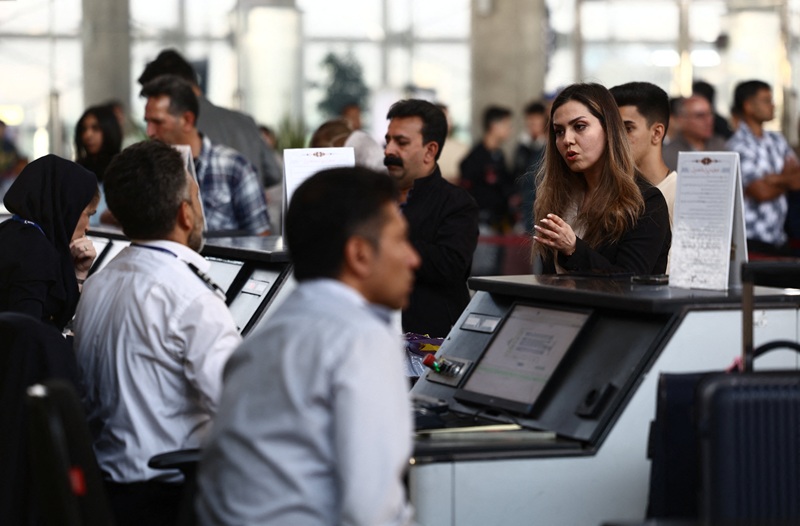
Staff at Iran’s airports are suffering layoffs, months of unpaid wages, and deepening job insecurity nearly three months since most airports across the country suspended operations.
The wave of layoffs has now spread to airport workers and employees across Iran. A significant portion of airport personnel are employed through contracting companies as “contract workers” or “company workers,” categories of employment that leave workers far more vulnerable to job insecurity than formally employed staff.
An employee working for a contracting company at Tehran’s Imam Khomeini International Airport (IKIA) told the Iranian Students News Agency (ILNA): “Following the recent war, several airport contracting companies suspended their operations and instructed their employees to remain at home until further notice.”
The employee, who worked in the translation department at IKIA, has remained at home since the Feb. 28 outbreak of the US-Iran war. During that time, they have received only delayed payments of their minimum base salary, and their employer has reportedly stated that the company may no longer be able to pay wages in the coming months. According to this employee, there is now a serious possibility that many employees will lose their jobs.
This person added that both they and many of their colleagues hold Masters degrees and have worked for years in relatively well-paid positions.
“I have not been able to cover my rent since the year started,” they said. “Our monthly rent is 30 million tomans (approximately $194), and it is impossible to cover these costs with a minimum wage salary.”
ILNA reported that airport employees and workers across many provinces “are facing nearly identical conditions: unpaid or extremely low wages, widespread layoffs, and growing anxiety about an uncertain and bleak future.”
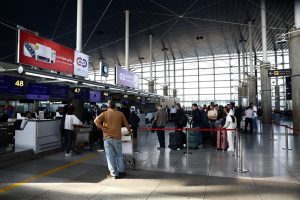
Since the beginning of the U.S.-Israel war against the Islamic Republic of Iran on Feb. 28, Iran’s airspace has remained closed, and all flights have been suspended.
According to Seyed Hamidreza Sanaei, Deputy Director of Aviation at the Civil Aviation Authority of the Islamic Republic of Iran (CAAIRI), only 90 cargo flights operated during the 40-day war period, and these flights carried exclusively medicine and medical supplies.
Beginning in April, and after the ceasefire, operations gradually resumed at several airports. IKIA, Mehrabad Airport in Tehran, and airports in Mashhad (northeast), Shiraz (central Iran), Zahedan (southeast), Gorgan (north), and Urmia (northwest) are currently up and running again.
However, flight traffic at these airports remains far below pre-war levels.
According to the Iran Airports and Air Navigation Company (IAC), airports in Isfahan (central Iran), Kermanshah (west), Abadan (southwest), Ahvaz (southwest), Rasht (north), Ilam (west), and Ardabil (northwest) are also in the process of reopening.
Workers in other industrial, manufacturing, and service sectors have likewise reported layoffs and delayed wage payments. In recent days, labor protests have occurred in several Iranian cities amid worsening economic conditions.
Labor rights activists estimate that around 4.5 million Iranian workers have lost their jobs or are unemployed since mid-February.
More than 200 workers from the Petronad Petrochemical Park (PPP) in Bandar-e Imam Khomeini — formerly known as Bandar Shahpour — in the southwestern province of Khuzestan, who were dismissed after the war, staged a protest on May 16. The workers had also gathered on several previous occasions in recent days.
Ebrahim Pirayesh, Executive Secretary of the Bandar-e Imam Khomeini Workers’ House, stated that the laid-off workers had recently assembled outside several institutions, including the governor’s office and the city labor office, demanding reinstatement to their jobs.
According to this labor activist, the protesters are seeking intervention from local administrative and labor authorities to address their worsening living conditions and facilitate their return to employment.
One dismissed worker told ILNA: “For years, we worked at Petronad, which produces petrochemical raw materials used in pharmaceuticals and several other industries. The company had planned to begin hiring for different operational phases at the start of the year, and we expected to return to work.”
“After the Nowruz holidays, operations resumed, but at the same time, more than 200 local workers were dismissed, while non-local workers were apparently recruited instead. Most of these 200 unemployed workers are married and have children, and many had taken out loans in the hope that their employment would continue.”
Another report points to widespread layoffs in amusement parks. Even before the war, amusement parks had been struggling with declining revenues due to inflation and a sharp decline in household purchasing power.
For many families, visits to amusement parks had effectively disappeared from household budgets. The protests in January and the subsequent conflict involving Israel, the U.S., and Iran dealt an even more severe blow to the industry, bringing many amusement park operations to a near standstill.
Reza Mardani, head of the Iran Amusement and Theme Parks Association, recently described the severe damage the sector has suffered in recent months, highlighting a dramatic drop in attendance, widespread layoffs, and mounting pressure from rent and operating expenses.
Referring to ongoing costs such as rent, employee salaries, and equipment maintenance, Mardani said these financial burdens had become overwhelming, forcing many operators to carry out extensive workforce reductions.
Initial projections indicate that most amusement park workers have already been laid off, with national figures causing significant concern.
“We want to preserve our workforce, but at this rate, continuing operations will become impossible,” Mardani said.
He further noted that although discussions had been held with the Iranian National Tax Administration (INTA) and certain tax-related issues had been partially addressed, those measures remain inadequate. He stressed that stronger and more practical government support is urgently needed.