By Katayoon Halajan
In its heyday, the Iranian National Ballet Company was an internationally recognized cultural institution. Active for 21 years, it attracted distinguished dancers and instructors from across the globe to develop ballet in Iran, nurturing a generation of gifted dancers.
The company also staged some of the world’s most celebrated operas in Iran, and played a crucial role in preserving and promoting Iranian folk dances, preserving the country’s artistic heritage.
The Islamic Revolution of 1979 put an end to all that. The joy of music and dance disappeared from the nation, as religious conservatism and authoritarianism took hold. Under the Islamic Republic, singing and dancing were among the first activities to be banned.
The Iranian National Ballet Company was permanently disbanded. Its members either fled the country or left the arts, abandoning — or even destroying — the memories of their past.
Gita Ostovani, one of the founding members of the dance troupe and a teacher at the National Ballet Conservatory of Iran, experienced those dramatic changes firsthand.
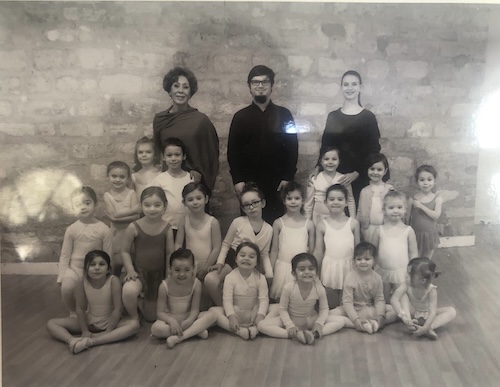
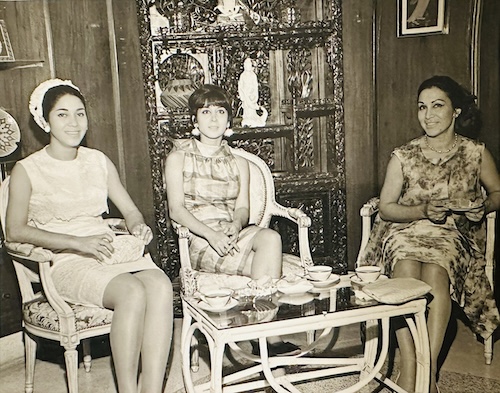
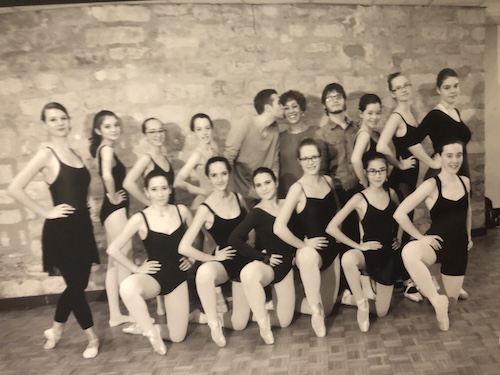
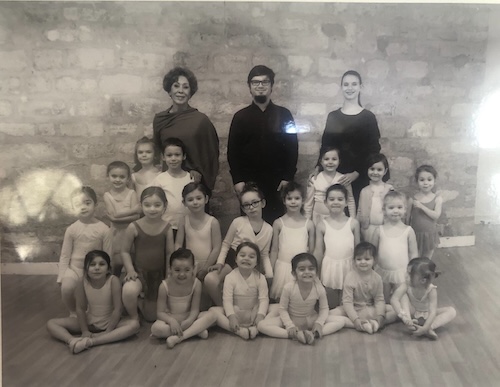
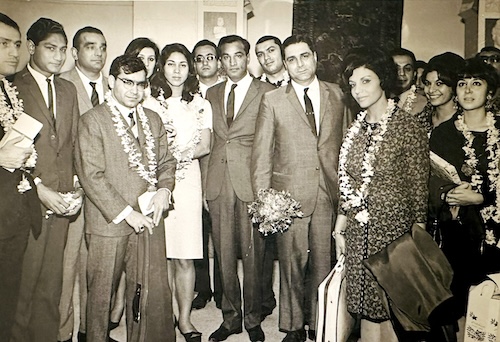
Initially staying in Iran after the 1979 revolution, Ostovani and her husband, Shahrokh Meskoob (1924-2005), along with their young daughter, ultimately left the country in 1980 and settled in France.
Ostovani recently shared her memories of the golden age of ballet in Iran and her life in exile in an interview with Kayhan Life.
How did you develop your passion for dance, and when did you start ballet school?
I was born in 1946 into a cultured family in Tehran. My father worked at a bank, and my mother was a teacher at one of the largest girls’ schools in Iran. Because of my father’s job, we moved to Lahijan in northern Iran for a few years during my childhood before returning to Tehran.
From a young age, I had a deep passion for dance, and I convinced my family to let me attend a ballet school. At that time, there were only three ballet schools in Iran, all founded by Russians.
In 1956, Nejad Ahmadzadeh (1925-2019) founded the Iran National Ballet Company. I became a student there from the very beginning, and by the time I was 15, I was already a member of the national troupe and a teacher at the school. In addition to ballet, we also studied and performed Iranian folk dances, some of which were showcased during the 2,500th Anniversary Celebrations of the founding of the Persian Empire in October 1971.
During this period, I also took classes remotely from a dance school in Paris. At the end of each term, I would travel to Paris to take my exams. I eventually earned a diploma from that school, which later proved invaluable during my years in exile. In 1968, I spent around eight months in Canada dancing with Les Grands Ballets Canadiens (GBC).
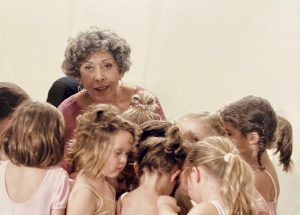
Upon returning to Iran, I continued my work at the National Ballet Conservatory until 1971, when I left the national troupe and joined the City Theater’s performance workshop and the Festival of Arts. Around the same time, I opened my own dance school, which remained active until the revolution.
The last performance I staged in Iran was Swan Lake (by Tchaikovsky), choreographed by Vakhtang Chabukiani (1910-1992), at Roudaki Hall (renamed Vahdat Hall after the 1979 Revolution).
When did you decide to leave Iran?
After the Revolution, I was hired by the state-run radio and television to research Iranian folk dances. At the same time, the Roudaki Hall asked me to choreograph Beethoven’s Ninth Symphony. To me, it felt like a cruel joke. None of the students I was teaching had any real ballet training, and they were required to perform while wearing something that resembled garbage bags over their heads and bodies. It was absurd.
One day during rehearsal, I placed my hand on a male student’s back to help straighten his posture. The following day, I was summoned and informed that I was no longer allowed to touch male students. Everything had become grotesquely superficial.
When the government imposed the mandatory hijab for women, we realized that we would have to wear it the next day at work. My colleagues and I decided to protest by all wearing black scarves. Armed guards were stationed at the entrance to enforce the hijab policy, but after a while, they came into the room and asked, “Are you wearing black because you are in mourning?” They had understood that we were protesting. I replied: “I wore black because that is the darkest color you told us to wear.”
They left, but the building custodian warned me, “Mrs. Ostovani, because of what you have done, you cannot leave through the main entrance. The armed guards will harass or arrest you.” He helped me sneak out through a side exit that led to a back street. I went home and, that very night, decided I had to leave Iran. I told my husband that I could no longer live in those conditions, nor could I raise our daughter there.
My husband, Shahrokh Meskoob, was a writer and researcher. Fortunately, at that time, a research institute in Paris offered him and Dariush Shayegan (1935-2018) positions, along with Henri Corbin (1903-1978). We seized this opportunity and left Iran on Sept. 15, 1980, arriving in Paris.
We initially planned to stay for just six months to see how things developed. It has now been 46 years.
How did you reinvent yourself in Paris while continuing to teach dance?
When I arrived in Paris, I made it my mission to continue working in my field, unlike some of my colleagues who had left the arts behind. In 1984, I taught ballet for a year at the American Center for Art and Culture. After the center closed, I rented a small studio at the Lucernaire Theater and began teaching a handful of students. Over the years, I faced numerous challenges in keeping my classes going.
This year marks the 40th anniversary of my teaching dance in Paris.
When we were young, my colleagues and I had dreamed of establishing a dance school in Iran where students could earn a university degree in dance. However, the revolution upended our plans.
For the past 40 years, I have been running my own school in Paris. A few years ago, the City of Paris awarded me the Medal of the City of Paris in recognition of my long-standing dedication to the arts, an honor I deeply cherished.
However, in all these years outside Iran, I have never truly felt at home. I know many Iranians who have seamlessly integrated into their new societies and celebrate the Christian New Year. Yet what I see, and experience here never feels connected to my core. I still celebrate Nowruz, the Iranian New Year, fully and joyfully. When the new year arrives (March 21), I listen to Rashed’s prayer, recorded on a cassette tape I brought from Iran.
Perhaps you don’t remember, but before the revolution, Rashed would pray for exactly seven minutes each Nowruz. His prayer wasn’t religious — it was a plea for peace, tranquility, and the well-being of humanity.
I still listen to it, holding onto hope that one day, peace, calm, and freedom will return to Iran.