More than three weeks have passed since the start of military operations against the Islamic Republic of Iran. And now, United State forces from the 82nd Airborne Division are on their way to the Middle East.
The resolve of the Islamic regime, and in particular that of the Islamic Revolutionary Guard Corps (IRGC), to block the Strait of Hormuz — a crucial waterway connecting the Persian Gulf to the Gulf of Oman — raises the likelihood that a ground operation to capture Kharg (or Khark) Island, located 25 kilometers northwest of the Strait of Hormuz in the Persian Gulf, will soon become necessary.
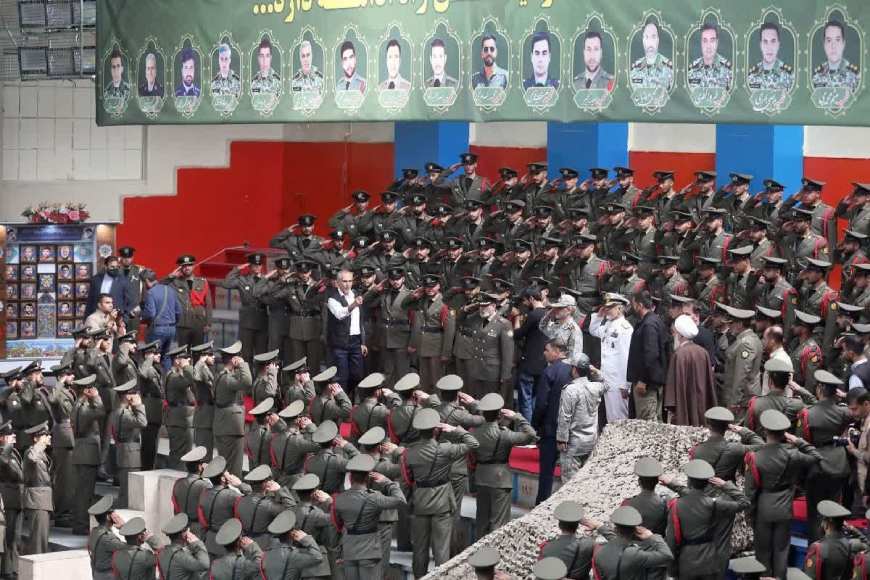
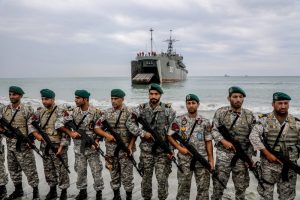
In response to this escalation, attention must shift to Iran’s regular army.
If the Iranian army can demonstrate both pride and honor by siding with the people, there is still hope of preventing further destruction and rescuing the nation from its downward spiral.
The U.S. is acutely aware of the immense cost associated with deploying ground forces in such a conflict.
Consequently, President Donald Trump has been working through intermediaries such as Pakistan, Turkey, Qatar, and Oman, in the hope of identifying a senior figure within Iran who still possesses enough influence and wisdom to break the deadlock and bring an end to the war.
Finding such a figure within the ranks of the IRGC, however, is a daunting task — as daunting as finding a needle in a haystack.
One of Trump’s hopes is to find someone within the Iranian regime who mirrors the role of Delcy Rodríguez, who served as Vice President under Venezuelan President Nicolás Maduro, and is temporarily performing the duties of the presidency since Maduro’s capture and removal from power.
Reports indicate that a communication channel was established with Mohammad Bagher Ghalibaf, the Speaker of the Iranian Parliament (Majlis), but he has so far rejected U.S. overtures.
There was also speculation that the former Secretary of the Supreme National Security Council, Ali Larijani, could have played a similar role before his assassination by Israeli forces on March 17.
Whether Mojtaba Khamenei — who succeeded his father, Ali Khamenei, as Iran’s Supreme Leader after the latter’s death in an Israeli strike on Feb. 28 — is still alive is uncertain.
Nearly all of the regime’s senior officials have been killed in the ongoing conflict, further deepening the instability.
At this stage, the key decisions appear to rest in the hands of individuals such as Ghalibaf, Brigadier-General Ahmad Vahidi (commander-in-chief of the IRGC), Brigadier-General Ahmad Reza Radan (commander of Iran’s Police Command, FARAJA), and others such as Eskandar Momeni (Minister of the Interior and former IRGC Brigadier-General).
These figures, with expertise in military operations and the use of force, hold significant power within the Islamic Republic.
For roughly one to two weeks after the deaths of Ali Khamenei and several top military leaders — including Major-General Abdolrahim Mousavi (former chief of staff of the Iranian armed forces), Brigadier-General Aziz Nasirzadeh (former defense minister), and Major-General Mohammad Pakpour (former commander-in-chief of the IRGC) — the Islamic Republic’s military retained its destructive missile capabilities.
After missile facilities were targeted and destroyed, launchers were decimated, operators sustained heavy casualties, and opposing forces put up strong defenses, Iran’s missile capabilities were significantly weakened.
According to a report by the American Institute for the Study of War (ISW), based in Washington D.C., by March 23, missile launches had plummeted from 332 on March 1 to just 16, with some days recording as few as six or seven. This dramatic decline indicates that Iran’s missile power, once a primary military asset, is no longer a decisive force on the battlefield.
Despite these setbacks, the regime has somehow managed to survive.
Over 70 percent of Iran’s security infrastructure, including police stations, Basij bases, and IRGC facilities, has been destroyed in bombings, yet the government has been able to maintain its “street repression apparatus” — a key factor in its continued survival.
Never in Iran’s modern history have its armed forces been as weak, or as humiliated, as they are now.
Since the massacre of civilians during the January nationwide protests, they are more despised than ever before. Now, with their bases destroyed, many members of the military are living in makeshift shelters, on streets, under bridges, or in temporary accommodation.
Reports suggest that these soldiers are often forced to roam the streets, sitting in their vehicles for hours, storing weapons in minibuses, mosques, or sports clubs, and even knocking on people’s doors to use their bathroom and begging for food outside restaurants and cafes.
The image of security forces living in cardboard boxes or tents on street corners must rank as one of the most disgraceful moments in Iran’s military history. This situation is only tolerable for a military under two possible conditions: the fear of total collapse, or a profound ideological commitment that might involve enduring humiliation to preserve the regime.
In the case of the army and police forces still embedded within the regime, the first condition — fear of collapse — seems to resonate more. However, many members of the Basij and IRGC, ideologically loyal to the regime, continue to fight on, driven by a martyrdom mentality.
In this context, it is vital that, alongside the U.S. and Israel, the people of Iran play their part — by any means necessary — in bringing these forces closer to the martyrdom that they seek. A crucial part of toppling the Islamic Republic will require the people of Iran to help these oppressors achieve the fate that they desire.
U.S. officials have publicly stated that their primary goal is to force the regime into a “solid” agreement.
However, given the regime’s repeated failures to reach agreements in the past — especially when it found itself in a stronger position — such a resolution with the remaining members of the Islamic Republic seems highly unlikely.
Nevertheless, the regime’s thirst for vengeance remains intact. In this context, the removal of figures like Ghalibaf or Radan may not be sufficient to end the conflict.
Iran’s vast size means that military action alone, even with U.S. ground forces and an international coalition, would not be enough to secure victory.
The Basij and IRGC, though severely weakened, still exert considerable control over the population. If they were to withdraw from the streets, the regime would likely collapse.
The final battle will be fought in the streets of Tehran.
Supporting the people’s presence in this struggle is not just a matter of providing arms. Millions of regime opponents are ordinary citizens who are unlikely to take up arms as guerrillas or commandos. However, each one, within their own neighborhood, can play a crucial role that, when combined, will significantly reduce casualties in the fight for Iran’s liberation.
The key to success lies in the mutual support between the regular army and the people.
Some commanders in the regular army still have access to the internet and, under certain circumstances, can watch satellite broadcasts. However, a large-scale, well-organized campaign is needed to ensure the public understands their responsibilities on that pivotal day.
The commanders on the ground are experienced enough to not need daily guidance from foreign military or paramilitary experts. A colonel or sergeant who has served for decades in the remote areas of Iran’s most difficult regions undoubtedly understands the realities of warfare better than anyone else.
Nonetheless, it is critical that they — and their families — realize they face a clear choice: either use force to maintain the regime or stand with the people.
The decision of the remaining garrisons — those still operational — will depend largely on the courage of their commanders and unit leaders, as soldiers typically follow their orders.
International support will be essential in this struggle, and the involvement of figures such as former Crown Prince Reza Pahlavi will be indispensable in assisting the garrisons to resist.
At present, Iran’s airspace is effectively closed to all flights, rendering an IRGC airstrike on military garrisons impossible. However, other options — such as artillery bombardments or the deployment of armored units — are more likely, though they would require international backing. Communication channels, both wireless and wired, are in place to link up with commanders on the ground.
If two or three garrisons declare their allegiance to the people and receive international support, they could form the foundation for the creation of a liberation army. Otherwise, these garrisons may be destroyed in disgrace through bombardment, and Iran will sink even further into devastation.
The soldiers still fighting must recognize that, after the massacre of 12,000 to 30,000 innocent civilians during the January protests, their credibility with the public has been completely shattered.
The only way that they can redeem themselves is by sacrificing themselves for the people — although figures like Mousavi and Nasirzadeh took a different path.