By Kayhan Life Staff
An award-winning Iranian documentary is in the running for an Oscar next month: “Cutting Through Rocks” is nominated in the Best Documentary Feature category at the upcoming 98th Academy Awards on March 16th.
“Cutting Through Rocks” (“Ozak Ulalar”) is the inspiring story of Sara Shahverdi, a 37-year-old former midwife who becomes the first woman ever elected to the local council of her conservative village in Zanjan, northwestern Iran — a village where gender segregation is particularly strict, divorce is nearly impossible to obtain, and girls as young as 12 are forced into marriage
A divorced, motorcycle-riding citizen advocate, Shahverdi breaks patriarchal traditions by stopping child marriages, extending property ownership for women, and training teenage girls to ride motorcycles.
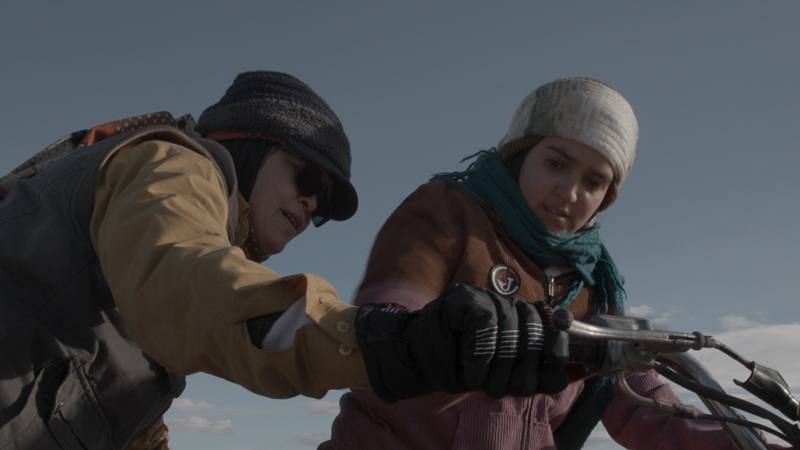
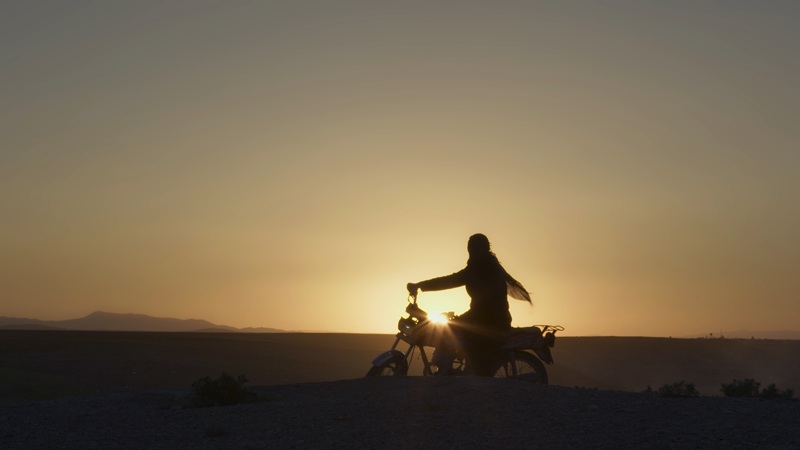
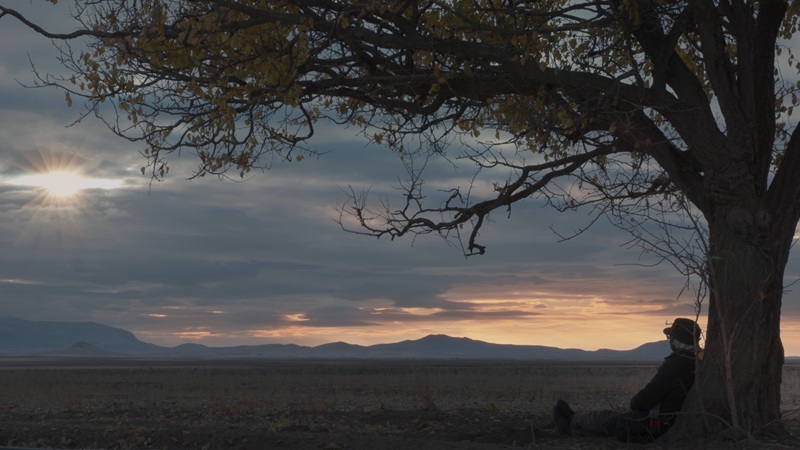
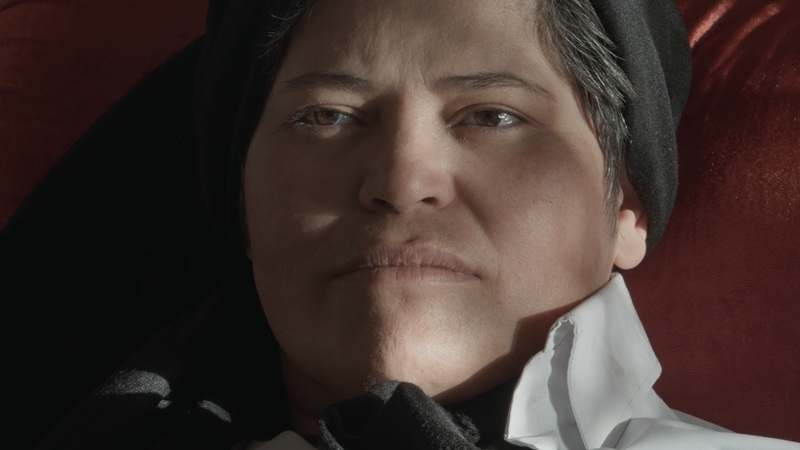
Directed and produced by Sara Khaki and Mohammadreza Eyni, the documentary has won 27 awards to date, including the 2025 Sundance World Cinema Documentary Grand Jury Prize, the 2025 International Documentary Film Audience Award, and the 2025 Vision du Réel Wide Angle Audience Award.
Khaki and Eyni teamed up to begin filming in 2017 and completed production eight years later. Their relationship evolved over time: The duo became a real-life couple and got married in the process.
Khaki is a documentary director, producer and editor whose work has focused on stories that promote gender equality. She graduated from the University of Maryland with a BFA in cinematic arts and from the School of Visual Arts with an MFA in social documentary filmmaking.
Growing up in Iran, Khaki encountered countless women fighting for their independence. After moving to the United States as a teenager, she realized that gender equality is an unfinished project whose mechanisms take many forms in different parts of the world.
Mohammadreza Eyni is a director, producer and cinematographer whose work has been focused on bridging boundaries, promoting underrepresented voices and connecting differing points of view around the world. He graduated with an MFA in cinema from Tehran University of Fine Arts and is an alumnus of the Tribeca Film Institute. He was named as one of the top five cinematographers to watch at the Sundance Film Festival in 2025.
Born in the Azeri-Turkish speaking community where the documentary was shot, Eyni always wanted to make a film about the untold stories he witnessed while growing up. Yet given the community’s patriarchal traditions, he, as a male director, was unable to make a film about women. Partnering with Sara Khaki made this possible, as it opened doors which he could not have opened on his own.
Khaki learned about Shahverdi through extensive research, and discovered a tenacious woman who had done a great deal for her community — first as a midwife, by delivering more than 400 children, and secondly, by being the only female motorcycle rider in northwestern Iran, where that was taboo.
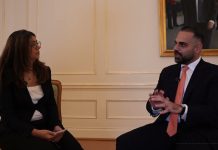
In an interview with Christiane Amanpour on CNN earlier this month, Khaki said Shahverdi had told her she had been thinking of running for a council seat and wasn’t sure she would ever be elected given the number of opponents along her way. As it turned out, “those that she had delivered were 18-year-old first-time voters and she was able to receive a lot of support from men and women and young teenagers who wanted her to be elected,” she remarked.
Eyni told Amanpour that when they started working on the documentary, they had a lot of footage from the election. After showing their demo reel to their colleagues, one of them said they had a story: a woman fighting against patriarchy who wins.
“But we decided to spend six more years on this film to see how she uses the power,” he said.
“It was really important for us to actually see how she challenges the traditions and how the others are responding to the changes that she is offering…To see how a leader uses the power to empower others: not controlling, not suppressing, not trying to decide for others, but trying to create a safe space for everyone in her community. We need more people like Sara, or at least to support leaders like Sara.”
Khaki said they had been devastated by the news of the latest uprisings in Iran, which had been violently crushed by the Islamic Republic, and by their inability to be in contact with their family for over a week.
Iranian Director Mohammadi Confronts Evin Prison’s Horrors with Berlinale Entry ‘Roya’
On the other hand, “let’s think of Sara Shahverdi for a moment,” she told Amanpour. “We have this one woman, the only female motorcycle rider in the northwestern region, and we follow her for eight years. We see at the end of the film that there are a lot of female motorcycle riders now. Recently she shared with us that as a woman to ride a motorcycle in this region is not a big deal anymore. Of course, there were a lot of backlashes along the way and we witnessed that in this movie…This was not an easy journey for her, but when we see these little sparks of hope, that keeps me hopeful about what the future can bring.”
Eyni added that they were so upset about what was happening in Iran that it was hard for them to celebrate the fact that their film was the first Iranian documentary to be nominated for the Academy Awards. “The only thing that gives me hope about the future of our country is its people,” he said.
“Actually, we both believe that change could come from the community itself,” said Eyni. “This is the result of many people that are fighting and supporting each other for a good change. We are here not as politicians but as storytellers. We have the responsibility to share those stories to inspire each other and to remind each other that change is possible in a very peaceful way.”
Khaki and Eyni were among the 11 directors who co-directed the 2021 Netflix Original documentary “Convergence: Courage in a Crisis” which was nominated for an Emmy for Outstanding Current Affairs Film. Their short film “Our Iranian Lockdown” was nominated for an International Documentary Association (IDA) Award.